

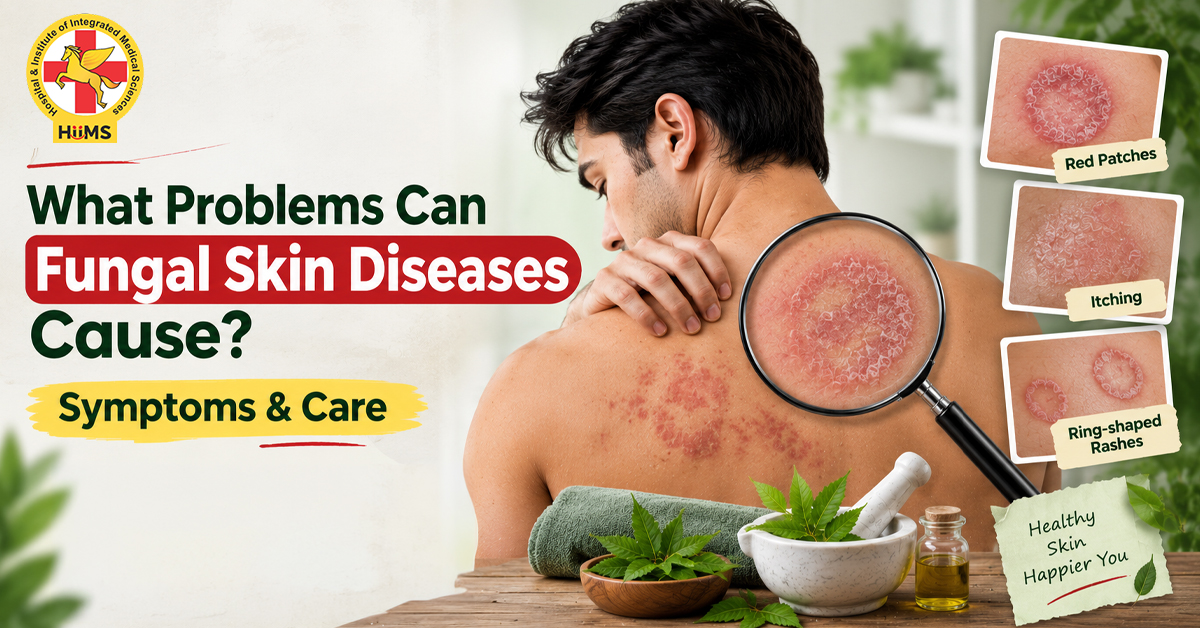
Fungal infections on the skin are quite common, particularly during hot and humid weather. In the beginning, a person may notice only a little itching, some redness, or a rough change in the skin. Since these signs do not always seem serious, they are often ignored. With time, however, the affected area may become larger, and the discomfort can increase. Fungal skin diseases can occur on different parts of the body, including the feet, scalp, groin, nails, and other areas of the skin. Ringworm, athlete’s foot, jock itch, scalp infection, and certain yeast infections are some common examples. According to the World Health Organisation, fungal skin infections affect more than 650 million people worldwide at any given time, and ringworm accounts for more than half of these cases.
Apart from itching and irritation, a persistent fungal infection may also affect a person’s comfort, confidence, sleep, and daily routine. Understanding the causes, signs, possible problems, and natural ways of caring for the skin can help a person take timely steps.
Fungal Skin Disease: An Overview
A fungal skin infection occurs when fungi grow on the skin, hair, or nails. Dermatophytes are one of the common groups responsible for such infections. The symptoms may include itching, redness, scaling, cracks, burning, or round patches on the skin.
Hot weather and humidity can create a suitable place for fungi to grow on the skin. If a person sweats a lot and stays in damp clothes, the skin may remain wet for quite some time. Sharing towels or walking barefoot in wet places such as public bathrooms can also spread fungal infections.
What Causes Fungal Skin Diseases?
Fungi usually grow well in places that are warm and moist. Because of this, fungal problems are often noticed around the feet, groin, armpits and different folds of the skin.
A few common reasons include:
- Excessive sweating
• Hot and humid weather
• Wearing tight or wet clothes for a long time
• Keeping the skin damp after bathing
• Sharing towels, clothes, combs or other personal things
• Walking barefoot in common changing rooms or wet places
• Having close skin contact with someone who has an infection
• Coming in contact with an infected animal
• Not drying the skin properly after a bath
• Certain health conditions that can lower the body’s natural defence
If these conditions are not changed, the infection may keep returning. Simple habits such as drying the skin well after bathing and keeping sweaty areas clean can therefore be quite helpful.
Signs and Symptoms of Fungal Skin Diseases
The symptoms can be different from one person to another. They also depend on the area where the fungus is growing.
Some commonly noticed signs are:
- Persistent itching
- Red or darker patches on the skin
- Dryness and scaling
- Ring-shaped patches with raised edges
- Burning or irritation
- Cracking of the skin, especially between the toes
- Moist or irritated skin folds
- Changes in nail colour or thickness
- Scalp scaling and itching
- Hair loss in some scalp infections
A fungal infection may sometimes resemble eczema, an allergy, or another skin problem. For this reason, assuming that every itchy rash is fungal may lead to the wrong care. In uncertain or persistent cases, proper examination can help identify the actual cause.
Types of Fungal Infections
There are several types of fungal infections, and they may affect different parts of the body. The symptoms also change according to the area involved. Some commonly seen infections are:
- Tinea corporis: It affects the skin of the body and may produce round patches that look red, dry, or scaly.
- Tinea cruris: This is often called jock itch. It develops around the groin and may cause considerable itching along with redness and irritation.
- Tinea pedis: Better known as athlete’s foot, it generally affects the feet. The area between the toes can become dry, itchy, cracked, or uncomfortable.
- Tinea capitis: Children are more likely to develop this scalp infection, which can bring itching, scaling, and broken patches of hair.
- Fungal nail infection: The affected nail may become thick and brittle over time and may not retain its normal colour.
- Yeast infections: Normally occur in warm, moist parts of the body. Skin folds are more likely to be affected when sweat stays there for a long time.
A skin problem may sometimes look like a fungal infection even when the actual cause is different. For this reason, it is better to understand the condition properly rather than judging it only from its appearance.
What Problems Can Fungal Skin Diseases Cause?
A fungal infection may look harmless in the beginning, yet it should not be ignored. Continuous itching can make a person scratch the skin often, which may cause soreness and further skin problems.
A fungal infection can spread to other parts of the skin and sometimes to another person through shared towels, clothes, or combs. Scalp infections may cause itching and hair loss, while nails may become thick and change colour.
Such skin changes may also cause embarrassment, especially when they are clearly visible.
Natural and Holistic Care for Fungal Skin Infection
Natural care of the skin begins with some simple habits. The affected area should be kept clean and dry. Cotton clothes are better, particularly in warm weather, and sweaty clothes should be changed without much delay. Towels, socks, clothes and combs should not be shared with others. A person should also pay attention to daily food, water intake, regular meals and proper rest. Neem, aloe vera and turmeric have been used traditionally for skin care. Still, these should not be applied without proper advice, especially when the skin is already red or irritated.
At Jeena Sikho HiiMS, Ayurvedic care looks at skin health along with food habits, digestion and daily routine. Depending on the person’s condition, suitable herbs and detoxification methods may be included. Taking guidance before using any herbal remedy is wise because a remedy that suits one person may not suit another.
When Should You Seek Professional Guidance?
A fungal skin problem needs proper attention when it does not improve with simple care. Professional advice may be useful when,
- The rash keeps spreading to other parts of the body.
• The problem returns after getting better.
• The skin becomes painful, swollen, or very irritated.
• Cracks or unusual discharge appear on the skin.
• The scalp develops heavy scaling or unusual hair fall.
• The nails become thick, brittle, yellowish, or misshapen.
• Basic skin care does not bring any improvement.
It is worth remembering that itching and redness alone do not confirm a fungal infection. Other skin problems may look similar, so the right cause should be understood before trying treatments at home.
Conclusion
Fungal skin diseases can cause more trouble than a person may expect from a simple skin rash. Continuous itching, spreading patches, damaged skin, hair fall, or nail changes may affect everyday comfort. For this reason, keeping the skin dry and clean and following good food and lifestyle habits is important. Ayurvedic care looks at health in a wider way.
It may include changes in diet, daily habits, herbal support, and detoxification methods. Jeena Sikho HiiMS offers natural and Ayurvedic guidance based on individual needs. VOPD consultation is also available for fungal skin disease.
FAQs
- Is fungal infection contagious through clothes?
Yes, sharing infected clothes, towels, or socks can pass the fungus from one person to another.
- Can fungal skin diseases affect the nails?
Yes, a fungal infection may make the nails thick, brittle, discoloured, or uneven.
- Why do fungal skin diseases occur more often in summer?
Hot and humid weather creates warm, moist conditions that can support fungal growth.
- Are fungal skin diseases caused by poor hygiene?
Not always. Sweating, humidity, skin contact, shared personal items, and several other factors can also play a role.
- When should I seek guidance for fungal skin diseases?
Seek professional guidance if the rash spreads, keeps returning, becomes painful, or does not improve with basic care.