
If your scalp has been dry, flaky, and itchy for a while now, and regular anti-dandruff shampoos just aren’t cutting it, you might be dealing with something more than dandruff. Scalp psoriasis treatment is something a lot of people search for only after months of trial and error with the wrong products.
This condition isn’t an infection, and it doesn’t spread by touch, but it does need the right kind of attention. In this blog, we’ll walk through why it actually happens, what triggers flare-ups, and how Ayurveda looks at managing it from the inside rather than just treating the surface.
What is Scalp Psoriasis, Exactly?
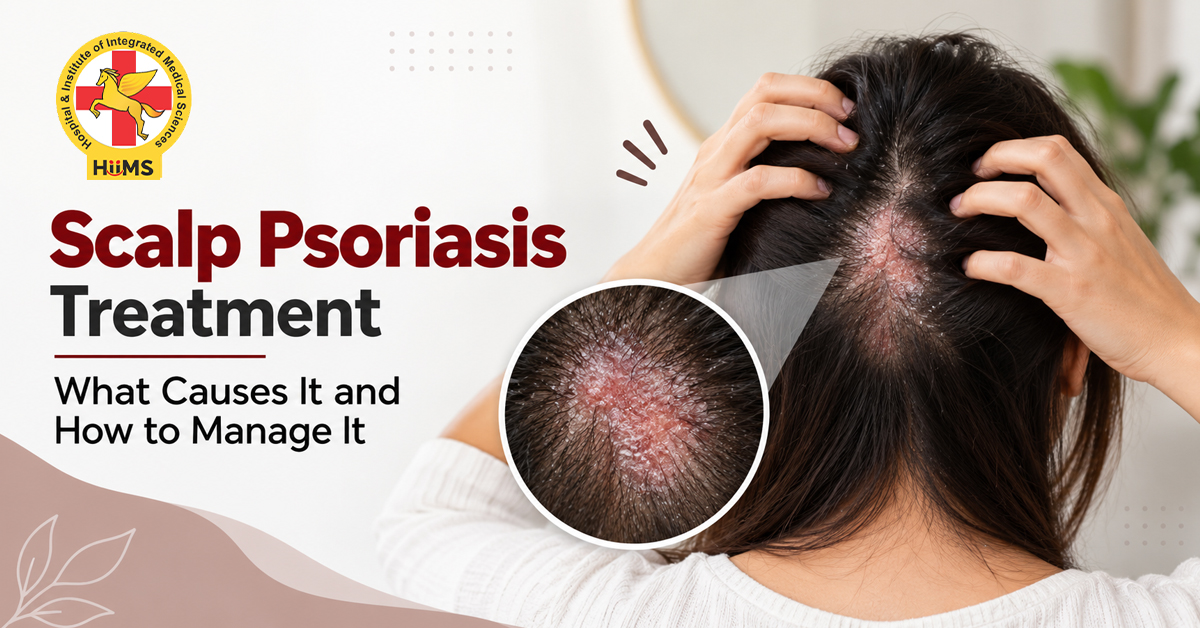
Scalp psoriasis happens when skin cells on your scalp start multiplying much faster than they normally should. Instead of shedding gradually the way healthy skin does, these cells pile up on the surface, forming thick, silvery-white patches or scales.
It’s an autoimmune condition, which means the immune system ends up overreacting and speeding up this skin cell cycle. It can show up just on the scalp, or extend to the hairline, forehead, back of the neck, and even around the ears.
Why Does Scalp Psoriasis Happen?
This is probably the question most people actually want answered. What they do know is that it usually comes down to a mix of things happening together rather than one single cause.
- Genetics plays a role; if a parent or sibling has had it, there’s a decent chance it could show up for you too
- On top of that, your immune system ends up misfiring a bit, telling skin cells to multiply way faster than they need to
- Stress is a big one as well; a lot of people notice their scalp acting up right during a stressful phase, almost like clockwork
- Cold, dry weather tends to make things worse too, and sometimes a random skin injury, an infection, or even a new medication can be enough to set off a flare that wasn’t there before
Common Symptoms of Scalp Psoriasis
Symptoms of scalp psoriasis vary from person to person, but there are a few signs that tend to show up consistently:
- Red, inflamed patches with silvery-white scaling
- Persistent itching, sometimes intense enough to disturb sleep
- Dry scalp that flakes off easily, often mistaken for dandruff
- A burning or tight sensation on the scalp
- Hair thinning in severe cases, though hair usually grows back once things settle
How is Scalp Psoriasis Different From Regular Dandruff?
This confuses a lot of people, and honestly, it’s an easy mix-up to make in the early stages. Dandruff usually comes with fine, white flakes and mild itching. Scalp psoriasis, on the other hand, tends to bring thicker, more stubborn scales, clearly defined red patches underneath, and symptoms that keep coming back even after you switch shampoos.
If regular anti-dandruff products aren’t helping after a few weeks, that’s usually a sign it’s time to look deeper rather than just trying another bottle.
The Ayurvedic View on Scalp Psoriasis
Ayurveda doesn’t really treat the scalp as an isolated problem here; it looks at what’s going on inside the body first. The thinking is that scalp psoriasis reflects an imbalance, mainly between Vata and Kapha dosha, and that this imbalance allows Ama, or toxins, to build up when digestion isn’t functioning well. So instead of jumping straight to something you’d apply to the scalp,
Ayurvedic scalp psoriasis treatment tends to start by asking questions about your digestion, your stress levels, your sleep, and even your diet because all of these are seen as connected to what’s eventually showing up on your skin. It’s a slower approach in some ways, but the idea is that treating the root cause gives more lasting results than only working on the surface.
How Ayurveda Approaches Psoriasis Scalp Treatment
Rather than masking symptoms temporarily, psoriasis scalp treatment in Ayurveda is built around correcting things from within, step by step. Here’s roughly how this usually plays out:
1) Digestive Correction
Weak digestion is considered a major contributor to flare-ups in Ayurveda. Correcting this often involves cutting back on heavy, oily, or processed food and focusing on food combinations that are easier on the gut.
2) Internal Cleansing
Mild detox-focused therapies are sometimes used to help support the body’s own toxin-clearing process, always guided by a practitioner rather than attempted at home.
3) Stress and Routine Management
Since stress is such a common trigger, calming practices, consistent sleep, and simple breathing routines are often part of the plan.
4) Supportive External Care
Natural oils, often infused with herbs like neem or manjistha, are used to soften scales and soothe dryness. These are meant to work alongside internal care, not as a stand-alone fix.
Herbs Traditionally Used in Ayurveda for Scalp Psoriasis
A few herbs come up again and again in Ayurvedic texts and practice when it comes to skin and blood-related concerns:
- Neem – traditionally used for its cleansing properties and to help calm irritation
- Manjistha – traditionally valued as a blood purifier in Ayurvedic formulations
- Turmeric (Haridra) – traditionally used to support the skin’s natural balance
- Triphala – traditionally used to support digestion, which ties back to overall skin health
These herbs have a long-standing place in traditional practice, but it’s worth being clear that they’re used as supportive, traditional remedies, not guaranteed cures for a diagnosed autoimmune condition.
What is the Best Psoriasis Treatment Approach to Follow?
There isn’t one single best psoriasis treatment that works identically for everyone, and that’s actually an important thing to understand early on. Your triggers, your digestion, your stress levels, and how long you’ve had the condition all shape what approach makes sense for you.
This is exactly why a personalised assessment, rather than a one-size-fits-all product, tends to make a real difference over time.
Daily Habits That Can Help Manage Flare-Ups
Alongside any treatment approach, a few everyday habits genuinely help keep things more manageable:
- Avoid scratching or picking at flakes, since this can worsen irritation
- Use a wide-tooth comb gently instead of brushing aggressively
- Keep the scalp moisturised with suitable natural oils
- Manage stress through simple daily practices like walking or breathing exercises
- Stay consistent with your diet rather than only reacting during flare-ups
Conclusion
Dealing with scalp psoriasis can feel frustrating, especially when it’s mistaken for dandruff for months before anyone figures out what’s actually going on.
The good news is that with the right, personalised approach, most people do see their symptoms become far more manageable over time. If you’d like to understand what’s actually driving your flare-ups and explore an Ayurvedic path forward, you can book a VOPD consultation with Jeena Sikho HiiMS and get a plan built specifically around your body and lifestyle.
FAQ’s
1) Is scalp psoriasis contagious?
No, it’s an autoimmune condition, not an infection, so it doesn’t spread through touch or shared items like combs or towels.
2) Can scalp psoriasis be completely cured?
Not exactly, it’s a long-term condition that tends to ease up and flare back up over time. With the right, consistent care, though, it can be kept well under control for long stretches.
3) Does oiling actually help?
It can especially when it’s gentle and done with the right kind of oil. But going overboard with oiling or doing it randomly without any guidance, sometimes ends up irritating the scalp more than helping it.
4) Can stress really set off a flare-up?
Yes, and more than people usually expect. Many patients notice a clear pattern between a stressful week and their scalp acting up right after.
5) How do doctors usually diagnose it?
Mostly just by looking closely at your scalp and asking about your symptoms and family history. Occasionally, if there’s any doubt, a small skin sample is taken to rule out other possible conditions.