

Ovarian cancer is a condition that develops in the ovaries, which form an important part of the female reproductive system. While it is less common than several other cancers, it should never be ignored. One difficulty is that the disease often begins without obvious symptoms. The early signs can easily be mistaken for common digestive issues or even normal hormonal changes.
Learning about its possible causes, risk factors, and early signs can help improve awareness. Besides expert advice, many people also go for a healthy diet, regular physical activity, stress management and Ayurveda to improve their overall wellbeing. Ayurveda looks at the body as a whole and believes that every individual needs a different approach to care. Such daily habits may help improve overall strength and wellbeing. In this article, we will discuss what this condition is, why it may develop, its common symptoms, and how natural wellness practices may become part of supportive care.
Ovarian Cancer: An Overview
The ovaries are a pair of small organs present on either side of the uterus. Their primary role is to produce eggs and hormones necessary for a woman’s reproductive health. Sometimes, the cells inside the ovaries start growing abnormally, which can later lead to ovarian malignancy.
The exact reason behind this condition is still being studied. In many cases, it develops because of changes in the genetic material of cells. These changes allow the abnormal cells to multiply rather than following the normal process of the body. Since the early stage may not show noticeable symptoms, regular attention to overall health becomes important.
Signs and Symptoms of Ovarian Cancer
Many women do not notice symptoms in the beginning. When signs appear, they may seem similar to common stomach or digestive problems. Here are a few symptoms that are important not to ignore:
- Frequent bloating or a lasting feeling of fullness,
- Pain or discomfort in the lower abdomen,
- Pain around the pelvis,
- Feeling full after eating a very small amount of food,
- Passing urine more frequently than usual,
- Changes in bowel habits that continue,
- Feeling tired without any clear explanation,
- Losing weight suddenly without a known reason,
- Back pain can also be seen in some women.
These ovarian cancer symptoms may also occur due to other health conditions. If they continue for several weeks, it is important to seek proper expert advice instead of ignoring them.
What Increases the Risk of Ovarian Cancer?
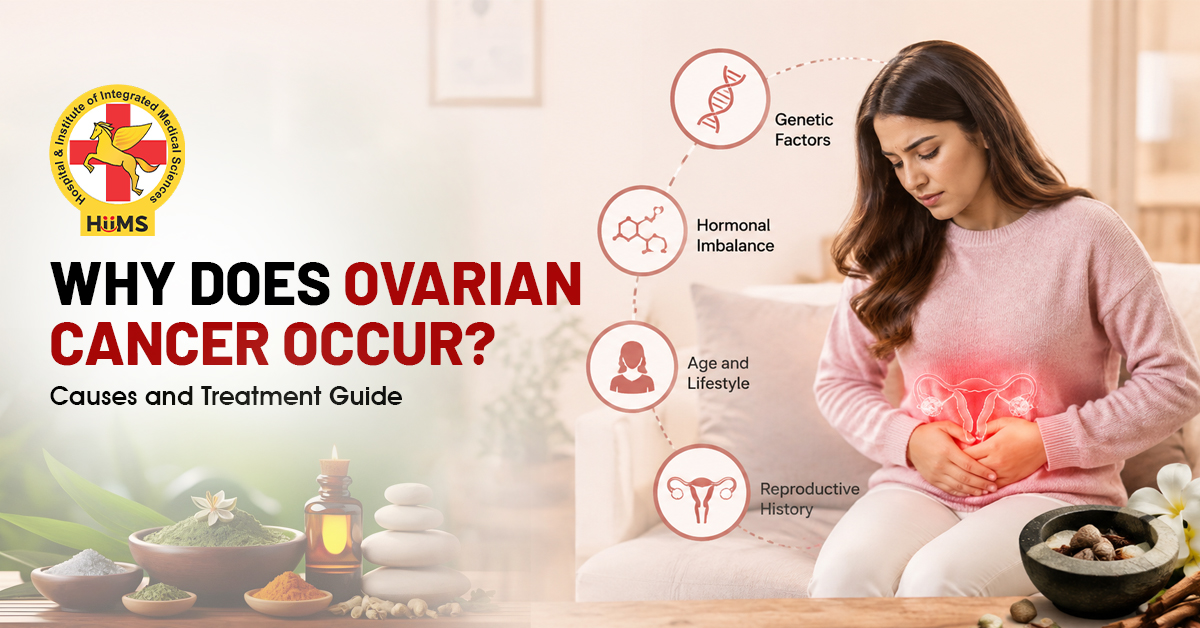
There is no single cause behind this condition. However, some factors may increase the possibility of developing it.
- Increasing age
- A family history of ovarian or breast cancer
- Certain inherited genetic changes
- Obesity or excess body weight
- Hormonal imbalance over a long period
- Unhealthy eating habits
- Lack of regular physical activity
- Long term inflammation in the body
- Smoking and excessive alcohol consumption
Having one or more risk factors does not always mean that a woman will develop cancer of the ovary. All these factors are only increasing the possibility, not certainty.
Ayurveda’s Perspective on Ovarian Health
According to Ayurveda, good ovarian health begins with a healthy body as a whole. If digestion weakens, the doshas stay out of balance, and toxins continue to build up, the body’s natural processes may also get affected with time. This is one reason Ayurveda always looks beyond a single health concern.
Ayurveda promote better digestion, healthy eating, healthy sleep habits, relief from emotional stress and active lifestyle. These daily practices may help the body to function more balanced. At Jeena Sikho HiiMS, lifestyle changes are also recommended that are suitable to their individual health requirements.
Natural and Holistic Approaches for Better Wellbeing
Apart from searching for the ovarian cancer treatment, many people also wish to know how Ayurveda may fit into a healthier lifestyle. At Jeena Sikho HiiMS, the focus is on combining the herbal support, natural therapies, and practical lifestyle guidance for overall wellness.
Supportive practices may include,
- Following a consistent routine for sleeping and eating,
- Including fresh and balanced meals in the daily diet,
- Using Ayurvedic herbal support after consulting professionals,
- Taking supportive therapies such as Golden Therapy, Cancer Detox Juice, and Panchakarma Therapy,
- Practising gentle yoga, meditation, and simple techniques to manage stress,
These are everyday wellness practices that encourage healthier habits and support a balanced Ayurvedic lifestyle over time.
The Importance of Early Awareness of Ovarian Cancer
Many women do not pay attention to the early changes because they often think the problem will settle on its own. Persistent bloating, pelvic pain, or noticeable changes in appetite should be checked if they last for more than a few weeks.
Being aware of these signs helps people understand when it is time to seek the professional advice. Learning about the condition and ovarian cancer treatment also helps families make informed health decisions instead of waiting until the symptoms become more serious.
Conclusion
Learning about the ovarian cancer is one of the first steps towards better health awareness. Understanding what may increase the risk and recognising the warning signs can help people take timely action. Alongside this, following a healthy routine with nutritious meals, adequate rest, and stress management helps maintain overall wellness. Ayurveda believes that balance in the body supports long-term health.
At Jeena Sikho HiiMS, every person is guided according to their individual health needs through a holistic approach to wellness. If you wish to understand ovarian cancer treatment from an Ayurvedic perspective, you may book a VOPD consultation with the experienced team and discuss your concerns in detail.
FAQs
- What are the early ovarian cancer symptoms?
The common early symptoms of ovarian cancer include bloating, pelvic pain, feeling full quickly, and frequent urination.
- Who is at a higher risk of ovarian cancer?
Older women, those with a family history, certain inherited genes, obesity, and unhealthy lifestyle habits may have a higher risk.
- Is bloating always a sign of ovarian cancer?
No. Bloating can happen for many reasons, but persistent bloating should be evaluated by a healthcare professional.
- What lifestyle habits may support ovarian health?
Regular exercise, balanced nutrition, quality sleep, and avoiding smoking may help support overall wellbeing.
- How does Jeena Sikho HiiMS approach ovarian wellness?
Jeena Sikho HiiMS follows an Ayurvedic approach that focuses on personalised guidance, lifestyle changes, and overall wellness.