

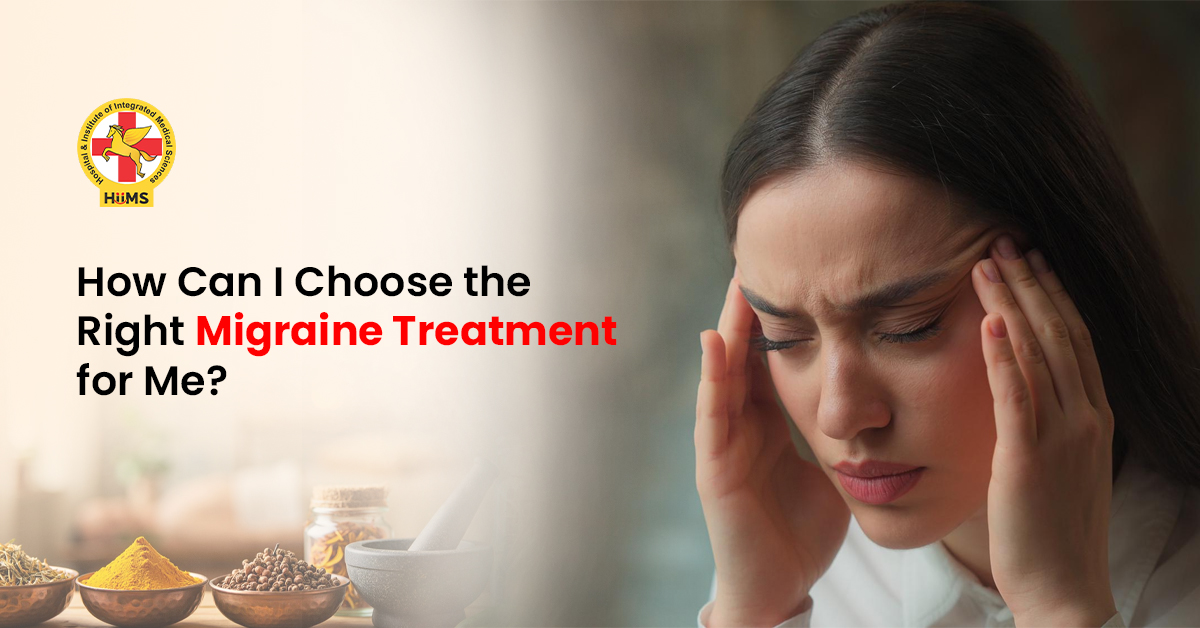
Migraines are stronger than ordinary headaches and can affect work, sleep, and mood. They often hit one side of the head and can last for a few hours or even a day. Many people feel nausea, dizziness, or sensitivity to light and sound during an attack. For many, migraines make it hard to work, study, or even relax. Life in a busy city, skipping meals, irregular sleep, or stress can make migraines happen more often. Many people take painkillers, but these only give temporary relief and do not solve the problem.
Finding the right migraine treatment is not only about stopping pain but also about understanding why it happens. At Jeena Sikho HiiMS, we guide patients to look at the root causes. We provide therapies, herbal support, and advice on food and daily routine. The goal is to reduce attacks, improve sleep, increase energy, and help people feel better naturally. With proper care, migraines can become manageable and life can get back to normal.
What is a Migraine?
A migraine is a neurological condition affecting the brain and nerves. It may last for hours or even a few days.
- The pain is often on one side of the head and may move.
- Some feel nausea or vomiting.
- Sensitivity to light, sound, or smell is common.
- Dizziness or blurred vision can occur.
Certain things trigger migraines like stress, skipping meals, hormonal changes, or lack of sleep. When migraines happen often, they can affect work, mood, and daily life. Understanding them is important to choose the right migraine solution.
Main Causes of Migraine
Knowing why migraines happen can help in finding the right migraine treatment.
- Stress and tension – Continuous mental pressure can trigger headaches.
- Irregular meals – Skipping food or eating too much fried or oily food can cause migraines.
- Hormonal changes – Especially in women, migraines may come during periods.
- Sleep problems – Less or more sleep than usual can cause attacks.
- Family history – Some people are more likely to get migraines if family members have them.Understanding these migraine causes helps doctors suggest therapies, diet, and lifestyle changes that work for you.
Key Symptoms to Notice
Migraine symptoms help in early identification and better migraine relief.
- Throbbing or pulsating headache, mostly one side
- Nausea or vomiting
- Sensitivity to light, noise, or smell
- Dizziness or faintness
- Blurred vision or seeing flashes of lightEarly attention reduces the chance of severe attacks. Visiting a good migraine hospital helps in proper care.
Ayurvedic Migraine Treatment
Ayurveda treats migraines by balancing the body’s energies or doshas.
Therapies Used
- Nasya – Herbal oils are applied through the nose to clear the head.
- Shirodhara – Warm oil is poured slowly on your forehead to help the mind feel calm.
- Abhyanga – A full-body oil massage relaxes your nerves and reduces stress.
- Swedana – Gentle steam lightens the head and removes toxins.
Each therapy is chosen based on the person’s body type and condition, giving safe and natural migraine relief.
Herbal Support
- Brahmi – Helps calm the mind and improve focus.
- Tulsi – Reduces heat and irritation inside the body.
- Ashwagandha – Helps the body handle stress and fatigue.
These herbs, along with lifestyle advice, work naturally to prevent migraine attacks.
Diet and Routine
- Meals should be eaten on time, and skipping them should be avoided.
- Excessive tea, coffee, or fried food should be limited.
- Simple and fresh foods, such as cucumber, coriander, and fruits, should be included in the diet.
- Simple breathing exercises should be practiced to calm the body and mind.
Daily small habits contribute significantly to controlling migraines.
How to Choose the Right Centre for Migraine Treatment
Check these points before picking a migraine hospital or Ayurvedic centre.
- Experience of Doctors – They should have treated chronic migraine cases before.
- Range of Services – Therapies, diet advice, and lifestyle guidance should be available together.
- Patient Care – Staff should listen carefully and explain everything clearly.
- Follow-Up Care – After your treatment, the centre should tell you how to continue your home routine and diet.
- Honest Guidance – Avoid anyone who promises instant relief. Proper treatment takes time.
At Jeena Sikho HiiMS, we make sure all these things are done properly so patients get safe and organised care.
Preventive Tips for Migraine
- Note your triggers and keep a simple diary
- Drink enough water and eat meals on time
- Avoid bright lights and long screen hours
- Manage stress with simple exercises
- Follow doctor’s instructions for diet and daily routine
Following these small steps regularly can reduce migraine frequency and severity.
Conclusion
Choosing the right migraine treatment does more than relieve pain; it also helps identify why migraines happen and guides steps for long-term relief. Proper care boosts energy, sleep, and overall well-being. At Jeena Sikho HiiMS, patients receive safe therapies, herbal support, and guidance for daily habits. This approach helps control migraine attacks and improves life naturally.
If migraines are affecting your daily life, it is better not to wait. Take the first step toward balance and relief. Contact Jeena Sikho HiiMS today for proper migraine relief and start your journey to a healthier, calmer life.
FAQs
- Can children get migraine treatment?
Yes, treatments are safe for children under doctor supervision. - Can Ayurveda be used with medicines?
Yes, but always tell the doctor about your current medicines. - How soon will migraine pain reduce?
Some notice improvement in a few weeks; long-term habits keep it away. - Can lifestyle changes alone stop migraines?
They help, but combining with therapies is more effective. - Do I need a special diet?
Yes, simple, fresh, easy-to-digest meals are recommended.