

Hemorrhoids can start as a small irritation and then quietly take over daily comfort. A person may notice burning after passing stool, a dull ache while sitting, or a little bleeding that appears only once and then returns later. Because the problem starts in such a mild way, many people keep postponing care and try to ignore it.
Still, the pain hardly stays small for long when constipation, hard stool, low fibre meals, and long sitting hours keep repeating the same pressure on the rectal veins. That is why many people now look for the best hemorrhoid treatment that feels gentle, practical, and non-surgical.
In this blog, we will walk through what piles are, why they form, which signs are important, and how Ayurvedic care, simple habits, and piles treatment without surgery can bring steady relief without making the process feel heavy or frightening.
Understanding Hemorrhoids in Simple Words
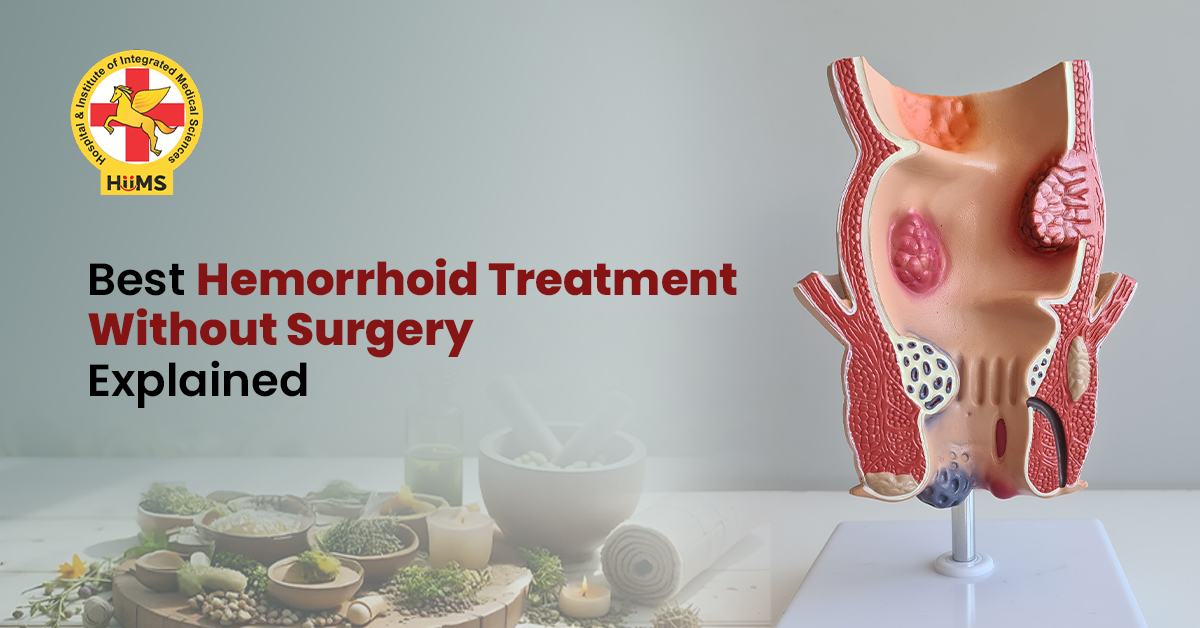
Hemorrhoids, also called piles, are swollen veins in and around the lower part of the rectum and anus. Internal piles stay inside and may show up as bleeding or a feeling of incomplete bowel movement, while external piles sit near the outside area and often cause itching, pain, or swelling. Many people first notice the issue only when hemorrhoids symptoms start to affect sitting, walking, or the toilet routine.
Why Hemorrhoids Develop Slowly Over Time
Piles usually do not appear overnight. They build up when digestion stays weak, stools become hard, and the body has to push too much during bowel movement. Long office hours, less physical movement, low-fibre food, dehydration, pregnancy pressure, and repeated straining all add extra force on the veins.
Who Is More Likely to Develop Hemorrhoids?
Office workers, older adults, pregnant women, and people who deal with long-term constipation often face a higher risk. The condition can also bother those who sit for many hours and do not give the body enough movement through the day. In many such cases, hemorrhoids disease treatment becomes easier when started early instead of waiting for the pain to grow stronger.
Why Many People Now Prefer Piles Treatment Without Surgery
Many people delay treatment because they imagine hospital stays, stitches, pain, and weeks of recovery. That fear is understandable, especially when the discomfort already affects daily life and sleep. For many patients, the thought of surgery feels bigger than the condition itself, so they start searching for safer and softer options first.
Non-surgical care works by supporting digestion, softening stool, lowering pressure on the veins, and helping the body settle into a better bowel routine. This is why many patients now prefer a plan that does not only cover the pain for a few hours but also works on the habits that caused the trouble in the first place.
In many early and moderate cases, that is where the best hemorrhoid treatment becomes more about balance than force.
Best Hemorrhoid Treatment Without Surgery: Ayurvedic and Natural Approaches
Ayurvedic View of Hemorrhoids Disease Treatment
Ayurveda connects piles with weak digestion, irregular bowel movement, dryness, and imbalance in the lower digestive tract. Instead of trying to hide the problem, it focuses on restoring better bowel flow and easing the pressure that keeps irritating the rectal area.
Kshar Sutra therapy
Kshar Sutra is a traditional Ayurvedic method that uses a medicated thread prepared with herbal ingredients. The thread is placed carefully so the pile mass can shrink little by little over time. The process is gradual, controlled, and less aggressive than major surgery, which makes it easier for many patients to accept.
Basti Therapy
During Basti therapy, doctors use warm herbal oils or herbal liquids to help the lower bowel work more comfortably. The therapy helps loosen hard stool, reduces inner discomfort, and supports easier bowel movement. People who regularly experience dryness or constipation often feel better with this therapy because the process feels gentle on the body and does not create extra stress while passing stool.
Herbal Support Used in Ayurveda
Many Ayurvedic doctors use Triphala to help make bowel movement smoother and keep the stool from becoming too hard. Haritaki and Amla are usually given to support digestion, while Neem and Turmeric are used when itching and irritation start becoming uncomfortable. These herbs are also included in many piles treatment without surgery plans because they help the body feel more settled and support better bowel movement naturally. When combined with proper diet, these remedies can become part of a more complete healing path.
Why Many People Choose Jeena Sikho HiiMS for Non-Surgical Care
At Jeena Sikho HiiMS, the care approach stays focused on the root of the problem, not only the visible pain. That means the plan looks at bowel habits, food patterns, daily routine, and the pressure already building inside the body. People often prefer this style because it feels more personal, more natural, and less hectic.
For many patients, the goal is not just to calm the recurrence but to feel steady again in daily life, which is exactly where the best hemorrhoid treatment should lead.
Conclusion
Hemorrhoids may start quietly, but they do not have to control daily life. When the body gets the right mix of food, water, movement, and Ayurvedic support, the pressure often starts to ease in a natural way. Surgery is not the first answer in every case, especially when the signs are noticed early and the treatment plan is built around digestion, comfort, and healing from within. That is why many people now choose the best hemorrhoid treatment options that feel practical, gentle, and lasting instead of harsh and stressful.
If piles symptoms are troubling you, early care can make recovery much smoother. For health concerns, you can also take an online video consultation (VOPD) with experienced doctors at Jeena Sikho HIIMS from your home itself. You can also book an appointment.

Also Read about
Best medicine for piles
FAQs
Q1: What are the early signs of piles?
Early signs usually include itching, mild pain, burning, a little bleeding, or discomfort while sitting and passing stool.
Q2: Can piles improve without surgery?
Many early and moderate cases improve with proper diet, bowel care, Ayurveda, and other non-surgical support methods.
Q3: Which foods help during piles recovery?
Fibre-rich foods such as fruits, vegetables, whole grains, and enough water usually help stool stay softer and easier to pass.
Q4: Why does constipation make piles worse?
Hard stool and straining increase pressure on the rectal veins, which can make swelling and irritation more intense.
Q5: What daily habits help reduce piles discomfort?
Regular walking, good hydration, soft food choices, and avoiding long sitting can all help reduce strain on the bowel.
