
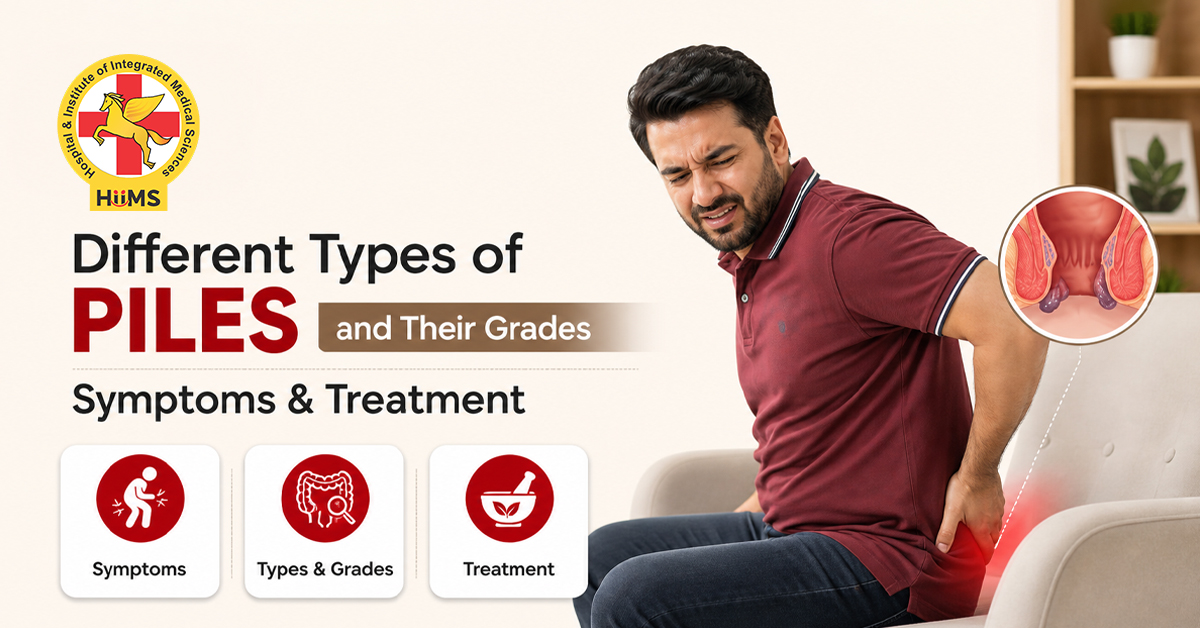

That uncomfortable pressure, occasional bleeding, or a small lump near the anus, piles are far more common than people openly admit, and honestly, most cases are nothing to panic about. What surprises a lot of people is that piles aren’t just one thing; there are genuinely different types of piles, each behaving differently depending on where they form and how far they’ve progressed.
Understanding which type you’re actually dealing with changes how it should be managed, and this blog breaks that down clearly, along with what genuinely helps.
What is Piles Disease, and Why Does It Happen?
Piles disease, medically called haemorrhoids, develops when veins around the anal area become swollen, either inside the rectum or on the skin around the anus. It’s genuinely common, and many people have mild cases that resolve completely on their own without ever knowing they had them.
The trigger is usually excessive pressure building up in the lower rectum, most often from straining during bowel movements or sitting on the toilet for too long. Pregnancy, chronic constipation or diarrhoea, and repeatedly lifting heavy weights all raise the risk too.
Types of Piles: Breaking Down the Four Categories
Piles generally fall into four distinct categories, and knowing the difference genuinely helps you understand what’s actually happening and what to expect next.
1) Internal Piles
These form deep inside the rectum, which means you can’t see or feel them directly. Since the rectum itself doesn’t have pain nerves, internal piles often cause no symptoms at all in mild cases, and a lot of people never even realise they have them.
Larger internal piles, though, can cause pain, itching, a burning sensation, or bleeding during bowel movements. Sometimes, straining pushes an internal pile out through the anal opening, which is where the next category comes in.
2) Prolapsed Piles and Their Grades
When an internal pile gets pushed out of the anus, it’s called a prolapsed pile, and these are graded based on how far they’ve protruded:
- Grade I: Internal piles with no prolapse at all
- Grade II: Prolapse happens under pressure, like straining, but the pile retracts back on its own afterwards
- Grade III: The pile stays protruded after bowel movements and needs to be manually pushed back in
- Grade IV: The pile stays permanently outside and can’t be pushed back, carrying a risk of the blood supply getting cut off, a genuine emergency
Depending on the grade, treatment ranges from simple diet and lifestyle changes to more involved procedures.
3) External Piles
These are the ones most people think of when they hear the word “piles” — visible, palpable lumps that form on the skin just around the anus. Symptoms are similar to internal haemorrhoids, but since these are forming outside the body, the pain is usually more intense and can really interfere with sitting, walking or daily activities.
4) Thrombosed Piles
This happens when a blood clot forms within an internal or external pile, and it’s considered a more serious complication. Symptoms escalate quickly here: intense pain, burning, redness, and noticeable swelling. It’s not life-threatening, but it does need prompt medical attention, since the standard treatment involves a specific procedure to remove the clot.
How to Piles Cure Naturally: The Ayurvedic Approach
How to piles cure without jumping straight to surgery is a genuine question a lot of people ask, especially for milder grades. Ayurveda looks at piles as connected to poor digestion and chronic constipation, called Mandagni, rather than treating the swollen veins as an isolated issue. This is exactly why Ayurvedic treatment focuses on correcting digestion first, alongside directly addressing the pile mass itself.
1) Kshar Sutra and Panchakarma for Piles Treatment
For types of piles that have progressed beyond early stages, Kshar Sutra therapy is a well-established, minimally invasive option. A specially medicated thread, prepared with herbal ingredients, is tied around the pile mass, gradually cutting off its blood supply so it dries, shrinks, and falls away naturally over several days.
Alongside this, Panchakarma therapies like Basti, a herbal enema, help ease constipation and calm aggravated Vata, while dietary correction with more fibre and water supports long-term prevention rather than just addressing the current flare-up.
Finding the Right Piles Hospital Near Me
Searching for a piles hospital near me usually brings up a long list, and narrowing it down comes down to a few genuine factors. Look for a place that properly assesses your specific grade before recommending anything, rather than pushing the same treatment on every patient. A good facility should also be transparent about both surgical and non-surgical options, including Kshar Sutra, and take the time to explain recovery expectations clearly.
Conclusion
Understanding which types of piles you’re actually dealing with, internal, prolapsed, external, or thrombosed, genuinely shapes what treatment makes sense for your specific case.
If you want to explore a gentler, root-cause approach through Ayurveda, the team at Jeena Sikho HiiMS can walk you through what would genuinely suit your grade and symptoms, a VOPD consultation is a simple place to start that conversation.

FAQs
1. Can internal piles go away without any treatment?
Yes, mild internal haemorrhoids often go away on their own, especially if you change your diet and lifestyle to ease constipation.
2. What is the difference between thrombosed and other piles?
The pile fills with blood causing more pain and swelling and generally needs urgent medical attention.
3. Is surgery always necessary for prolapsed piles?
No, the treatment is based on the grade; mild forms often respond to lifestyle changes or Kshar Sutra before surgery is even spoken about.
4. What is the difference between Kshar Sutra and conventional piles operation?
In general it is less invasive and has a smoother recovery because it works gradually, rather than removing the tissue all at once.
5. What lifestyle changes really help stop piles coming back?
More fibre, enough water, not sitting too long, not straining to poo really helps long term prevention.