

Everyone feels nervous before a big exam, a job interview, or bad news they’re bracing for. That’s normal, even useful sometimes. But what is anxiety actually, when it stops being a passing feeling and becomes something that follows you around for weeks?
This blog breaks down the real clinical picture, what counts as an anxiety disorder, the different types, common causes, and exactly when it’s time to stop managing it alone and get proper help.
What is Anxiety, Really? Normal Fear vs an Anxiety Disorder
Anxiety, at its core, is your brain’s built-in alarm system, a normal reaction to stress that can actually help you focus or react quickly when needed. The distinction between ordinary anxiety and an anxiety disorder comes down to two things, proportion and duration.
Anxiety disorders involve fear or worry that’s disproportionate to the actual situation, and unlike a passing nervous moment, it sticks around, sometimes for months, without a clear trigger, and tends to interfere with work, relationships, or daily functioning.
Types of Anxiety Disorders You Should Know About
There isn’t just one kind. A few of the most recognised types include:
- Generalised anxiety disorder (GAD), ongoing, excessive worry about everyday things, finances, work, family, that persists for months
- Panic disorder, sudden episodes of intense fear, often mistaken for a heart attack given symptoms like chest pain and racing heart
- Social anxiety disorder, overwhelming worry about being judged or embarrassed in social situations
- Specific phobias, intense fear of something that poses little actual danger, heights, flying, injections
- PTSD, developing after a shocking or dangerous experience, often triggering a persistent fight-or-flight response
Each type has its own pattern, though they frequently overlap, and more than half of people with an anxiety disorder also deal with depression alongside it.
Anxiety Symptoms: Physical and Mental Signs
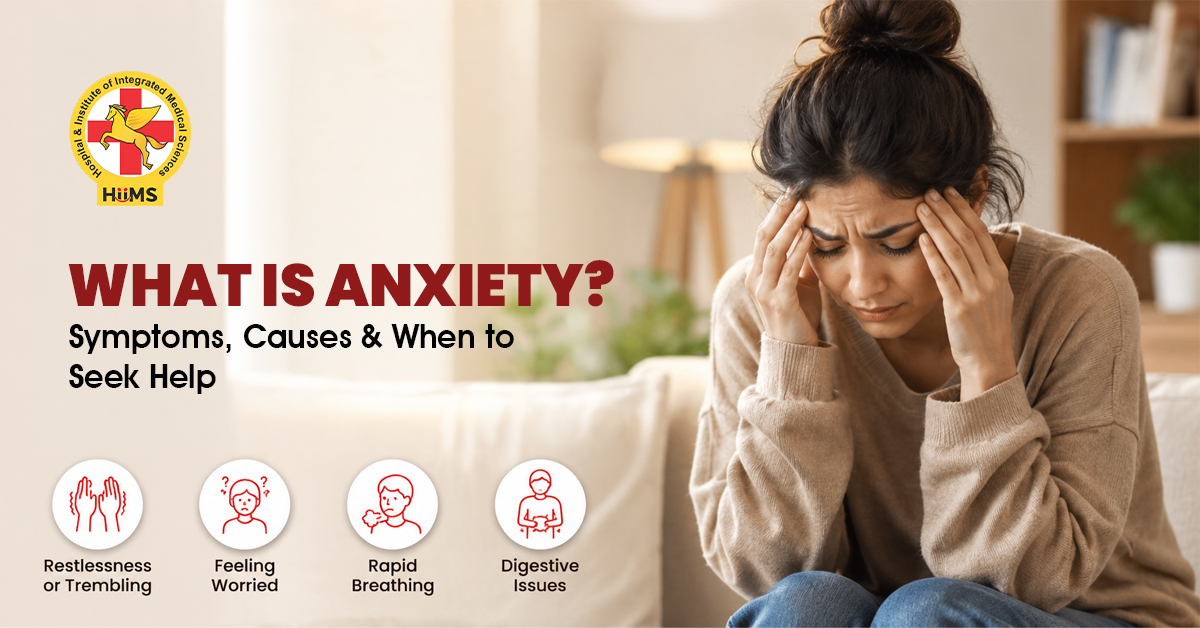
Anxiety symptoms show up in the body just as much as the mind. Physically, that means a pounding or rapid heartbeat, sweating, shortness of breath, dizziness, and unexplained aches.
Your mind is racing with thoughts you can’t turn off, restlessness, a constant feeling of impending doom that is out of proportion with what is actually happening. Behaviourally, people often begin to avoid situations they used to deal with without a second thought, such as work meetings, social events and even routine errands.
Causes of Anxiety: Why Does It Happen?
There are usually never single reasons. Causes of anxiety usually include a combination of:
- Genetics play a part, family history of anxiety or other mental health conditions tends to raise the odds.
- Personality matters too, people who are naturally shy or hold back in new situations often carry a higher baseline risk.
- Past trauma, whether from childhood or something more recent, leaves its mark as well.
- Sometimes it’s physical, thyroid issues or an irregular heartbeat can trigger symptoms that look and feel exactly like anxiety. And substance use, or even withdrawal from it, tends to make everything sharper and harder to manage.
Knowing your own mix of causes actually helps here, more than people expect. It’s what makes treatment feel targeted instead of generic.
When Should You Actually Seek Help?
A lot of people wait far too long here, hoping it’ll just pass. Consider reaching out for professional support if:
- Worry or fear has lasted more than several weeks and isn’t easing up
- It’s interfering with work, relationships, or daily responsibilities
- You’re avoiding places or situations you used to manage fine
- Anxiety is accompanied by depression, substance use, or physical symptoms you can’t explain
- You’re having thoughts of self-harm or suicide, in which case seeking help immediately is essential
Persistent, untreated anxiety doesn’t just affect daily comfort either; it’s linked to increased risk of cardiac issues over time, which is exactly why early intervention matters beyond just feeling better day to day.
Is Anxiety Treatment Always About Medication?
No, and this misconception keeps people from seeking help sooner than they should. Anxiety treatment most often combines psychotherapy, particularly cognitive behavioural therapy, with medication only where it’s genuinely needed.
Exposure therapy, gradually and safely confronting feared situations, has strong evidence behind it, especially for phobias and social anxiety. Regular aerobic exercise has also shown effects comparable to medication in mild-to-moderate cases in several studies, which says a lot about how much lifestyle factors matter here, too.
Anxiety Treatment: What Actually Works Long-Term
Effective anxiety treatment usually isn’t a single fix; it’s a combination tailored to the individual. Talk therapy helps people build new ways of relating to their fears rather than avoiding them entirely.
Medication, when prescribed, supports the brain chemistry side of things alongside therapy, not instead of it. And increasingly, mindfulness-based approaches are used specifically to help prevent relapse once someone has responded well to initial treatment.
Ayurveda’s View: Supporting Mental Wellbeing Alongside Treatment
Ayurveda ties anxiety closely to an aggravated Vata dosha, the energy governing movement and the nervous system in the body. At Jeena Sikho HiiMS, this understanding shapes supportive practices such as Abhyanga, a warm oil massage aimed at calming the nervous system, alongside herbs like Ashwagandha and Brahmi, traditionally used to support relaxation, and dietary guidance favouring warm, grounding, regular meals over erratic eating patterns.
This kind of support is generally meant to work alongside conventional therapy or medication, not as a replacement for professional mental health treatment.
Conclusion
Understanding what anxiety actually is, where the line sits between normal worry and a genuine disorder, makes it a lot easier to know when to seek real support instead of just pushing through. If you’d like to explore how Ayurvedic, Vata-balancing support could sit alongside your existing mental health care, reach out to Jeena Sikho HiiMS to set up a VOPD consultation and talk it through with our team.
This is a sensitive topic, and if you’re personally struggling, please consider reaching out to a mental health professional for proper support.

FAQs
- How’s normal worry different from an actual anxiety disorder?
Normal worry fades once whatever’s stressing you out is over. A disorder sticks around for weeks or months, often with no clear reason behind it.
- Can anxiety mess with your physical health too?
Yes, it genuinely can. Persistent anxiety raises cardiac risk and can make existing health conditions worse over time.
- Does anxiety always mean medication is necessary?
Not at all. Plenty of people manage it well through therapy and lifestyle changes alone. Medication comes in when it’s actually needed, not as a default.
- Does exercise actually make a dent in anxiety symptoms?
It does, more than people assume. Regular aerobic activity has shown results comparable to medication in mild-to-moderate cases across several studies.
- Is it common for anxiety and depression to show up together?
More common than not, actually. Over half of people with an anxiety disorder also deal with depression, which is why a proper evaluation matters, not just treating one symptom in isolation.