

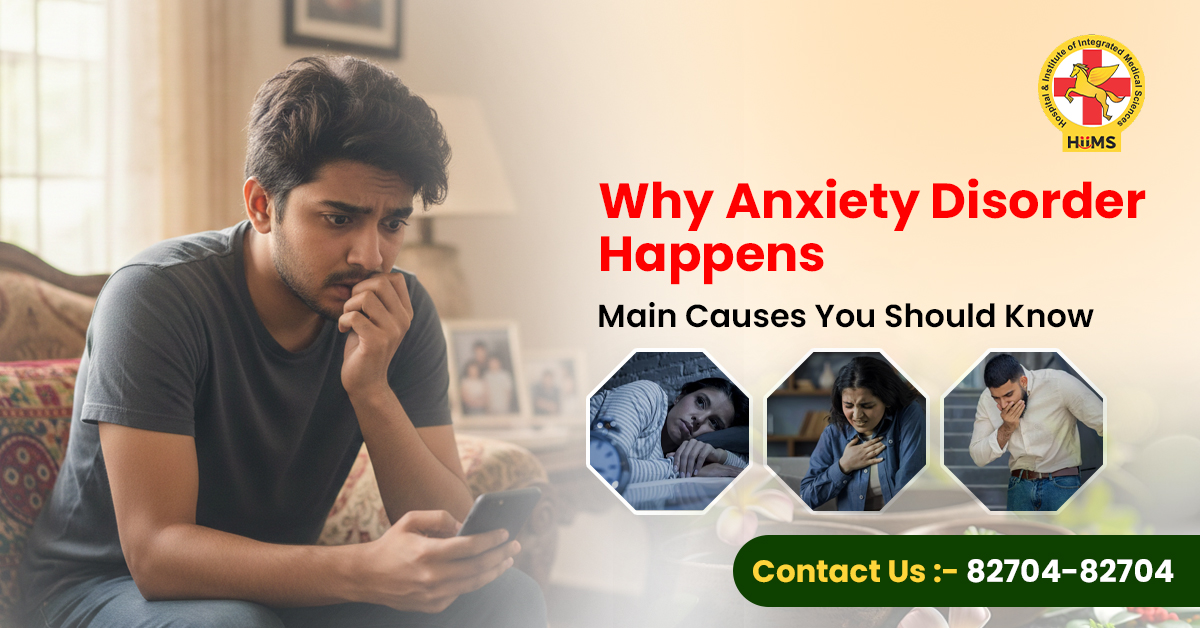
Most people think a busy day or a coming deadline accounts for that jittery or uneasy kind of feeling, yet for many that nervous energy becomes the habitual way of being and slowly reshapes choices, sleep and focus into a narrower life. This blog explains anxiety disorder causes in very simple language so you can recognize signs, understand the forces that keep worry active, and take steps toward relief.
In this we describe what an anxiety disorder looks like compared with normal stress, how the brain and nervous system react, and why diet, routine and past experiences matter. You will read about common physical and mental symptoms of anxiety disorder, the particular signs that appear in social circumstances, and a short self-check that helps clarify whether professional help might be useful.
By the end of this blog, you should feel clearer about the reasons, better knowledgeable to spot warning signals in your daily routine, and ready to consider practical options that restore steadiness.
What Is Anxiety Disorder?
A medical or diagnosed anxiety disorder differs from normal worry because it persists beyond the triggering event, grows disproportionate to circumstances, and slowly changes behaviour and daily rhythm. People with long-standing anxiety find sleep breaks down, attention decreases, and simple actions demand more energy. Understanding what is anxiety disorder helps remove the blame or guilt and opens a path to practical care.
How Anxiety Affects the Mind and Body Together
The brain and body interchange signals constantly, and anxiety shifts that conversation toward alertness; muscles stay tense, digestion slows, and the breath shortens while the mind prepares for worst-case outcomes. That loop of thought and bodily reaction keeps stress active and can make ordinary tasks feel hazardous.
The Main Causes of Anxiety Disorder
In healthcare procedure we see several repeating concepts behind anxiety disorder causes, and knowing them makes it easier to find corrective steps. Naming specific anxiety disorder causes helps both patients and clinicians plan targeted steps.
- Brain and Nervous System Imbalance: An overactive alarm network in the brain can raise baseline vigilance, and neurotransmitter shifts change mood regulation; these biological tendencies shape how strongly someone reacts to everyday pressures.
- Genetic and Family Factors: Families generally share ways of responding to stress; genetics do not decide fate, but they raise sensitivity to fear and introspection.
- Long-Term Stress and Emotional Pressure: Continuous work responsibilities, financial difficulty, or caregiving without breaks steadily weaken handling skills and make anxious responses more likely.
- Past Experiences and Emotional Trauma: Unprocessed losses or early adversity leave traces in memory and habit, and the body can respond to present situations as if danger still exists.
- Lifestyle and Daily Habits: Erratic sleep, endless screen timings and a fluctuating routine keep the nervous system unsteady and invite anxious cycles.
- Diet and Stimulant Overuse: High caffeine, sugar swings and missed meals amplify feelings of unease and interrupt calm, so simple changes to eating can reduce overall reactivity.
Symptoms of Anxiety Disorder You Should Not Ignore
Recognising signs early helps prevent escalation. The list below highlights common symptoms of anxiety disorder to watch for.
- Physical indicators include a racing heart.
- Shortness of breath and digestive upset.
- Mental characteristics show as repetitive negative thinking and trouble concentrating.
- Sleep disturbance and morning fatigue generally occur next.
Social Anxiety Disorder Symptoms: When Fear Becomes Situational
Social settings can trigger a focused fear of judgment that leads to avoidance, visible physical reactions and a sudden mental blank; these social anxiety disorder symptoms block opportunities and increase isolation. Note that these social anxiety disorder symptoms often affect schooling or work performance.
Anxiety Disorder Test: A Simple Self-Reflection Check
Try asking yourself whether worry occupies most days, whether social situations often feel unbearable, whether your body reacts without clear cause, and whether sleep suffers from racing thoughts; this informal anxiety disorder test guides whether to seek a full assessment.
Keep a short record of answers to use in a formal anxiety disorder test if you consult a clinician.
Conclusion
Anxiety need not become a life sentence; understanding anxiety disorder causes gives you a map for change and invites specific action such as improving sleep, moderating stimulants, and seeking therapies that address both body and mind. When we treat triggers early by restoring routine, improving diet, and using calming practices we reduce the chance that worry becomes automatic and disabling.
If repeated worry impacts or limits your days or sleep, a guided assessment helps decide the right steps and steadily regain daily confidence. For personalised support at Jeena Sikho HiiMS, reach out to the team by calling +91 82704-82704 or emailing care@jeenasikho.com to start a recovery plan.

FAQs
Q1: What is an anxiety disorder?
An anxiety disorder is a persistent pattern of excessive worry and physical tension that disrupts daily routines and sleep.
Q2: What are the common symptoms of anxiety disorder I should notice?
Look for a racing heart, restless thinking, muscle tension and sleep trouble mixed with difficulty focusing during the day.
Q3: How do social anxiety disorder symptoms appear in daily life?
Social anxiety disorder symptoms often show as intense fear of judgment, avoidance of gatherings, and sudden blanking under pressure.
Q4: When should I take an anxiety disorder test or seek assessment?
If worry occupies most days, disrupts sleep, or limits activities, consider a structured anxiety disorder test and professional guidance.
Q5: Which factors commonly drive anxiety disorder causes?
Typical factors include brain sensitivity, prolonged stress, personal history of trauma, irregular routines, and stimulant overuse.
