

A dull ache in the leg after a long day, a sore hip that lingers past the weekend, and a shoulder that never quite loosens up. Most people treat these symptoms as the ordinary cost of getting older or pushing too hard at the gym. That assumption is usually right. But every so often, what looks like a stubborn muscle pull or a leftover sports injury is actually something the body is trying harder to recognise.
Bone cancer symptoms can hide behind these everyday complaints for weeks before anyone takes them seriously, partly because bone pain is so common and partly because it hardly arrives with any obvious signs of problems. It just settles in, does not want to fully go away, and slowly starts behaving differently from a normal strain. Knowing where that line sits between a passing ache and a genuine warning sign is what allows people to get checked early instead of waiting it out.
This blog walks through the key signs, the bones most often involved, and exactly when a doctor visit stops having to be required.
What Is Bone Cancer?
Bone cancer happens when cells inside a bone multiply without control, forming a mass that gradually eats into healthy bone tissue. Doctors split this into two situations: primary bone cancer, where the disease starts inside the bone itself, and the far more common case where cancer that started elsewhere, the lungs, breast, or prostate, for example, travels through the bloodstream and settles in the bone later.
That second kind still carries the name of the organ where it began. Either way, any new, persistent change in a bone deserves attention rather than any kind of speculation.
Bone Cancer Symptoms You Should Not Ignore
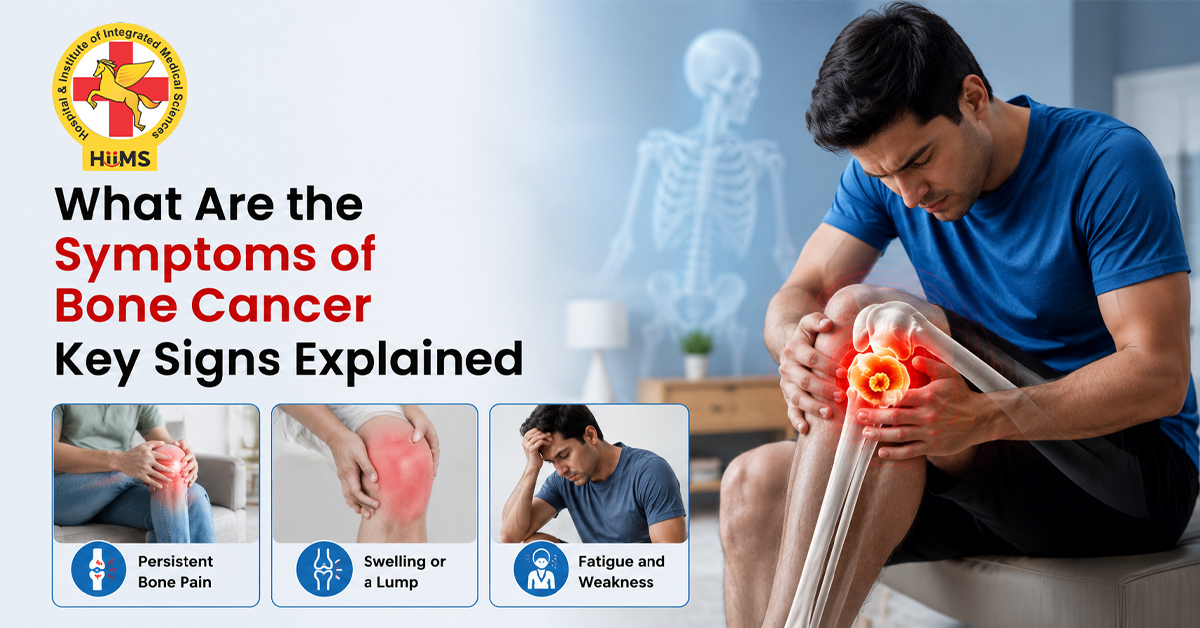
Persistent Bone Pain That Doesn’t Go Away
The most telling of all bone cancer symptoms is pain that refuses to settle down, starting mild and building over weeks rather than days. Unlike a pulled muscle, it tends to get worse at night, and ordinary rest or painkillers do not even provide comfort.
Swelling or a Lump Around the Bone
Many people notice a swelling or firm lump forming near the affected area a few weeks after the discomfort began, with skin that feels warm or looks stretched. This visible change often leads people to finally see a doctor.
Bone Becoming Weak or Breaking Easily
A tumour growing inside a bone can quietly weaken it, so the bone fractures during something as ordinary as standing up or lifting a light object. Doctors call this a pathological fracture, and it is a serious signal precisely because the injury was far too minor to explain a break.
Difficulty Moving a Joint or Limb
If the affected bone sits close to a joint, movement there can start feeling stiff or harder than before. Climbing stairs, raising an arm, or bending a knee fully may start to feel limited without a clear injury to explain why.
Feeling Tired All the Time
A kind of exhaustion that sleep does not fix often accompanies these signs, tied to the body managing ongoing pain, and it tends to remain rather than get up after rest.
Unexplained Weight Loss
Dropping weight without any change in diet or activity is another sign worth attention, since cancer can quietly alter metabolism and dull the appetite, especially when paired with bone pain.
Fever or Night Sweats Along With Bone Pain
A mild fever that keeps coming back or night sweats may not seem important at first. But if they happen along with ongoing bone pain, it is better to speak with a doctor rather than put them aside.
Which Bones Are Most Commonly Affected?
Bone cancer can affect any bone in the body, but it is more often found in the long bones of the arms and legs. It can also develop in the pelvis, shoulder, or spine. Where the tumour develops shapes which symptoms appear first, which is why bone cancer treatment plans are almost never identical between two people.
When Should You See a Doctor?
Certain situations call for a proper medical opinion rather than more waiting: pain lasting several weeks without improving, discomfort that feels worse at night, a swelling that keeps growing, a bone that breaks after a minor injury, or real difficulty walking or using a limb. None of these confirms anything serious alone, but together they justify a timely medical evaluation instead of self-diagnosis.
Conclusion
Bone cancer symptoms can look harmless at first, easy to dismiss as age, overuse, or a forgotten bump. But the body usually keeps repeating its signals when something needs attention, and listening to those signals is more important than waiting for certainty.
Acting early, rather than self-diagnosing from a screen, gives doctors the best chance of identifying the cause sooner. If pain, swelling, or fatigue continue without explanation, a healthcare professional remains the right next step, not another week of watching.
Readers exploring a more integrated approach to bone cancer treatment can learn more about the care available at Jeena Sikho HiiMS. You can also opt for an online video consultation (VOPD) for your health concerns with expert doctors at Jeena Sikho HiiMS.

FAQs
Q1: What are the first signs of bone cancer?
A mild ache in the bone is often the first sign people notice. When it does not improve over the next few weeks and slowly becomes worse, it is best not to ignore it.
Q2: Is bone pain always a sign of bone cancer?
Not really, bone pain is something most people experience at some point, and it is usually related to an injury, overuse, or another common problem. If it stays for weeks or keeps returning, it is worth speaking with a doctor.
Q3: Which bones are affected most often?
Bone cancer can start in any bone. It is seen more often in the long bones of the arms and legs, although it can also affect the pelvis, shoulder, or spine.
Q4: How do I know when bone pain needs medical attention?
If the pain is still there after a few weeks, starts disturbing your sleep, or you notice swelling, unusual tiredness, or weight loss at the same time, do not put off getting it checked.
Q5: Is Ayurvedic care used along with bone cancer treatment?
Some hospitals offer Ayurvedic supportive care alongside conventional treatment. The exact approach depends on the person’s condition and should always be planned with qualified healthcare professionals.