

Ongoing bloating, sense of being full even after eating just a little bit of food, or frequent trips to the bathroom are some symptoms that are often ignored by women. They are usually associated with indigestion, hormonal fluctuations, or stress-related issues. But when these symptoms persist for several weeks in a row, they cannot be simply neglected. Ovarian cancer is also known as a silent disease due to its vague symptoms which are not always easily detectable in the first place. That’s why many women find out about their condition only after it becomes quite severe.
Knowledge of the different stages of ovarian cancer, awareness of the signs of ovarian cancer, and understanding when it’s time to see a doctor are the key factors which can allow making informed choices. Timely ovarian cancer diagnosis will give clear information on the issue.
This blog post aims at describing the different stages of ovarian cancer, discussing the most frequent symptoms and ways to diagnose it, and learning how a holistic treatment method could help with managing the situation.
What Is Ovarian Cancer?
The cancer of the ovary starts developing when the abnormal cells grow uncontrollably in the ovaries. The ovaries are organs that belong to the woman’s reproductive system and produce eggs and hormones.
It is difficult to detect the disease at its initial stages, since many of the symptoms are common for digestive and hormonal diseases. This is one of the factors contributing to the delayed diagnosis of this type of cancer.
Knowing the characteristics of this disease and ovarian cancer stages will enable people to monitor changes in their bodies and consult doctors regarding any persistent symptoms.
Stages of Ovarian Cancer and the Symptoms That Should Not Be Ignored
The Stages of Ovarian Cancer describe how far the disease has spread in the body. As the cancer progresses, the symptoms may also become more noticeable. Nevertheless, some women may fail to have any symptoms during the early stages, which is why ovarian cancer is usually diagnosed in its later stages.
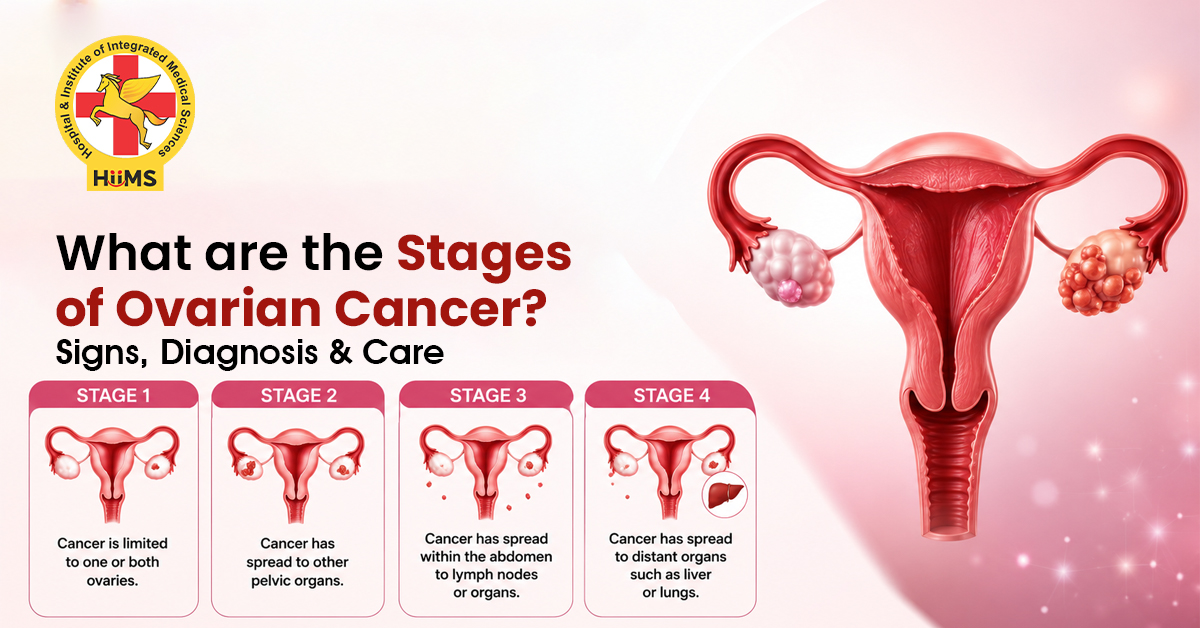
Stage 1 Ovarian Cancer: Cancer Is Limited to the Ovaries
Cancer is contained in one or both of the ovaries and has not spread to any adjacent organ in Stage 1. It is considered one of the early ovarian cancer stages. However, despite that, it might be quite hard to detect, as the symptoms are quite moderate.
The following might be the signs of ovarian cancer during stage 1:
- Mild bloating
- Quick satiety
- Pelvic pain occasionally
- Appetite changes
- Abdominal weightiness
These ovarian cancer symptoms could be confused with those of digestive diseases, thus being ignored.
Stage 2 Ovarian Cancer: Cancer Has Spread Within the Pelvis
At this stage, the disease has spread to nearby pelvic organs, such as the uterus
or fallopian tubes. The symptoms can become more prevalent and harder to ignore.
The common stage 2 signs of ovarian cancer are as follows:
- Pelvic pain
- Bloating
- Urinating frequently
- Constipation or alterations in bowel movement
- Painful sexual intercourse
- Fatigue
- Appetite loss
Since all these symptoms are similar to other illnesses, it is vital to do an ovarian cancer diagnosis properly.
Stage 3 Ovarian Cancer: Cancer Has Spread Beyond the Pelvis
In Stage 3, the disease has spread outside the pelvic region and may involve the abdominal lining or nearby lymph nodes. The symptoms are usually more noticeable during this stage.
Common Ovarian Cancer Symptoms may include:
- Continuous abdominal swelling
- Significant bloating
- Loss of appetite
- Unexplained weight loss
- Severe fatigue
- Persistent abdominal pain
- Difficulty eating normal-sized meals
Many women are diagnosed during this stage because the symptoms start interfering with daily life.
Stage 4 Ovarian Cancer: The Most Advanced Stage
Stage 4 represents the highest degree of all the stages of ovarian cancer, as the disease spreads to the distant organs, for example, the liver or lungs.
Symptoms that could be present at this stage can be the following:
- Extreme weakness and fatigue
- Difficulty breathing
- Pain
- Fluid retention in the abdomen
- Weight loss
- Lowered capacity to cope with the daily tasks
Treatment at this stage is usually aimed at controlling the disease and enhancing the quality of life. In addition to the medical assistance, the majority of people suffering from ovarian cancer at this stage of the disease opt for complementary methods of treatment, which will help them enhance their quality of life and receive proper ovarian cancer care.
Knowledge of ovarian cancer stages and their symptoms can motivate people to turn to doctors.
How Is Ovarian Cancer Diagnosis Done?
The symptoms of ovarian cancer can often look similar to those of digestive issues, hormonal changes, or other gynaecological conditions. Consequently, an accurate ovarian cancer diagnosis is important in case the symptoms persist or recur.
For a better comprehension of the disease, some suggestions by healthcare professionals are:
- The performance of pelvic examination in order to see any abnormalities of the ovaries and the adjacent organs.
- Blood tests, as some blood factors like CA-125, can add information about the disease.
- Ultrasound to make images of the ovaries and the tissues that surround them.
After that, the stages of ovarian cancer are defined by doctors to identify the extent to which the disease has developed and establish a plan for the necessary ovarian cancer care.
Timely diagnosis and paying attention to the symptoms will help detect the disease early and make informed decisions regarding treatment.
Can Ayurveda Support Better Ovarian Cancer Care?
Cancer impacts not only one’s physical health but also the state of emotions, vitality, digestion, and overall quality of life. It is here where Ayurveda offers a more holistic approach to health.
According to Ayurvedic philosophy, health is maintained by well-functioning digestion, appropriate nourishment, and harmony in one’s body. Instead of solely concentrating on the symptom, Ayurveda seeks to assist the body in restoring its health and wellness.
In mm the focus is put on holistic ovarian cancer care according to Ayurvedic philosophy, recommendations concerning healthy lifestyle, adequate nutrition, and wellness approaches.
Possible supportive Ayurvedic practices might involve:
- A healthy and balanced diet
- Effective stress coping strategies
- Physical activities
- Good everyday habits
- Wellness-based treatments
All these practices are aimed at increasing one’s strength and maintaining overall balance and well-being.
Conclusion
Understanding the stages of ovarian cancer is important because it helps patients recognise the seriousness of the condition and seek timely care. Focusing on the early signs, taking proper diagnoses and living a healthy life could contribute significantly towards overall well-being. In addition to that, along with the help of medicine, Ayurveda therapy could prove beneficial to increase physical and mental well-being in the process of recovery.
Jeena Sikho HiiMS is available for consultation with the help of the VOPD consultation service. Contact No.: +9182704-82704; Email: care@jeenasikho.com.

FAQs
- What are the various stages of ovarian cancer?
The disease is usually described according to its four distinct stages that depend on how widespread the cancer has become beyond the ovaries to other parts of the body.
- What are the symptoms of ovarian cancer?
There are a number of symptoms that can be associated with the development of ovarian cancer, such as bloating, pelvic pain, frequent urination, and loss of appetite.
- What are the early ovarian cancer symptoms?
The early ovarian cancer symptoms include bloating, abdominal discomfort, feeling full quickly, and being unusually tired without any reason.
- How can ovarian cancer be diagnosed?
Diagnosis for ovarian cancer involves testing using blood, use of imaging techniques, pelvic exams, and biopsies to confirm the presence of the disease.
- What does ovarian cancer care involve?
Ovarian cancer care may include treatment, dietary considerations, life choices, psychological care, and holistically based well-being practices, among others.