
Hearing the word “cancer” is always overwhelming, but when it involves our bones, it can feel uniquely frightening. Our skeleton is the body’s foundation the strong framework that carries us through every day. When something affects that framework it is natural to feel shaken and worried.
In moments like these, one of the very first questions that comes to mind is Why did this happen? Did I do something wrong?
It is completely normal to look for answers. Fortunately, medical research gives us a clear understanding of how bone health changes occur. Most importantly, primary bone cancer is quite rare and is rarely caused by everyday habits, minor injuries, or simple lifestyle mistakes.
In this blog, we’ll explore how bone cancer actually develops, separate primary and secondary forms, understand the known risk factors, look at early warning signs, and discuss how holistic approaches can support body and tissue recovery.
Primary vs. Secondary Bone Cancer
Before looking at causes, it helps to clear up a common source of confusion: the difference between primary and secondary bone cancer.
Primary Bone Cancer
This means the cancer actually originates directly inside the bone tissue or surrounding cartilage. It is relatively uncommon. Examples include Osteosarcoma (which often affects teenagers and young adults), Chondrosarcoma (which starts in cartilage), and Ewing Sarcoma.
Secondary (or Metastatic) Bone Cancer
This is much more common. It occurs when cancer that starts in another organ such as the lungs, breast, prostate or kidneys spreads through the bloodstream to the bones.
Even though secondary cancer affects the bones, it is named and treated based on where it originally started. Knowing whether a condition is primary or secondary helps doctors choose the right approach to care.
Why Does Bone Cancer Happen?
Our bodies are constantly building new bone cells and breaking down old ones. Our DNA, like an instruction manual inside each cell, controls the process. Sometimes, a mistake occurs in that manual, a DNA mutation.
If the genetic code is damaged, the bone cell violates the rules of normalcy. Rather than growing, dividing and dying on a healthy timetable, the mutated cell starts to multiply uncontrollably. These extra cells join together and form a mass or tumour in the bone tissue.
It is important to know that most of these cellular copying errors happen completely by chance. They are microscopic mishaps during cell division rather than the result of something you ate, drank or did wrong.
Key Risk Factors & Triggers
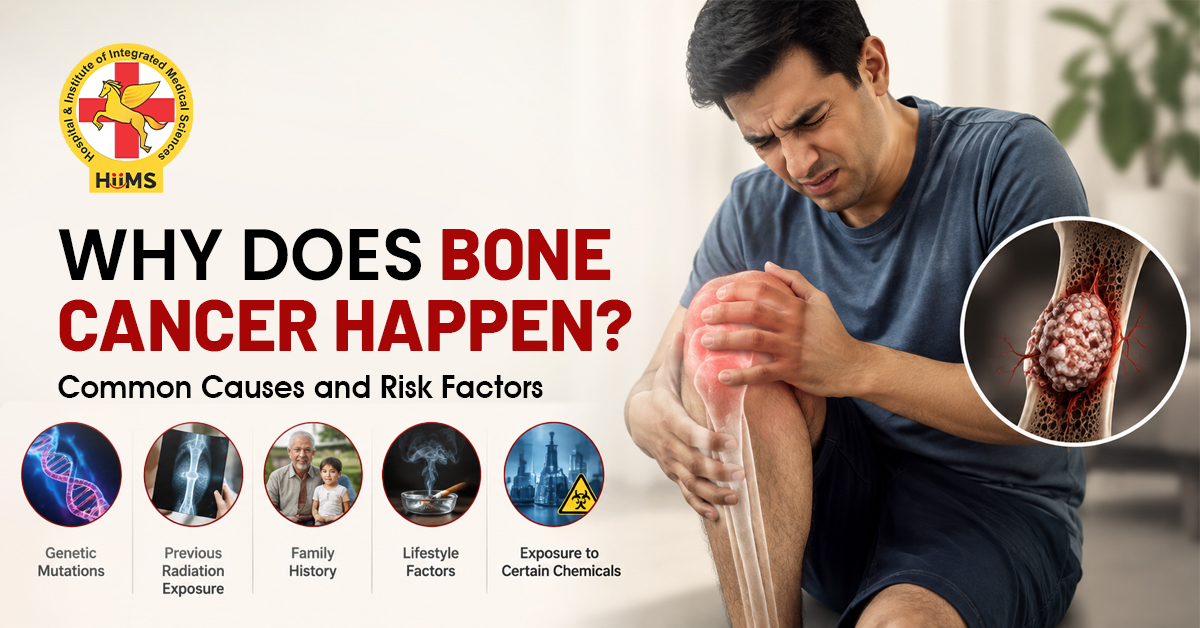
While we cannot point to a single direct cause for most bone tumors, doctors have identified several risk factors that can increase the likelihood of genetic mutations occurring in bone cells
Rapid Bone Growth – During teenage growth spurts, bone cells divide at an extraordinary speed. This rapid growth creates more opportunities for accidental DNA copying errors, which is why conditions like Osteosarcoma occur more frequently in young people.
Inherited Genetic Conditions – A few bone cancers are related to rare gene changes that are passed down in families such as Li-Fraumeni syndrome or Hereditary Retinoblastoma.
Older Radiation Therapy – People who received radiation therapy for an earlier health condition many years ago have a small increased long-term risk of developing a bone tumour in the area that was treated later in life.
Pre-Existing Bone Disorders – Non-cancerous bone conditions that cause abnormal or rapid tissue remodelling, such as Paget’s disease of the bone, can sometimes increase the chance of abnormal cell changes over time.
When to Pay Attention
Recognising how your body feels is essential for catching any health issue early. While many symptoms can be caused by simple strain, arthritis, or minor sports injuries, knowing the key bone cancer symptoms helps you spot when persistent changes deserve a closer look
- Persistent Bone Pain: Deep, aching pain in a specific bone or joint that doesn’t improve with rest, and often gets worse at night
- Swelling or Stiffness: A noticeable lump, tenderness or swelling near a joint or over a bone.
- Unexplained Fractures: A bone breaks unexpectedly from a slight fall or normal daily movement because the internal tissue is weak
- General fatigue: Unexplained weight loss with bone pain and feeling unusually tired.
Having bone pain does not mean you have cancer. However, getting an early evaluation gives you clarity, peace of mind, and the ability to take timely action.
Holistic Care at Jeena Sikho HiiMS
Once health concerns are evaluated, the focus shifts toward restoring balance. In Ayurvedic care the individual is seen as a whole system. It helps to improve metabolism, clear metabolic waste, strengthen tissue health and support the immune system.
Jeena Sikho HiiMS has established itself as a leading Ayurvedic centre for bone cancer treatment.
Instead of relying on a single isolation technique, care at Jeena Sikho HiiMS brings together multiple Ayurvedic and natural therapies working in harmony. Patients receive specialised protocols like Golden Therapy a herbal paste to support cellular rejuvenation. Alongside Panchakarma detoxification to clear blocked channels. This is paired with herbal support, a personalised pH-balanced diet and gentle lifestyle routines.
By bringing external therapies, internal detoxification, natural nutrition, and stress management into one unified care routine, holistic management creates an optimal internal environment for long-term strength and healing.
Conclusion
Understanding why bone cancer happen helps replace fear with clear facts. Most cases are caused by complex changes in cells beyond our control but paying attention to early signs and taking care of your overall health makes a real difference.
If you or any of your family members are suffering from bone cancer symptoms or looking for bone cancer treatment, Jeena Sikho HiiMS offers personalised consultation through their VOPD service. You can connect directly with experienced wellness specialists from home, discuss your health needs and receive a customised care plan tailored to your journey.

FAQs
- Can a past physical injury or broken bone turn into bone cancer?
No. Bumps, bruises, sports injuries and past bone fractures do not cause bone cancer.
- What is usually the first noticeable sign of bone cancer?
Deep, persistent bone pain especially pain that worsens at night or during rest is typically the most common early symptom.
- How does holistic treatment help in bone cancer care?
It focuses on removing metabolic waste, reducing systemic inflammation, boosting natural immunity and providing deep nutritional support to strengthen tissue health.
- What therapies does Jeena Sikho HiiMS provide for bone health?
Jeena Sikho HiiMS offers Golden Therapy, Panchakarma detoxification, Ayurvedic herbs, personalised diet plan and lifestyle guidance.
- How can I consult Jeena Sikho HiiMS for bone care from home?
You can easily book an online consultation through VOPD service from official website to receive expert medical and holistic advice from the comfort of your home.