

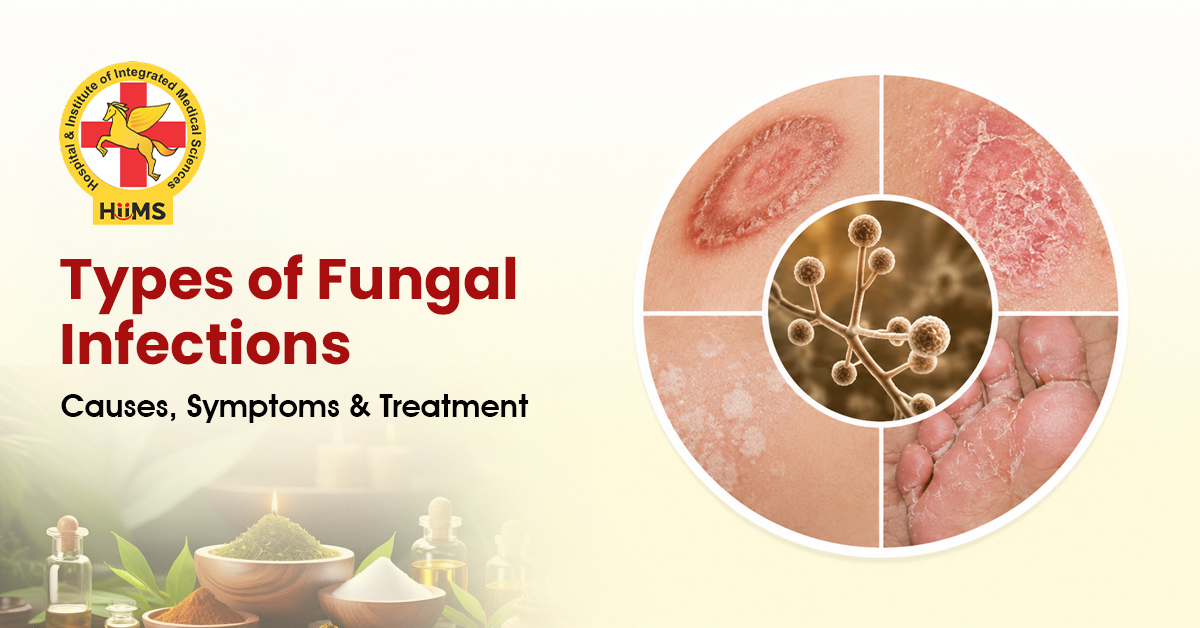
Most people don’t really take fungal infections seriously at first. It usually starts small, with a little itching, some redness, and maybe dry or peeling skin. Easy to ignore. You think it’s just a rash or maybe a reaction to something.
But the thing is, fungal infections don’t just go away on their own every time. In general, they are attracted to places with moisture and warmth, like the folds of your armpit where your body sweats or the region of the skin under long periods of clothing. And if you don’t pay attention early, they can spread or keep coming back.
In this blog, we’ll go through the types of fungal infections, their fungal infection causes, common fungal infection symptoms, and what usually helps in fungal infection treatment in a simple, no-complication way.
What Are the Different Types of Fungal Infections?
Fungal infections typically categorise themselves by which body part is attacked. Some infections tend to restrict themselves to a particular area, while others will spread to nails, hair, the scalp, and even deeper parts of the body. Being aware of different types of fungal infections will also simplify treatment and identification.
1. Skin Fungal Infections
These occur most frequently and involve the outer part of the body’s layer of protection.
- Tinea Corporis (ringworm): It presents itself in the form of circular rings and a raised and red layer. Itching can occur and will slowly grow if left untreated.
- Athlete’s Foot (Tinea Pedis): Common between the toes, especially when feet stay sweaty in closed shoes. Skin may crack, peel, or burn.
- Jock Itch (Tinea Cruris): These rashes form in the skin in the inner thigh areas of groin and lower body. Irritation, friction and moisture from clothes can make the rashes more uncomfortable and acute.
2. Scalp and Hair Infections
The following are common fungal infections that develop on the scalp and head and, in many cases, may influence the growth of hair:
- Scalp Fungus (Tinea Capitis)
Results in the development of circular, dry, scaly spots on the head. In some patients, it may result in baldness and may induce itching.
3. Nail Fungal Infections
These develop slowly and are often ignored in the early stages.
- Nail Fungus (Onychomycosis): Fungus can affect your nails, making them discoloured, thick, or even brittle, and they can lose their normal shape and strength over the course of the condition.
4. Yeast Infections (Candidiasis)
These typically develop when the yeasts become excessive in the warm areas of the body, such as inside any folds.
- Candidiasis (Yeast Infection): Common in skin folds, the mouth, or private areas. It may cause redness, itching, or a burning sensation.
5. Less Common but Serious Infections
Some infections caused by fungi are relatively rare, but can cause more severe effects when ignored.
- Fungal Eye Infection: This infection is capable of affecting the cornea and results in reddened eyes, pain, sensitivity to light, or loss of clear vision. Attention should be paid to the condition.
- The above are just a few of the most common fungal infections encountered by people. Although they might appear insignificant initially, knowing the type early can prevent their spread.
How Do You Recognise Fungal Infection Symptoms?
Regardless of the type of groups involved, the signs and fungal infection symptoms of a typical infection of the skin can appear as follows:
- Itching and burning: a nagging and rather unbearable prickling feel on the top layer of the skin.
- Itching and redness: inflammation and irritation of the skin, which appears reddened.
- Dry and flaky or even cracked skin: skin that is extremely dry and flaky and is cracked.
- Peeling or flaky patches: Layers of the skin peeling up.
- Occasionally, small blisters: Small bubbles filled with liquid on the infected skin.
Should the mentioned symptoms repeat over and over again, then it can be more than a simple skin problem; it might be a skin fungal infection.
What Triggers a Fungal Infection?
Fungal infections don’t just appear randomly. There’s usually a reason behind them.
- Too much sweating, which will lead to warm, fungal conditions.
- Prolonged dampness: Skin remains wet, which provides a growing environment for fungus. Non-breathable and tighter
- Clothing: Which causes trap sweat, allowing air flow to remain minimal, thereby creating a fungal infection conducive environment.
- Neglected hygiene, without thorough drying: Dirty and wet skin is more conducive to infections.
Sharing of items such as towels and shoes transfers fungus via contaminated belongings.
What Actually Helps in Fungal Infection Treatment?
Fungal infection treatment will depend on the severity of the infection.
- When fungal infections are mild, the following can help with mild fungal infections: Most of them will heal if rubbed well with antifungal creams and powders applied regularly and for the prescribed length of time.
- Keeping the affected area clean and dry is very important because moisture allows the fungus to grow and makes the infection worse over time.
- It also helps to avoid tight clothing, change sweaty clothes quickly, and not share personal items, as these small steps can prevent the infection from spreading or coming back again.
One common mistake people make is stopping treatment as soon as symptoms reduce. That often leads to the infection coming back again.
What Are Simple Ways to Prevent Fungal Infections?
Prevention is honestly easier than dealing with repeated infections.
- Be sure to dry yourself as much as possible, especially when sweating, to prevent the damp skin that fungal organisms thrive on.
- If you become damp, change as needed. Sweat will irritate skin, especially when sitting in warm places.
- You do not want to share towels or other intimate accessories with anyone, you know that it can easily transmit infections, such as socks or shoes.
- Change into clothing made of breathable materials, such as those with airflow.
Small habits like these can go a long way in managing fungal skin disease.
Conclusion
Fungal infections may look minor, and in many cases, they are. But ignoring them repeatedly is what turns them into a recurring problem. If redness, itching, or alterations in skin conditions recurrently appear. It is important not to avoid such conditions repeatedly every time. With minimal maintenance and prompt therapy, types of fungal infections might be curable.
Nonetheless, if you’re still in a dilemma concerning such ailments, then consulting an expert would provide a better solution. The Jeena Sikho HiiMS VOPD facility connects you to a trained health care advisor and specialist. Write to us at care@jeenasikho.com. For booking the appointment, call +91-82704-82704.
FAQs
- In which parts of the body does fungal infection develop?
They develop in warm and moist parts of the body, such as under the feet, in the groin area, and in creases of the skin. - Is it contagious?
Some types can be spread via direct contact or personal items. - What is the time required to cure a fungal infection?
The mild types of infections can be healed in a couple of days, while others might take more time. - Can home remedies treat fungal infections?
They may help to give relief for a little bit of time. - When must you see a medical health professional?
If an infection doesn’t go away and/or begins to become worse.