
If you’ve noticed your nails turning yellowish, pitted, or crumbly, it’s easy to mistake it for a fungal infection at first, as most people do. It’s only after a few rounds of antifungal creams that don’t work that they start digging deeper, and that’s usually when nail psoriasis comes into the picture. It’s more common than people realise.
Almost everyone who has psoriasis ends up dealing with some form of nail involvement at some point, and it often shows up quietly, long before or after the skin flares up. This blog is meant to help you make sense of what’s actually happening to your nails, how to tell it apart from a fungal infection, and what real treatment looks like once you know what you’re dealing with.
We’ll also walk through what the best nail psoriasis treatment in Chandigarh looks like when it’s approached the Ayurvedic way, treating the root cause instead of just calming down what’s visible on the surface. If you’re tired of guessing and want a clearer picture before your next doctor visit, this is a good place to start.
How Do You Know It’s Nail Psoriasis?
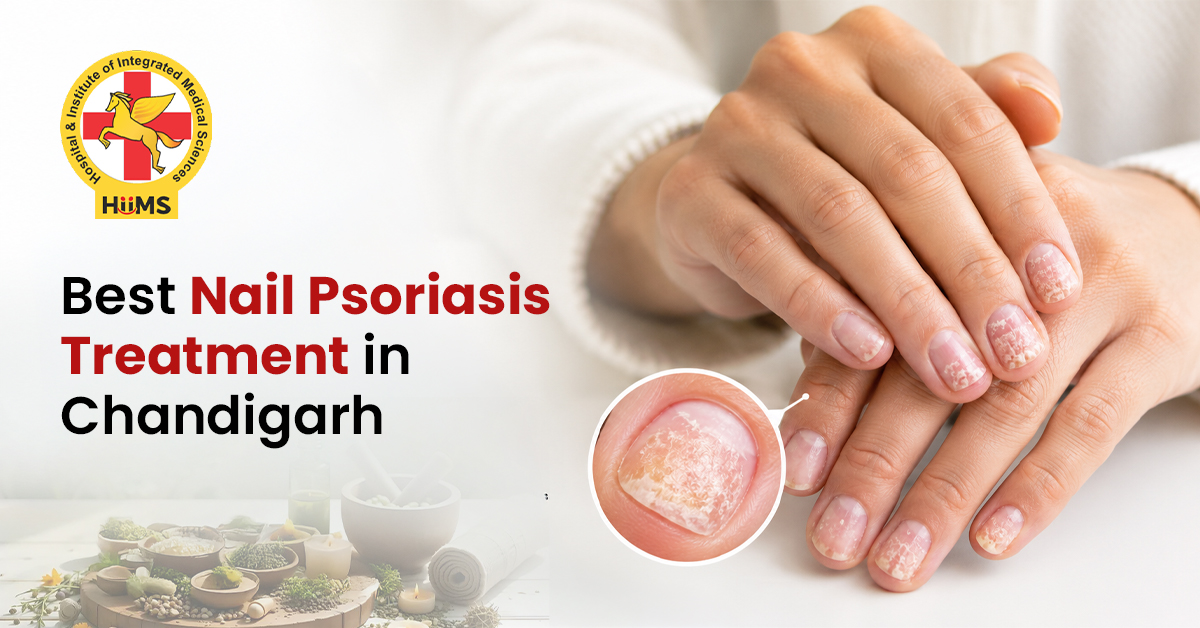
A few signs make it fairly easy to tell apart from a regular nail infection:
- Tiny pits or dents on the nail surface, almost like the nail was pricked with a pin
- Yellow-brown patches under the nail, sometimes called “oil drop” spots
- The nail lifting away from the skin underneath, leaving a hollow, whitish gap
- Crumbling or brittle nails that break easily
- A chalky buildup under the nail that can get uncomfortable or even painful
- Fine reddish or dark streaks running down the nail, caused by tiny blood vessels bursting
If you’re seeing two or three of these together, it’s worth getting it checked rather than guessing.
Why Does Ayurveda Look at It Differently?
Modern dermatology treats nail psoriasis with steroid creams, injections into the nail bed, or in tougher cases, medicines that work on the immune system. These help, no doubt, but they mostly work on the surface, calming the inflammation you can see.
Ayurveda takes a slower, more root-level route to Nail Psoriasis Treatment. Psoriasis, in Ayurvedic thinking, isn’t just a skin or nail problem — it’s a sign that toxins (ama) have built up in the body and the immune response has gone haywire. So instead of only treating the nail, the focus shifts to cleaning up what’s happening internally, the gut, the blood, the metabolism, while also caring for the nail itself.
This is roughly the approach followed at Jeena Sikho HiiMS Chandigarh, an initiative that focuses on treating chronic, lifestyle-linked conditions through a mix of Ayurveda, naturopathy, and diet correction rather than symptom suppression alone. Their Chandigarh-area centre near Zirakpur sees a fair number of psoriasis and nail psoriasis cases, and for genuine Nail Psoriasis Treatment, the approach usually combines a few things:
- Panchakarma-based detox therapies like Abhyanga (medicated oil massage) and Virechana (internal cleansing) to bring down systemic inflammation
- Herbal blood purifiers – neem, turmeric, and Manjistha are commonly used to calm the skin and support nail bed healing
- Nail-specific herbal oils applied directly to soften thickened, brittle areas
- Diet changes tailored to the person, since food plays a big role in how psoriasis behaves in Ayurvedic treatment
What to Expect, Realistically?
One thing worth knowing upfront is that nails grow slowly. Really slowly. Even with the right treatment, it can take 4 to 6 months for fingernails and 12 to 18 months for toenails to fully grow out and look normal again. So patience matters here more than in most skin conditions. There’s also no guaranteed permanent cure for psoriasis in any system of medicine, Ayurvedic or modern, but symptoms can be managed well, and flare-ups can be spaced further apart with consistent care.
Small Habits That Actually Help
Alongside any treatment you choose, a few daily habits make a real difference:
- Keep nails trimmed short so they don’t catch and lift further
- Don’t dig out the debris building up under the nail; it just invites infection
- Skip acrylics, gel nails, and heavy manicures for now; they stress an already weak nail bed.
- Wear gloves for dishwashing, cleaning, or any work involving water or chemicals for long stretches
When to Stop Waiting and See a Doctor?
Nail psoriasis has a strong link with psoriatic arthritis. If you’re noticing joint pain, stiffness, or swelling alongside the nail changes, don’t wait it out; get it looked at soon. Catching that early can prevent joint damage that’s much harder to reverse later.
If you’re currently dealing with nail psoriasis and thinking about an Ayurvedic route, it helps to go in with a clear picture of your case, how long you’ve had it, whether your skin or joints are also affected, and what treatments you’ve already tried. That’s usually the first thing a doctor at a place like Jeena Sikho HiiMS will ask, and it saves a lot of back and forth during the first visit.
Conclusion
Nail psoriasis often looks like a fungal infection, but correct identification makes proper care possible. For the Best Nail Psoriasis Treatment in Chandigarh, choose an approach focused on overall health, not just visible nail changes. At Jeena Sikho HiiMS, patients get personalised, integrated Ayurvedic care for long-term nail wellness. Book a VOPD Consultation from home, call +91 82704-82704 or email care@jeenasikho.com. Stay consistent, and seek evaluation promptly if joint pain accompanies nail changes.

FAQs
- Is nail psoriasis contagious?
It’s your immune system acting up, not a bug you caught, so there’s zero risk of passing it to anyone through touch. - How is it different from a fungal infection?
Fungal infections usually creep in on one nail and spread from there. Psoriasis is a bit different; it tends to show up on the nails and skin at the same time, and you’ll often spot pitting or those yellowish “oil drop” patches, which fungus just doesn’t cause. - Will my nails ever look normal again?
They can, but you’ll need to give it time. Fingernails usually take about 4 to 6 months to grow out fully, and toenails can take up to a year and a half. Slow, but it does happen with the right care. - Does what I eat actually matter?
More than most people expect, especially with Ayurvedic treatment. Cutting back on foods that trigger inflammation and sticking to a diet suited to your body type tends to cut down on flare-ups quite a bit. - What if I also have joint pain?
Joint pain alongside nail changes can be an early warning sign of psoriatic arthritis, and it’s worth getting checked out sooner rather than waiting for it to get worse.