


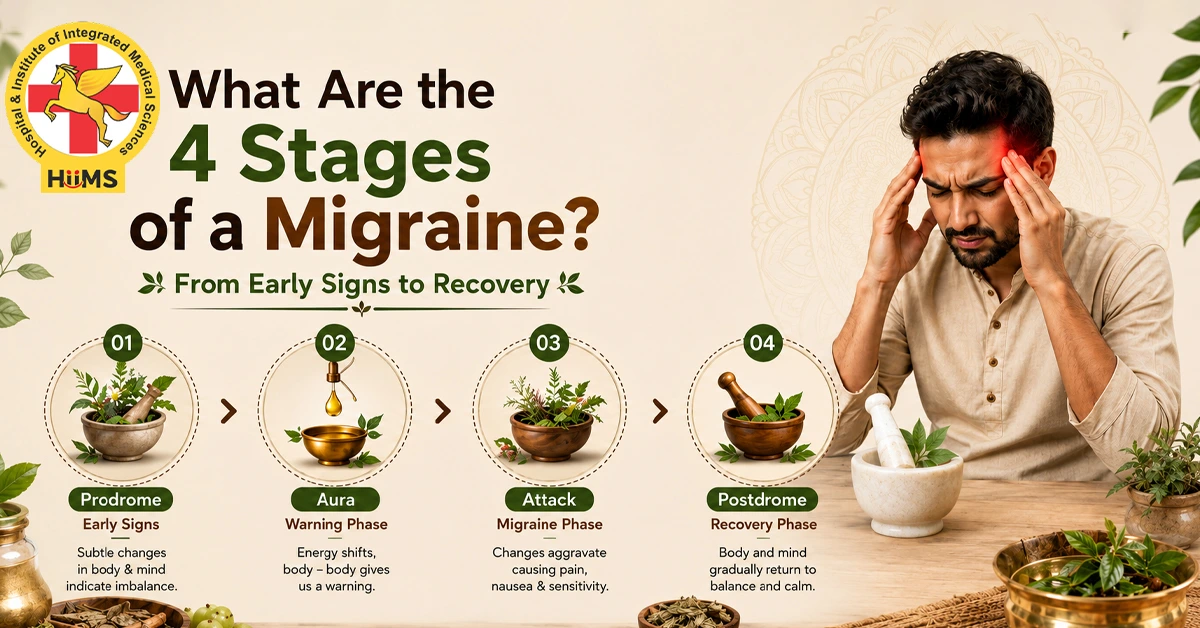
A migraine can cause several symptoms along with head pain. For many people, it begins quietly with small changes in the body or mood and may continue even after the main pain has gone. These changes are not always easy to notice, especially when a person does not know what to look for. Understanding the migraine stages can help a person recognise an attack earlier and take better care of themselves.
A migraine commonly moves through four phases: prodrome, aura, headache and postdrome. However, every person may experience these phases differently. Some people may notice only the headache, while others may experience symptoms several hours or even days before the migraine pain starts. The aura phase is also not present in everyone.
Knowing these phases can make migraine episodes less confusing. It can also help a person notice personal triggers, understand changes in the body and give proper attention to rest, food, sleep and daily routine.
What Are the Different Stages of a Migraine?
The migraine stages describe how an attack may develop from the first warning signs to the recovery period. The four phases are,
- Prodrome
- Aura
- Headache
- Postdrome
Each phase can differ in order and intensity from one person to another. Some people may skip certain phases during a migraine attack.
Stage 1: Prodrome or the Early Warning Stage
The prodrome phase can start hours before a headache and, in some cases, may appear one or two days earlier. It is often difficult to recognise because the symptoms may seem unrelated to migraine.
A person may notice,
- Frequent yawning
- Tiredness or unusual sleepiness
- Mood changes or irritability
- Difficulty concentrating
- Food cravings
- Neck stiffness
- Nausea
- Increased sensitivity to light or sound
- Changes in sleep
- Increased need to urinate
The early signs of migraine can vary from person to person. Some may experience the same symptoms before an attack, while others may not notice any prodrome symptoms. A simple headache diary can be useful for keeping track of these changes.
This is an important stage because the body may already be showing signs that an attack is approaching. Paying attention to these changes may allow a person to rest, drink enough water, avoid known triggers and follow their usual care routine.
Stage 2: Aura and Its Warning Signs
The second phase is called aura, but it may not occur in every person with migraine. Around one quarter to one third of people with migraine experience aura. It usually develops gradually and commonly lasts from a few minutes up to an hour.
Aura can affect vision, sensation or speech. Common experiences include,
- Seeing flashing lights, bright spots or unusual patterns
- Temporary changes in vision
- Tingling or numbness in the face, hand or another part of the body
- Difficulty speaking clearly
- Trouble finding the right words
Vision-related changes are the most frequently experienced aura symptoms. In some cases, aura may happen without the usual headache afterwards.
Because some aura symptoms can look similar to other neurological problems, sudden or unusual symptoms should not simply be assumed to be migraine. New weakness, sudden speech difficulty or sudden loss of vision requires expert attention.
Stage 3: The Headache or Main Attack
For most people, this is the stage that feels like a typical migraine. The pain can be moderate to severe and may occur on one side or both sides of the head. It can feel throbbing or become worse with normal physical activity.
Other symptoms may occur along with the pain, such as,
- Nausea or vomiting
- Discomfort in bright light
- Sensitivity to loud sounds
- Sensitivity to smells
- Dizziness
- Difficulty concentrating
At Jeena Sikho HiiMS, the stages of migraine can be considered while understanding how the condition affects a person. Along with this, an Ayurvedic approach may pay attention to food, digestion, sleep and daily lifestyle.
Stage 4: Postdrome or the Recovery Stage
The headache may stop, but the body may not immediately return to its usual state. This final phase is called postdrome and is sometimes described as a migraine hangover.
A person may feel,
- Very tired
- Weak or drained
- Dizzy
- Mentally foggy
- Less able to concentrate
- Sensitive to movement
- Sore or uncomfortable in the neck and body
Postdrome may last for a day or two, although the experience differs between individuals. Not every migraine episode is followed by this phase.
This stage is often ignored because the main pain has already disappeared. However, recovery is still important. Returning immediately to a stressful routine, skipping meals or getting inadequate sleep may leave the person feeling worse.
How Can You Recognise Your Personal Migraine Pattern?
Every person may experience migraine differently, so knowing your own symptoms can be helpful. Maintaining a simple headache diary allows you to write down what happens before, during and after an episode. It may also help you understand possible migraine causes in your everyday life.
You can record,
- When you sleep and wake up
- What and when you eat
- Long gaps between meals
- Your water intake
- Stressful events
- Menstrual cycle changes, when relevant
- Screen exposure
- Changes in weather
- Foods eaten before an attack
- Early signs and symptoms
- Duration and severity of the headache
As you continue keeping these notes, they may help you recognise a repeated pattern. They can also help a healthcare professional understand your symptoms more clearly.
Can Lifestyle and Ayurveda Support Migraine Management?
The factors linked with migraine can differ from one person to another, so there may not be one common reason. Genetics, sleep changes, stress, hormonal shifts, food habits, and environmental factors may contribute to attacks.
Along with symptom care, daily routine should also be considered. Regular sleep, timely meals, adequate water, light physical activity and relaxation may support overall health.
Ayurvedic care may also focus on digestion, daily routine, food choices, breathing practices, yoga and relaxation according to the individual’s condition. The aim of a natural migraine cure is generally to understand possible triggers, support the body’s balance and reduce factors that may contribute to repeated episodes.
When Should You Seek Medical Advice?
Migraine is only one possible reason for a headache. If you experience a new headache, severe pain or a pattern that is different from your usual episodes, expert guidance should not be ignored. It may also help you understand the right migraine treatment for your symptoms.
Seek immediate healthcare when a headache appears suddenly and severely or occurs with fainting, confusion, seizure, severe weakness, difficulty speaking or sudden vision loss.
An appropriate evaluation can help separate migraine symptoms from other possible causes.
Conclusion
Understanding the migraine stages can help you notice the early signs instead of waiting for severe pain to appear. Prodrome may bring subtle changes, aura may affect the senses, the headache phase brings the main discomfort, and postdrome allows the body to recover. Not everyone experiences all four phases.
At Jeena Sikho HiiMS, a natural approach may consider food, digestion, sleep, routine and individual needs while planning care. If migraine attack episodes are frequent or troubling, you can seek guidance through a VOPD consultation to understand your symptoms and a suitable care approach better.

FAQs
Q.1 What are the four stages of a migraine?
Ans: The four stages are prodrome, aura, headache, and postdrome.
Q.2 Does every person experience all four migraine stages?
Ans: No, some people may experience only one or two stages, while others may go through all four.
Q.3 What symptoms can occur during a migraine attack?
Ans: Nausea, vomiting, dizziness, and sensitivity to light, sounds, or smells may occur during an attack.
Q.4 Can stress contribute to migraine?
Ans: Yes, stress and changes in stress levels can contribute to migraine episodes for some people.
Q.5 Can Ayurveda support migraine management?
Ans: Ayurvedic care may focus on food, digestion, daily routine, yoga, breathing practices, and relaxation according to individual needs.