
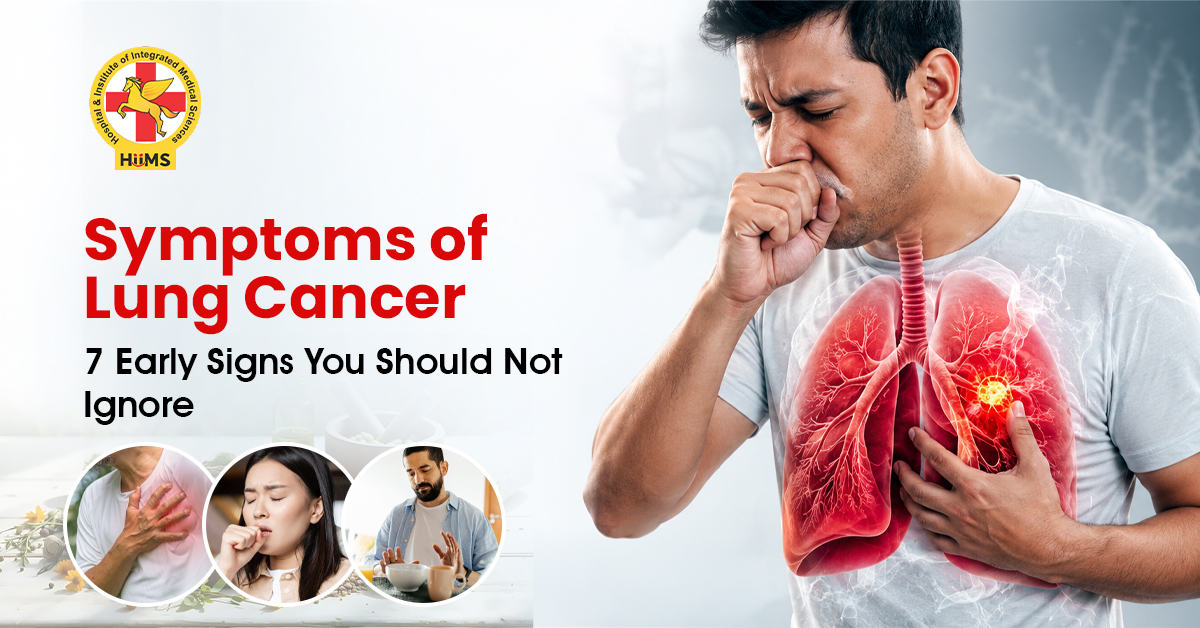
Many people notice a cough, chest discomfort, or tiredness and try to explain it away as stress, dust, or a bad season. That is exactly why lung problems can move ahead quietly while the person keeps waiting for the discomfort to pass. The lungs work nonstop for the body, so even a small change in breathing, voice, energy, or appetite deserves attention when it stays for long. Understanding the early symptoms of lung cancer does not mean living in fear. It means learning when to take a symptom seriously and speak to a doctor at the right time.
In this blog, you will read about the first warning signs, the common types of lung cancer, when to consult a cancer doctor, and how a mindful approach through Jeena Sikho HiiMS Udaipur can fit into the overall health discussion.
What Is Lung Cancer and Why Early Detection Matters?
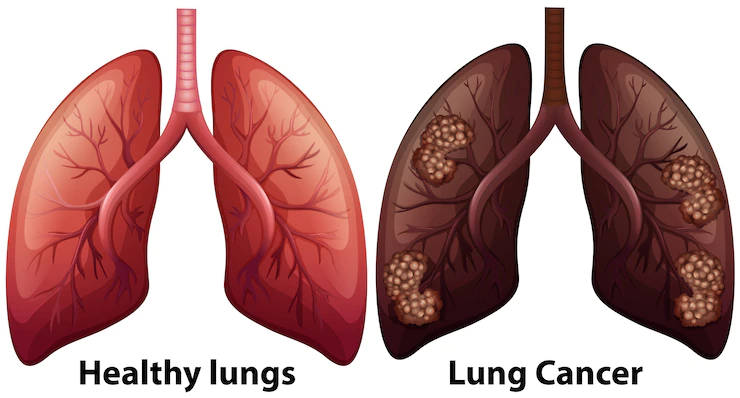
Lung cancer starts when cells in the lungs begin growing in an uncontrolled way. At first, the change can feel small, so many people do not notice it right away. Some symptoms look like a cold, dust irritation, or ordinary tiredness, and that is where delay often begins. The real issue is not only the disease itself, but also the habit of ignoring small body changes for too long. Watching the symptoms of lung cancer early gives a person a better chance to seek help at the right time.
Understanding the Main Types of Lung Cancer
Doctors usually divide types of lung cancer into two main groups: Non-Small Cell Lung Cancer (NSCLC) and Small Cell Lung Cancer (SCLC). Among the two, NSCLC is seen more often in patients, while SCLC is less common but generally progresses at a quicker pace. These types of lung cancer are important because the signs and next step in care can differ.
7 Early Symptoms of Lung Cancer You Should Never Ignore
1. A Cough That Does Not Settle
A cough that stays for weeks or changes in a new way is one of the most common symptoms of lung cancer. If it becomes deeper or more frequent, it should be checked.
2. Breathlessness In Normal Work
You may not think much about your breathing until it changes. Many people notice this change during their daily routine. Tasks they once did comfortably suddenly leave them stopping to catch their breath more often than before.
3. Chest Pain That Keeps Coming Back
If you feel pain in your chest, back, or shoulder more often than usual, and it continues for weeks, it is a good idea to find out what is causing it. It should not be left to speculation.
4. Voice Changes That Last
If your voice turns rough, weak, or hoarse for a long time, it may be more than strain. A lasting voice change can be one of the early symptoms of lung cancer.
5. Chest Infections That Return
Repeated bronchitis or pneumonia can point to a deeper issue when it keeps happening. Frequent infections should be reviewed instead of being treated as “just another infection.”
6. Weight Loss Without Trying
Losing weight without changing food habits can be a warning sign. A poor appetite along with weight loss may show that the body is under stress.
7. Fatigue That Does Not Go Away
Most people feel tired now and then. But when weakness stays for weeks and rest does not make much difference, your body may be asking for a closer look.
When Should You Consult a Cancer Doctor?
A cancer doctor should be consulted when these signs last for weeks, keep returning, or begin affecting normal life. A cough that does not improve, breathing trouble, recurring chest infections, or unexplained weight loss should not be left for later. The earlier a specialist reviews the issue, the clearer the next step becomes.

Can Lifestyle and Ayurvedic Care Support Overall Lung Health?
The small things people do every day, such as eating well, sleeping on time, staying active, and taking care of their routine, can make a difference to overall health. From an Ayurvedic point of view, balance in daily routine is important, and that balance can help a person stay more aware of body changes. This does not replace medical care, but it can sit beside it in a practical way. When people think about lung cancer treatment, they should also think about routine, nourishment, and timely evaluation.
How Jeena Sikho HiiMS Udaipur Supports Holistic Health
Most health concerns do not develop overnight, which is why understanding your body matters. At Jeena Sikho HiiMS Udaipur, attention is also given to the small lifestyle habits that can influence overall health over time. Small changes often become easier to notice when you stay connected to your health, and that awareness can make a meaningful difference over time.
Conclusion
The body often gives small warnings before a bigger problem becomes obvious, and that is why symptoms of lung cancer should never be ignored or put aside. A cough that lasts, shortness of breath, chest pain, hoarseness, repeated infections, weight loss, and ongoing fatigue may point to different issues, but they still deserve attention. Early checking brings more clarity and gives doctors a better chance to guide the next step in time.
If these changes are staying with you, do not wait for them to settle on their own. If you would like professional guidance, you can book an online video consultation (VOPD) with the doctors.

FAQs
Q1. What is the first sign people usually notice?
Ans. A cough that stays for a long time is one of the earliest warning signs many people report.
Q2. Can lung cancer appear in non-smokers?
Ans. Yes, it can also be linked with pollution, passive smoke, genetics, and other exposures.
Q3. Are repeated chest infections always serious?
Ans. Not always, but infections that keep returning should be reviewed by a doctor.
Q4. When should breathing trouble be checked?
Ans. Breathing trouble should be checked when it starts affecting normal daily work or does not improve.
Q5. How does a doctor confirm the cause?
Ans. A doctor may suggest scans, tests, and other checks to understand what is causing the symptoms.