
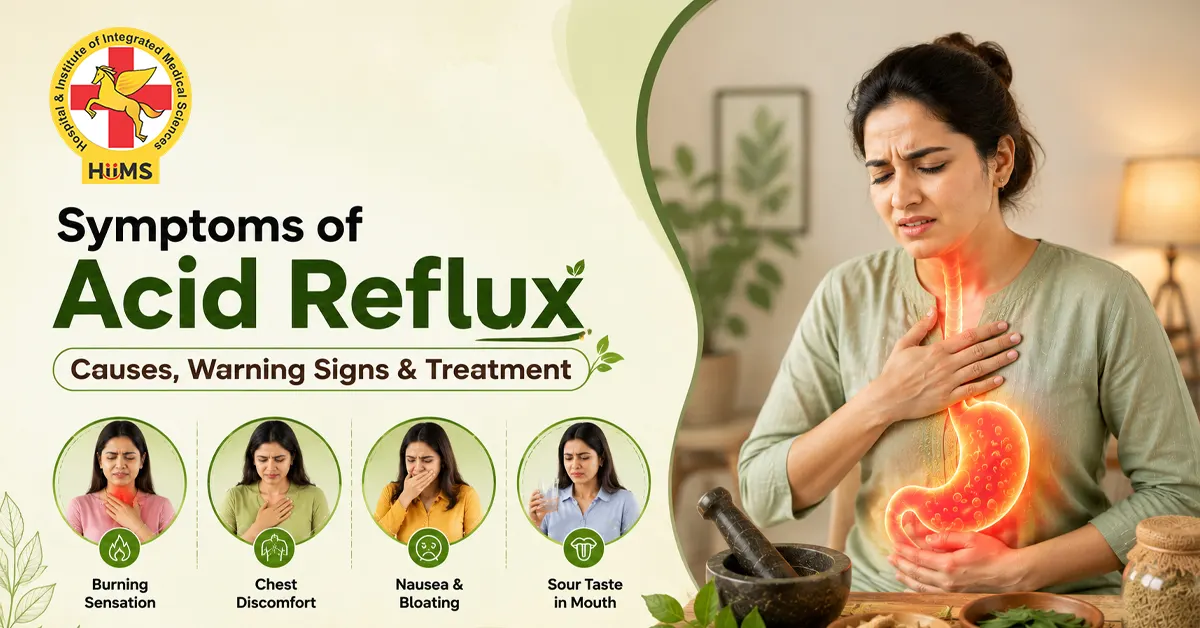

That burning sensation creeping up your chest after a heavy or spicy meal, most people brush it off as a one-time thing until it starts happening more often than they’d like. Recognising the actual symptoms of acid reflux early genuinely helps you understand whether you’re dealing with an occasional annoyance or something that needs proper attention.
This blog breaks down what acid reflux actually is, the warning signs worth taking seriously, and how Ayurveda approaches treatment through digestion and Pitta balance.
What is Acid Reflux, and How Is It Different From GERD?
Acid reflux happens when stomach acid flows back up into your food pipe, or oesophagus, because the muscle meant to keep it down, the lower oesophageal sphincter, doesn’t close properly.
Most people experience this occasionally, and it’s genuinely nothing to worry about in isolated instances. When it starts happening twice a week or more, over several weeks, it’s classified as GERD, or gastroesophageal reflux disease, a more chronic, mechanical version of the same problem.
Symptoms of Acid Reflux You Shouldn’t Ignore
The symptoms of acid reflux go beyond just a burning chest. Watch for:
- A burning sensation behind the breastbone, commonly known as heartburn
- Regurgitation, where stomach contents or an acidic taste come back up into your throat or mouth
- Difficulty or pain while swallowing, especially with solid food
- A chronic cough, hoarseness, or a persistent sensation of a lump in your throat
- Nausea, particularly after meals
Not everyone with acid reflux experiences classic heartburn, either; some people only notice the throat and cough-related symptoms, which often get mistaken for something else entirely.
Heartburn Symptoms: The Most Common Sign
Among all the symptoms of acid reflux, heartburn tends to be the most recognisable, a burning feeling rising from the lower chest toward the throat, often worse after eating, bending over, or lying down.
Some people also notice a sour or acidic taste in the mouth alongside it. It’s worth knowing that heartburn symptoms can sometimes feel remarkably similar to chest pain from a heart problem, which is exactly why sudden, severe chest pain should never be assumed to be “just heartburn” without proper evaluation.
Acid Reflux Causes: What’s Actually Behind It
A combination of factors typically contributes to acid reflux causes:
- A weakened lower oesophageal sphincter sits at the centre of it usually, that muscle simply does not close the way it should.
- Beyond that, eating big meals or lying down right after eating gives acid an easy path upward.
- Extra weight adds pressure on the stomach that pushes things in the wrong direction too.
- Smoking, alcohol, spicy or fried food, all of these irritate an already struggling system further.
- Pregnancy brings its own version of this, hormones shifting alongside literal physical pressure on the stomach.
- Even posture matters more than people expect; slouching for hours at a desk genuinely worsens symptoms for a lot of people.
Warning Signs That Need Immediate Medical Attention
Most acid reflux really isn’t dangerous. But a few signs change that entirely:
- Severe, unexplained chest pain, especially with shortness of breath
- Vomiting blood or passing black, tarry stools
- Difficulty swallowing that’s getting progressively worse
- Unexplained, drastic weight loss alongside frequent heartburn
- Symptoms that don’t improve despite two weeks of over-the-counter antacids
Chronic, untreated acid reflux can gradually damage the oesophagus lining, leading to complications like oesophagitis or, in some cases, a condition called Barrett’s oesophagus, which carries its own long-term risks, another reason not to dismiss persistent symptoms.
When Should You Actually See a Doctor?

Two weeks of antacids with zero improvement, that’s usually the line. Same goes if symptoms are showing up more often or hitting harder than before.
At that point, self-managing stops making sense. A doctor might send you to a gastroenterologist, and depending on what’s going on, an endoscopy could come next, mostly to rule out anything else hiding behind similar symptoms.

Acid Reflux Treatment Through Ayurveda: How Pitta Plays a Role
Ayurveda points to aggravated Pitta here, the energy behind digestion and metabolic heat in the body. Push Pitta past its natural balance, and digestive fire stops being steady; it turns excessive instead, which is exactly where that burning, acidic quality behind heartburn comes from.
So acid reflux treatment through this lens isn’t really about neutralising acid for a few hours. It’s about cooling the system down and fixing digestion at the root instead.
Jeena Sikho HiiMS Udaipur: Ayurvedic Support for Acid Reflux
Treatment at Jeena Sikho HiiMS Udaipur starts with actually understanding someone’s digestive pattern and where their Pitta has tipped out of balance, not a fixed plan handed to everyone walking in. Amalaki and Yashtimadhu (licorice) show up often, both traditionally used to soothe the digestive lining and calm excess acidity. Diet shifts too, cooling, easily digestible food replacing spicy, fried, or overly sour meals.
Some cases bring in Virechana, a gentle Panchakarma purgation therapy, specifically to clear out excess Pitta where it’s genuinely needed. And then there’s the daily stuff, smaller and more frequent meals, not lying down right after eating, managing stress, since Ayurveda ties emotional balance to digestion just as tightly as food itself.
Conclusion
Catching the symptoms of acid reflux early, understanding what’s actually triggering yours, and knowing when something’s crossed into “needs a doctor” territory, all of this matters more than people give it credit for.
If you’re in Udaipur and want a more personalised, Ayurvedic route for managing acid reflux alongside proper medical guidance, the team at Jeena Sikho HiiMS Udaipur can talk you through what that would actually look like for your case.
FAQs
Q1. Is occasional heartburn basically the same as GERD?
Ans. Not quite. Occasional heartburn is common and mostly harmless. GERD gets diagnosed once reflux starts happening twice a week or more, over several weeks straight.
Q2. Can acid reflux actually feel like a heart attack?
Ans. It genuinely can; the chest pain overlaps enough that sudden, severe chest pain should never get written off as “just heartburn” without getting checked.
Q3. Which foods tend to make acid reflux worse?
Ans. Spicy food, fried food, anything acidic, large meals, alcohol, all the usual suspects show up here consistently.
Q4. How does Ayurveda’s take on acid reflux differ from the standard explanation?
Ans. Comes down to aggravated Pitta and too much digestive heat in Ayurveda’s view, so treatment leans toward cooling the system rather than just blocking acid production.
Q5. At what point should antacids stop being the answer?
Ans. Two weeks in with no real improvement, or symptoms getting worse instead of better, that’s when it’s time to see a doctor instead of grabbing another bottle.