
Feeling tired or short of breath now and then is normal. Most of us blame work, stress, or age and move on. But sometimes, these small changes are the first hint that the heart is not working as well as it should.
Heart problems are becoming more common in India. A study by Huffman and Prabhakaran in the National Medical Journal of India estimates that 1.3 to 4.6 million people in the country live with heart failure. Busy routines, stress, poor food choices, and lack of exercise are some reasons this number keeps rising.
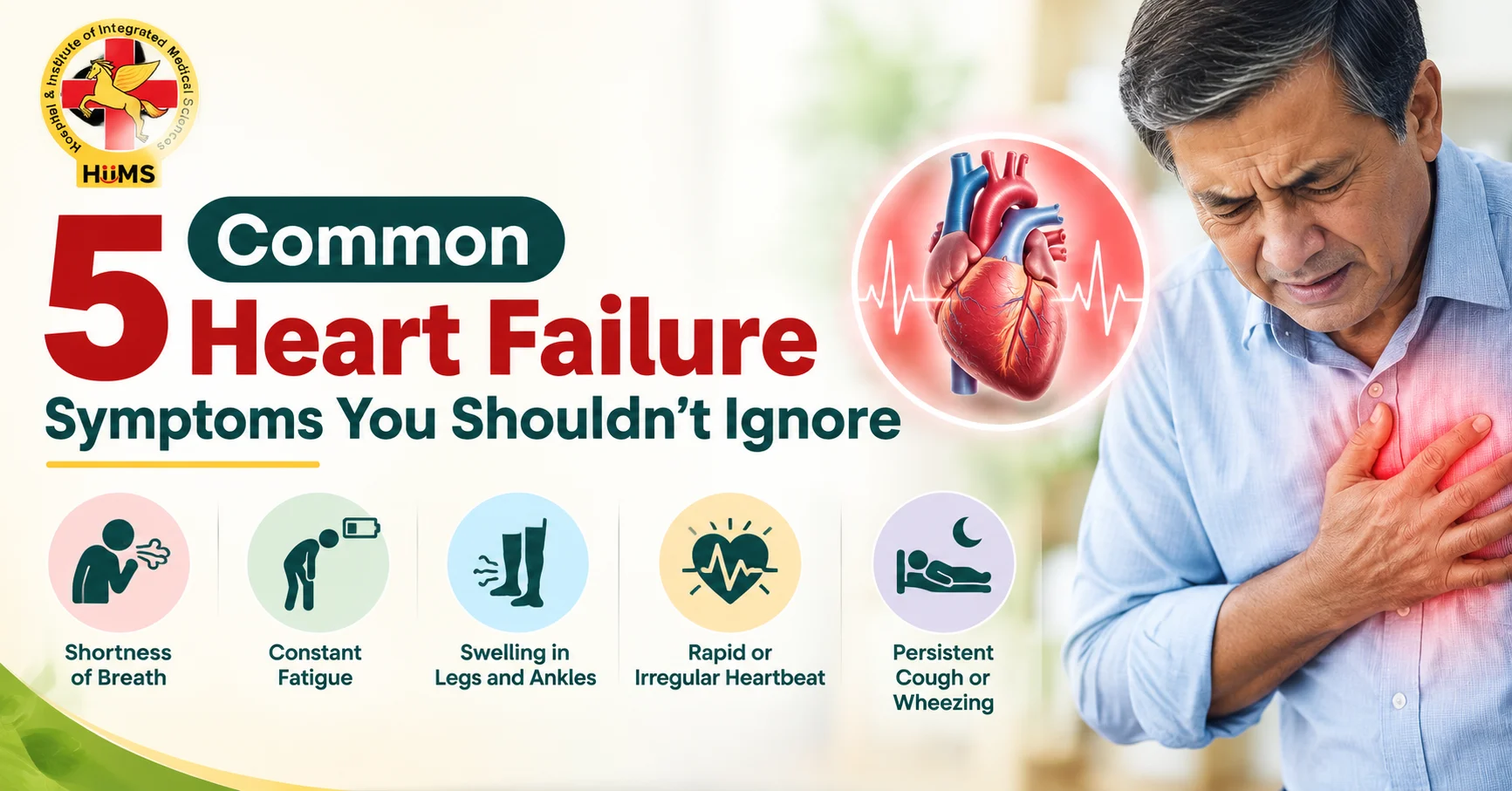
The tricky part is that heart failure symptoms often build up slowly, so people get used to them. Learning the early signs of heart failure can help you act in time. In this blog, we cover five common signs you should never ignore.
Why Heart Failure Symptoms Are Easy to Miss
Heart failure does not mean the heart has stopped. It means the heart is too weak to pump blood well. As a result, the body does not get enough blood and oxygen.
This usually happens slowly, so people get used to the changes. You may think you are just out of shape when stairs leave you breathless. You may blame a long workday for your tiredness.
However, these heart health symptoms should not be ignored. The sooner you notice them, the sooner you can get help.
The 5 Heart Failure Signs to Watch For
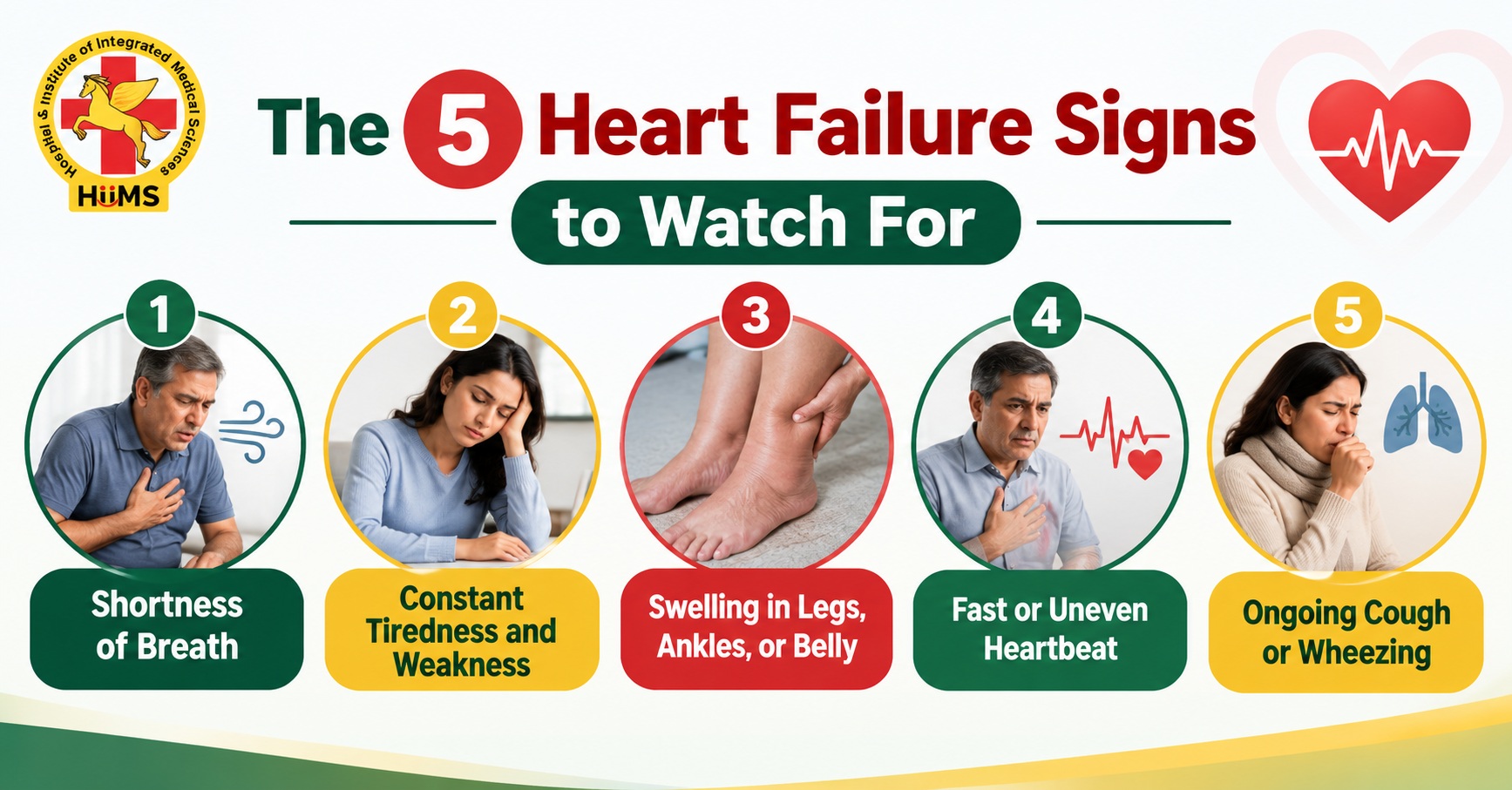
Here are the common symptoms of heart failure that many people overlook.
1. Shortness of Breath
You may feel breathless while walking, climbing stairs, or even resting. Some people wake up at night gasping for air. Others cannot lie flat. This happens when fluid backs up into the lungs.
2. Constant Tiredness and Weakness
Tiredness that does not go away after rest is a warning sign. When the heart pumps less blood, the muscles get less energy, at that time even simple tasks may start to feel hard.
3. Swelling in Legs, Ankles, or Belly
A weak heart can cause the body to hold extra fluid. This is called edema. You may notice tight shoes, puffy feet, or a swollen belly.
Did you know? If a finger press leaves a dent in the swollen skin it is called pitting edema. It is a common sign of fluid buildup.
4. Fast or Uneven Heartbeat
The heart may beat faster to make up for weak pumping. You may feel it racing, fluttering, or skipping beats. If such an event happens often, get it checked.
5. Ongoing Cough or Wheezing
A cough that keeps coming back, especially at night, may come from fluid in the lungs. Some people also cough up white or pink-tinged mucus. Many mistake the symptoms for a cold or allergy.
If you notice more than one of these heart failure symptoms, see a doctor soon.
How These Signs Connect to Congestive Heart Failure
You may hear doctors say “congestive heart failure.” Congestive means fluid builds up in the body. That is why swelling, breathlessness, and cough are the main signs of congestive heart failure.
Not everyone has all the signs. Some people notice only one or two at first. So, look at the full picture and do not ignore any single change. Had swelling or breathlessness for more than a few days? Do not wait. Speak to our Heart Care Expert Today.
Conventional Treatment: What It Does and Where It Falls Short
Modern treatment usually includes medicines, a low-salt diet and regular check-ups. Water pills remove extra fluid. Other medicines help the heart pump better. These are important and help many patients.
However, medicines mainly control the condition. Many people also want support with daily habits such as diet, stress, and sleep. These habits affect the heart every day. This is where lifestyle care and heart disease prevention play a big role.
An Ayurvedic View of Heart Health
Ayurveda focuses on balance. It looks at food, daily routine, stress, and sleep together. It believes a healthy heart depends on all of them.
Some research has started to look at this. A study by Sane and Mandole, published in the Journal of Ayurveda and Integrative Medicine in 2018, tested a Panchkarma-based therapy in people with chronic heart failure and low ejection fraction. The therapy used oil massage, steam, and other procedures. After 90 days of follow-up, the authors said it may help as part of ongoing care.
This was an independent study, and more research is still needed. Still it shows that doctors are exploring how Ayurveda can support heart care.
How Jeena Sikho HiiMS Udaipur Approaches Heart Care
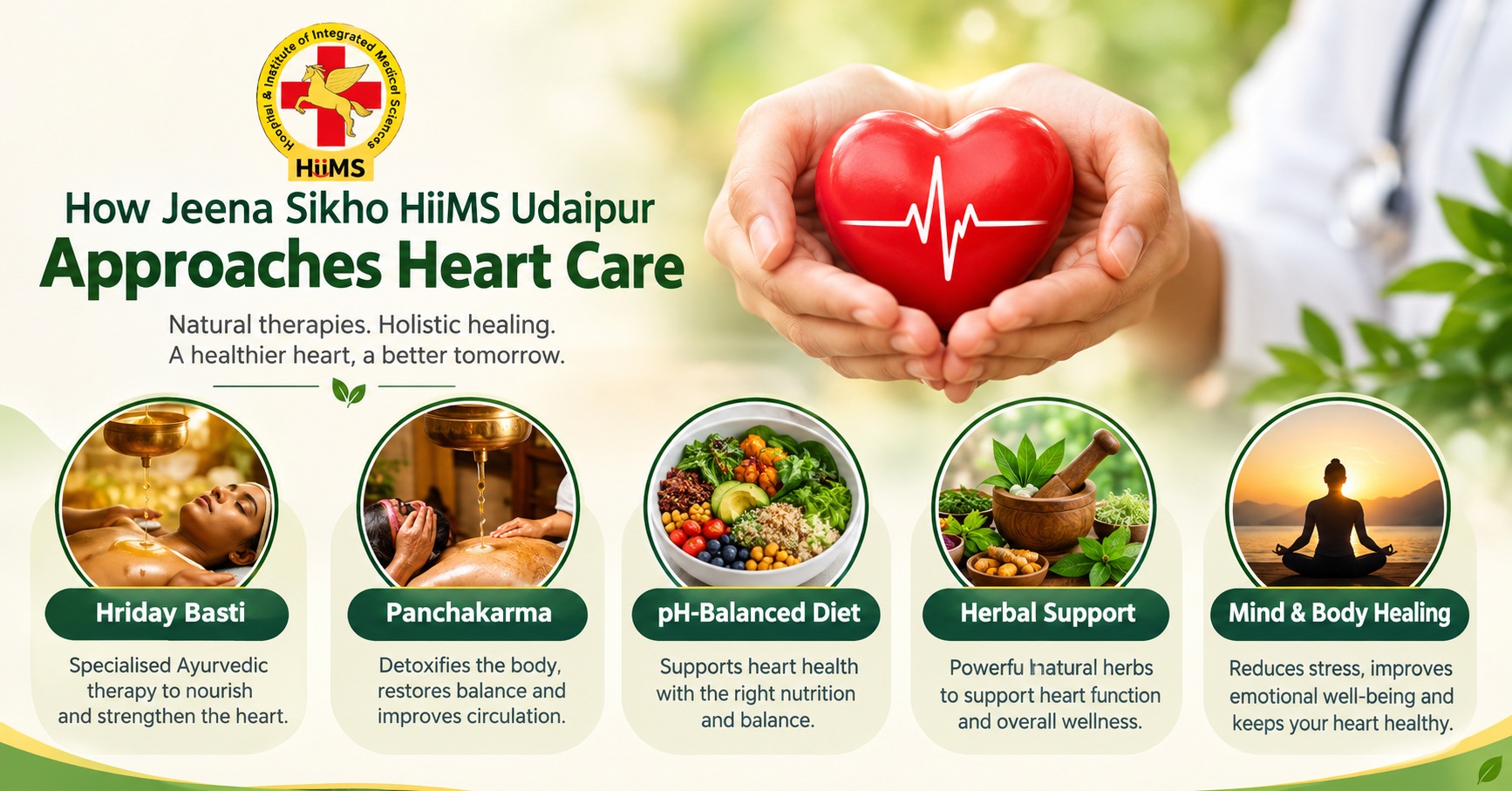
Jeena Sikho HiiMS Udaipur is an integrated care hospital that combines Ayurveda, Naturopathy, diet & lifestyle guidance to heal the problem from the root. At HiiMS, care is built around the whole person not just the symptoms. Ayurvedic therapies are combined with diet and lifestyle guidance. The main parts of this approach are:
- Hriday Basti: Warm medicated oil is kept on the chest area. It is traditionally used to support the heart and ease stress.
- Panchakarma: Ayurvedic body detoxification therapies that are traditionally used to support overall health.
- pH-Balanced Diet: Simple meals planned to keep the body’s acid-alkaline balance in check.
- Herbal Support: Ayurvedic herbs traditionally used to support heart and body strength.
- Mind & Body Healing: Calming practices like yoga, breathing exercises (pranayama) and meditation to reduce stress.
Every plan is made after a doctor checks the patient. Results can differ from person to person.
Conclusion
Your heart works for you every second, keeping it healthy is essential for lasting wellness. When it gives signs, listen. Shortness of breath, constant tiredness, swelling, a fast heartbeat, and a lasting cough, together they can point to heart failure.
Talk to a doctor if you notice any changes in your body. Small daily habits also matter like eating simple, balanced meals, managing your stress, sleeping well and staying active. These habits support heart disease prevention and overall health.
Visit Jeena Sikho HiiMS Udaipur for expert care, Want to know if this approach is right for you? Book Your Consultation with Jeena Sikho HiiMS experts today!
FAQs
Q1. What are the first signs of heart failure?
Ans. Shortness of breath, constant tiredness and swelling in the feet or ankles are often the first signs. They usually start mild and slowly get worse.
Q2. Can heart failure be cured?
Ans. Heart failure is a long-term condition so it usually needs ongoing care. With proper treatment and healthy habits many people manage it well.
Q3. Is breathlessness always a sign of heart failure?
Ans. No. Asthma, anemia or a lung problem can also cause it. If it keeps happening, a doctor can find the real cause.
Q4. What is the difference between heart failure and a heart attack?
Ans. A heart attack happens when blood flow to the heart is suddenly blocked. Heart failure means the heart is too weak to pump blood well and it often develops slowly.
Q5. When should I see a doctor?
Ans. See a doctor if you have swelling, breathlessness, or tiredness that lasts for days. Get help right away if you have chest pain, fainting, or severe trouble breathing.