
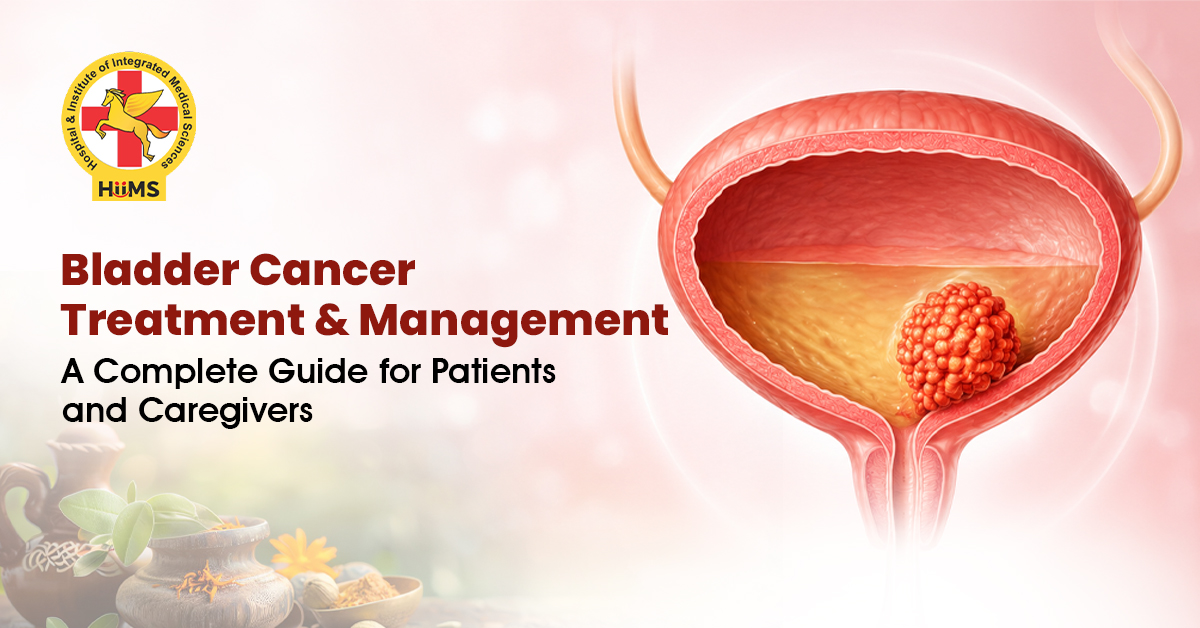

Bladder cancer is something many people have heard about but still do not fully understand. It usually begins slowly in the bladder and may not show clear signs in the early stage. Because of this, people sometimes ignore early changes in the body. Over time, it can affect daily comfort and routine in different ways.
Bladder cancer treatment is not only about handling the condition but also about supporting the body during the whole journey. Patients and caregivers both need simple and clear guidance so they can make better decisions step by step. In hospitals like Jeena Sikho HiiMS, the focus is often kept on understanding the body deeply and improving internal balance through natural ways.
This guide is written in a very simple manner. It explains the signs, care approaches, and daily management ideas. It works as a bladder cancer patient guide that may help patients and families feel a little more prepared and less confused while dealing with this condition.
Understanding Bladder Cancer
Bladder cancer begins when some cells inside the bladder start growing in an unusual way. These cells slowly affect the normal working of the bladder.
Many times, the condition grows quietly. People may not notice anything serious at first. That is why awareness becomes important.
Common Signs You Should Not Ignore
Some signs may look small in the beginning, but they can still be important. They should not be ignored, as early attention can help in a better understanding of bladder cancer symptoms and treatment.
Early Changes
- Blood in urine
- Burning feeling while passing urine
- Frequent urge to urinate
- Mild lower abdominal discomfort
Later Changes
- Pain in the lower back
- Weakness or tired feeling
- Difficulty in urine flow
These signs do not always mean something serious, but they still need proper attention and care.
How Daily Routine Affects Recovery
When someone is going through this condition, the body becomes weaker from the inside. Digestion, energy, and natural balance may get disturbed.
Bladder cancer management is not just about one step. It includes the daily care, proper routine, and understanding what the body is trying to say.
Simple changes in lifestyle can slowly make a difference. Even the small steps help when done regularly.
Bladder Cancer Treatment Approaches
Bladder cancer treatment often focuses on supporting the body and maintaining internal balance. The aim is not only to manage symptoms but also to keep the body strong.
Natural Supportive Therapies
At Jeena Sikho HiiMS, care usually follows a simple and natural path. The focus is on helping the body feel lighter and more stable from the inside.
1. Panchakarma Therapy
This method focuses on gentle cleansing of the body. It works slowly and allows the body to reset in a natural way.
Benefits:
- Lightness in the body
- Improves digestion process
- Brings balance inside
- Gets the body ready for further care
2. Golden Therapy
A mix of herbal leaves is used in paste form and softly pressed through the soles of the feet. These therapies are done carefully and are often included as part of the supportive bladder cancer treatment options that focus on the overall balance.
Benefits:
- Supports better blood flow
- Helps relaxation
- Assists natural detox through the skin
- Creates a calming effect
3. Cancer Detox Juice
Juices made from green leaves, herbs, and vegetables are given regularly. These are simple and natural.
Benefits:
- Helps maintain daily energy
- Supports digestion
- Adds nutrients
- Keeps hydration level good
4. Therapeutic fasting
A fixed eating schedule is followed. Food is taken at proper times to give rest to digestion.
Benefits:
- Gives rest to the digestive system
- Supports internal cleaning
- Keeps energy balanced
- Helps the slow recovery process
5. Personal Care Planning
Each person gets a different plan depending on their condition; there is no fixed routine for everyone.
Benefits:
- Makes care easy to follow
- Tracks progress better
- Keeps routine simple
- Supports steady improvement
These steps are often part of a long-term approach in bladder cancer care, where patience and consistency play a big role.
Small Lifestyle Changes That Make a Difference
Living with this condition needs some small changes in daily habits. These may look simple, but they help the body stay steady over time.
- Start the day early with a routine
- Choose simple and light meals
- Avoid stress as much as possible
- Stay active in a balanced way
- Keep your thoughts calm
These small habits, when followed daily, can support the body slowly.
Importance of Caregivers in Daily Care
Caregivers play a very important role in daily care. They support not only the physical needs but also the emotional well-being during this time. Their presence can make the journey feel a little easier.
- Give support without creating pressure
- Help maintain a simple daily routine
- Keep communication clear and easy
- Stay patient in all situations
Sometimes, emotional support works more than anything else. It also helps patients stay positive, which may indirectly influence overall well-being, including factors linked with bladder cancer survival rate.
Conclusion
Bladder cancer is not just a physical condition. It affects daily life, emotions, and overall routine. That is why care should not be rushed or confusing. A simple and steady approach helps more in the long run.
Bladder cancer treatment works better when the body is supported from the inside. Natural routines, proper eating habits, and a calm lifestyle together create a base for improvement. At Jeena Sikho HiiMS, this kind of balanced thinking is often followed, where focus stays on the long-term comfort and internal strength.
If things feel unclear or repeated, understanding your condition better can help. A VOPD consultation can be considered to guide the next steps in a more personal way.

FAQs
Q1. What is bladder cancer?
It is a condition where bladder cells grow abnormally.
Q2. What are the early signs?
Blood in urine and frequent urination are the common signs.
Q3. What is the bladder cancer patient guide?
It is simple information for patients and families.
Q4. What does bladder cancer care include?
It includes daily routine, food habits, and overall body support.
Q5. What kind of food should be avoided?
Heavy, oily, and processed food should be avoided.