

Bladder health is something many people do not think about daily. But small changes in the body can sometimes show deeper issues. One such condition is bladder cancer, which often begins quietly. The body gives signals, but they are easy to ignore or misunderstand.
In many cases, people confuse these changes with common urinary problems. That is why knowing the early signs of bladder cancer becomes important. It does not mean every symptom is serious, but ignoring them for a long time may not be right.
Hospitals like Jeena Sikho HiiMS often talk about understanding body signals in a natural and aware way. This approach helps people notice changes early and take better care.
This article explains some common signs and patterns. The aim is not to create fear, but to build simple awareness because early attention can make a big difference later.
Understanding Bladder Health and Related Changes
The bladder is a part of the urinary system. It stores urine before it leaves the body. When it works properly, the process feels normal and smooth.
But sometimes, changes begin to appear. These changes may be small in the beginning. A person may feel slight discomfort or a change in routine but not think much about it.
Over time, these small signals may become more noticeable. That is where attention becomes important. Not every change means something serious, but repeated changes should not be ignored.
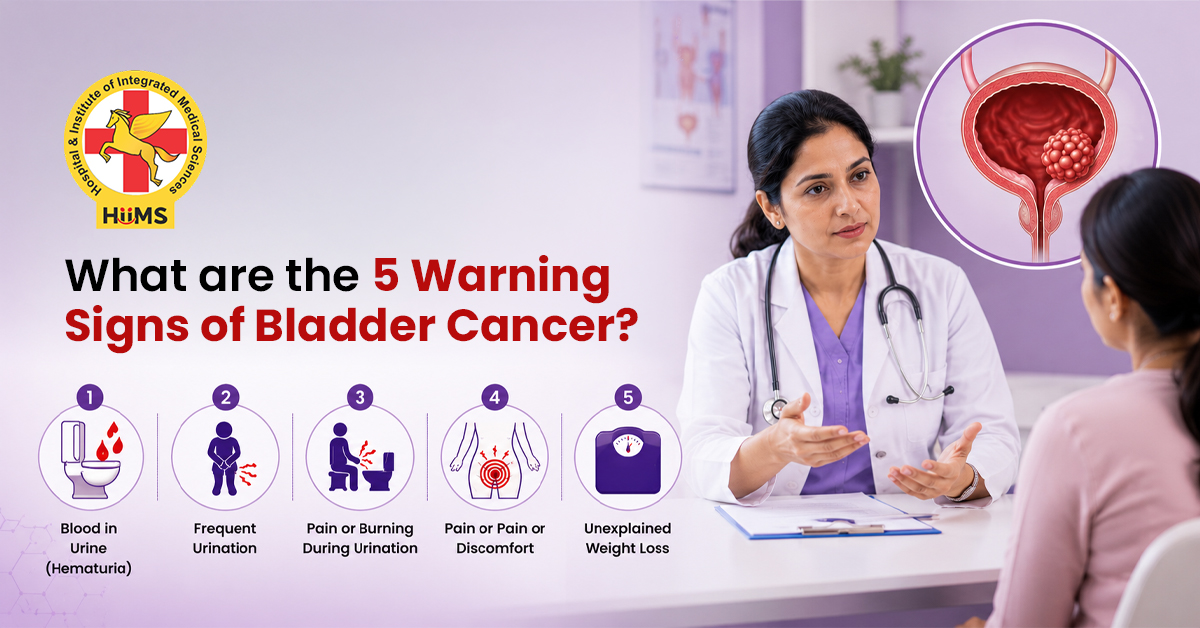
What are the Warning Signs of Bladder Cancer?
The warning signs of bladder cancer do not always appear all at once. A person may notice only one or two changes in the beginning. Still, these signs give early hints that something is not normal.
1. Blood in urine
One of the most noticeable symptoms of bladder cancer is blood in the urine. It may appear pink, red, or sometimes even dark brown. In some cases, it is very light and hard to notice.
This condition is also known as ‘blood in the urine,’ and it may come and go. That makes it confusing. A person may feel normal otherwise and ignore it.
There may not always be pain. That is why it gets missed. But even if it happens once, it should not be ignored for a long time.
2. Frequent urge to urinate
A person may feel the need to pass urine more often than usual. Even when the bladder is not full, the urge comes again and again.
This is one of the early signs of bladder cancer, though it can also happen in infections or other issues. Still, if it continues for many days without a clear reason, it needs attention.
The pattern changes slowly. At first, it may feel like a normal increase. But over time, it becomes uncomfortable.
3. Pain or burning during urination
Pain while passing urine is another sign people notice. It may feel like burning or irritation. Many times, it is assumed to be an infection.
But when this pain does not go away with simple care, it may need a deeper check. It is not always severe pain, sometimes mild but continuous.
This is where people often delay, thinking it is temporary. But the body usually gives repeated signals.
4. Lower back or pelvic discomfort
Pain in the lower back or pelvic area can also be among the warning signs of bladder cancer. This pain is not always sharp. It may feel dull and constant.
Sometimes, it spreads slowly and becomes more noticeable during rest. People often relate it to muscle strain.
But when this discomfort stays for a long time without a clear reason, it should not be ignored.
5. Difficulty in passing urine
Some people have difficulty while urinating. The flow may become weak or interrupted. It may take a longer time to empty the bladder.
This is one of the symptoms of bladder cancer that can affect daily routine. It creates discomfort and sometimes stress.
It does not always happen suddenly. Changes are gradual, so people adjust to them instead of questioning them, especially in cases of bladder cancer symptoms in women.
Understanding the Pattern of Bladder Cancer Symptoms
Bladder cancer symptoms do not always appear together. A person may experience one or two signs only.
That is why awareness becomes important. If something feels different from the body’s usual pattern, it is worth noticing.
Also, these symptoms can overlap with other conditions. For example, infections or stones may show similar signs. So, a proper understanding is needed before reaching any conclusion.
When Further Evaluation Becomes Important
If symptoms continue for more than a few weeks, it is better to consult a doctor. Early observation helps in a better understanding of the condition.
A bladder cancer diagnosis usually involves simple tests first. Based on reports, further steps may be suggested.
At hospitals like Jeena Sikho HiiMS, the focus is often on understanding root imbalances along with regular evaluation. This balanced approach helps people stay more aware of their health.
Lifestyle Habits That Support Bladder Health
Taking care of bladder health does not always need complex steps. Small habits may help in the long run.
Drinking enough water, maintaining hygiene, and avoiding holding urine for a long time are basic things. Food choices also matter sometimes.
Traditional health systems often look at overall body balance. They do not just focus on one organ. This thinking may help people build a better routine slowly.
Conclusion
The body does not stay silent. It gives signs, sometimes small, sometimes clear. Understanding the warning signs of bladder cancer can help people respond early.
Not every symptom means something serious. But ignoring repeated changes is also not wise. A balanced and aware approach works better.
Bladder health is part of overall well-being. Paying attention to it should not feel difficult or stressful. If you notice any of these changes, consider getting it checked. Early understanding always helps in better management.
At Jeena Sikho HiiMS, people are encouraged to listen to their bodies and take steps in a simple and mindful way.
For more guidance, you can also consider a VOPD consultation to understand your condition better.

FAQs
Q1. What is bladder cancer?
It is a condition where abnormal cells grow in the bladder.
Q2. What are common bladder cancer symptoms?
Blood in urine and frequent urination are common signs.
Q3. Is frequent urination always a serious sign?
No, but if it continues for a long time, it should be checked.
Q4. What is the first sign usually?
Blood in urine is often the first noticed sign.
Q5. How do early signs of bladder cancer appear?
They appear slowly and may look like normal issues.