


Kidney disease often develops quietly. Many people feel fine until the kidneys have already lost part of their function. The signs are subtle in the early stages because the kidneys can keep working even after significant damage. That is why it helps to know the symptoms and act on them early. A review of community studies found that about 13% of adults in India live with chronic kidney disease.
For people in Mathura, changing eating habits, drinking too little water, diabetes, and high blood pressure are all reasons to take kidney health seriously. If you live in Mathura and notice swelling, foamy urine or constant tiredness, this guide explains what these signs mean, which checkups may be needed, when to see a kidney doctor and how kidney symptom management in Mathura at Jeena Sikho HiiMS can include supportive Ayurvedic care.
What Is Kidney Disease? Understanding the Signs and Symptoms
Kidney disease means the kidneys slowly lose their ability to filter waste and extra fluid from the blood. This is also called chronic kidney disease (CKD), and it has five stages based on the level of kidney damage.
Early Signs of Kidney Disease
In stages 1 to 3, you might not notice any symptoms, and doctors often find the problem through blood or urine tests. When early signs do appear, they may include:
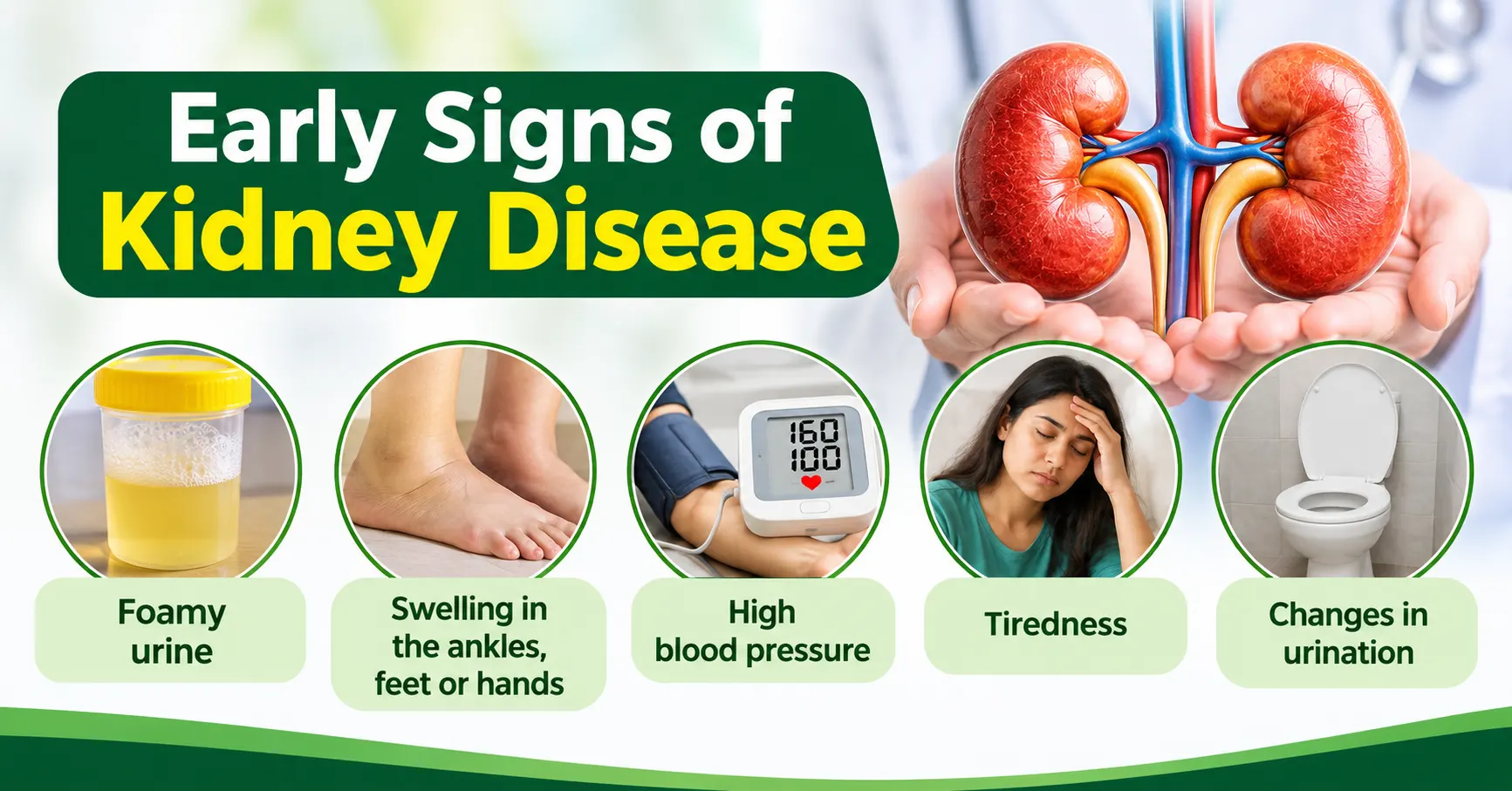
- Foamy urine: Protein leaks into the urine when the kidneys do not filter well. Foam that stays and does not fade quickly can be a sign of this.
- Swelling in the ankles, feet or hands: Mild swelling (edema) can appear in the early stages.
- High blood pressure: This is one of the most common signs of kidney damage.
- Tiredness: Feeling more tired than usual without a clear reason.
- Changes in urination: Passing urine more or less often, or waking at night to pass urine.
Symptoms of Advanced Kidney Disease
In stages 4 and 5, the signs become more noticeable. They may include nausea and vomiting, puffiness around the eyes, constant tiredness or breathlessness, loss of appetite, muscle cramps (especially in the legs), very dry and itchy skin, poor sleep, and weight loss without a clear cause. People may also pass less urine than usual.
Many of these symptoms can come from other conditions too. Only a health assessment can show the cause.
Why Are Kidney Symptoms Easy to Miss?
Many people with chronic kidney disease (CKD) have no symptoms because the body can cope with a significant drop in kidney function, and problems usually appear only at an advanced stage. Doctors often find kidney changes during a routine blood or urine test done for another reason. This is why regular check-ups matter, especially if you have diabetes or high blood pressure. Waiting for symptoms may mean waiting too long.
What Raises the Risk of Kidney Problems?
Diabetes and high blood pressure are the two most common causes of chronic kidney disease and account for most cases. Other factors include:
- Heart disease and a family history of kidney failure.
- Frequent painkiller use: NSAIDs such as ibuprofen and naproxen can harm the kidneys when taken often.
- Low water intake in hot weather: Dehydration can strain the kidneys, and Mathura’s summers can be very hot.
- Excess salt and processed food: These can make blood pressure harder to control.
People with these health concerns should not ignore regular kidney checkups, even when they feel healthy.
Which Tests Check Kidney Health?
Kidney disease is found through simple tests, not by symptoms alone. A kidney doctor may suggest:
- Blood pressure check
- Blood tests: A high creatinine level or a low eGFR points to reduced kidney function.
- Urine test for protein (albumin): Doctors commonly ask about your glomerular filtration rate (GFR), your urine albumin level and your blood pressure.
- Ultrasound: Used when doctors want to look at the size and shape of the kidneys or check for stones.
Kidney Symptoms Management in Mathura at Jeena Sikho HiiMS
Kidney Doctor in Mathura at Jeena Sikho HiiMS follows an integrated approach to kidney symptom management. It combines Ayurveda, naturopathy and lifestyle guidance. After a proper assessment, the care team plans support around the health history, food habits and daily routine.
What this approach includes –
Personalised diet and lifestyle guidance: Simple food and routine advice planned for your needs, including suitable fluid intake and regular daily habits.
Panchakarma: A set of traditional procedures selected for each person, which supports the natural cleansing processes.
Herbal support: Herbal formulations, including kadhas, which are herbal decoctions made by boiling herbs in water. Doctors select them by need.
GRAD (Gravitation and Resistant Diet therapy): A supportive therapy with three parts
- Hot water immersion therapy: A warm water therapy that helps the body relax.
- Head-down tilt therapy: A gravity-based therapy that uses body position for support.
- pH-balanced diet: A planned diet that keeps food choices balanced.
Herbal products should be taken only under qualified guidance, and it is a good idea to tell your kidney doctor about them.
Simple Daily Habits for Kidney Comfort
In practice, doctors see that small, steady changes matter more than sudden, big ones. These habits include:
- Eat fresh home-cooked meals with less salt and fewer packed snacks
- Sip water through the day, unless your doctor has set a limit
- Walk for thirty minutes and practice gentle yoga
- Sleep and wake at fixed times
- Keep blood sugar and blood pressure under watch with your doctor’s guidance
- Avoid taking painkillers on your own
Following these habits regularly, along with timely checkups, can help you look after your kidneys simply and steadily.
Conclusion
Kidney problems may stay silent for a long time, so regular check-ups matter more than waiting for symptoms. Swelling, foamy urine, constant tiredness or changes in urination deserve a proper check. Kidney symptom management in Mathura starts with timely tests, suitable food habits and guidance from a qualified kidney doctor.
Along with this care, a kidney specialist in Mathura at Jeena Sikho HiiMS offers Ayurvedic and lifestyle support planned around your reports and routine. Book a VOPD consultation today and discuss your concerns with an expert from home.

FAQs
Q1. What are the early signs of kidney disease?
Early kidney disease often has no symptoms. Later signs include swelling, tiredness, foamy or bloody urine, nausea and shortness of breath.
Q2. Can kidney disease happen without symptoms?
Yes. Many people have no symptoms in the early stages, so the regular health checkups matter, especially if you are at higher risk.
Q3. What does foamy urine mean?
Foam that stays and does not fade quickly can be a sign of protein leaking into the urine, so it is worth getting checked.
Q4. Does low water intake affect the kidneys?
Yes, not drinking enough water, especially in hot weather, can strain the kidneys.
Q5. Who should get regular kidney checkups?
People with diabetes, high blood pressure, heart disease, or a family history of kidney failure should not skip regular checkups.