

Have you ever noticed your chest tightening after a brisk walk, or woken up at night because of a dry cough that won’t settle? For many people, these moments repeat often enough that they start wondering what is going wrong inside their lungs.
Understanding the causes of asthma patients deal with is not always about pointing to one reason. Asthma usually develops through factors that build up quietly over the years, and then certain everyday situations suddenly bring on symptoms without warning. Some factors exist in your genes or surroundings, which affect how your respiratory tracts behave, while others act like sudden switches that come out of nowhere.
In this blog, you will get a simple breakdown of what lies behind asthma, the everyday triggers that catch people off guard, and how a balanced approach to care can help you manage it better.
What Is Asthma?
Asthma is a long-term condition in which the respiratory tract becomes sensitive and reactive. When something irritates them, the lining swells, the muscles tighten, and extra mucus forms, making breathing feel like an effort instead of something automatic. Getting a complete understanding of the causes of asthma helps explain why this happens.
What Causes Asthma? Understanding the Factors Behind It
There isn’t one neat answer to what causes asthma in a person. It usually develops through genetic, environmental and health-related factors working together over time.
Family History and Genetic Susceptibility
If asthma or allergies run in your family, your lungs are more likely to be sensitive too. Genes are only one piece of the puzzle. A family history does not mean asthma is guaranteed.
Allergies and Sensitive Airways
One of the clearest allergic asthma causes doctors point to is an overactive immune response, where the body treats harmless particles as threats and inflames the lungs from within.
Air Pollution, Smoke and Environmental Exposure
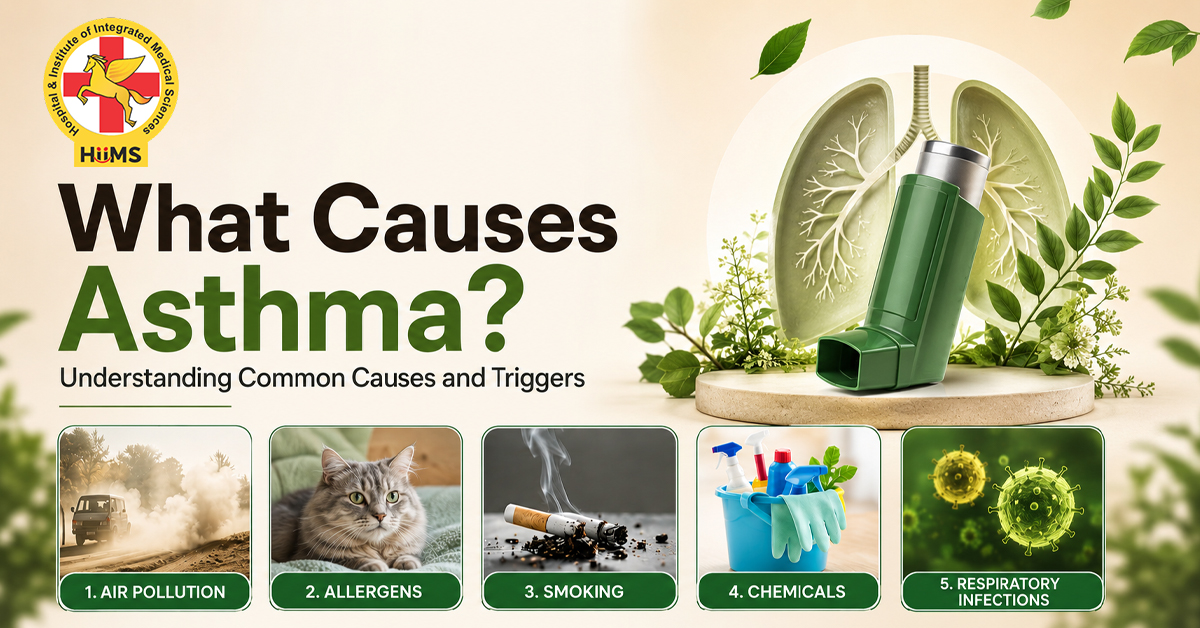
Vehicle exhaust, tobacco smoke and industrial fumes are common causes of asthma symptoms worsening in cities. Repeated exposure keeps sensitive respiratory tracts irritated, a real concern in busy, polluted areas.
Respiratory Infections
Frequent colds, flu and chest infections, especially in childhood, can influence how the respiratory system develops, leaving the lungs more sensitive than before.
Workplace and Occupational Exposure
Dust, chemical fumes and cleaning agents at work can also play a role. If symptoms mostly appear during working hours, a professional evaluation is worth considering.
Common Asthma Triggers That Can Bring on Symptoms
Causes and triggers are related but not identical. A person can have asthma and feel fine until exposed to a specific trigger. These common asthma triggers are what bring on sudden episodes of asthma.
Common Asthma Allergens at Home and Outdoors
Dust mites, pollen, mould, pet dander and cockroach allergens are among the most familiar common asthma allergens indoors and outdoors, often the first suspects when symptoms flare at home.
Weather and Seasonal Changes
Cold air, sudden temperature swings and shifts in humidity are among the common asthma triggers that can tighten the airways almost instantly, which is why many people notice symptoms worsening in particular seasons.
Exercise and Physical Activity
Physical activity, especially in cold or dry air, can bring on symptoms for some people. This doesn’t mean exercise should be avoided. It simply needs a little more planning.
Strong Smells, Smoke and Chemical Irritants
Perfumes, incense, cleaning products and paint fumes are frequent common asthma allergens and irritants that affect respiratory tracts that are already sensitive, even without a specific allergy to these smells.
Stress and Strong Emotions
Stress and intense emotions can influence breathing and trigger symptoms in some people, though it would be inaccurate to say stress alone is behind causes asthma develops from.
What Does Ayurveda Say About the Causes of Asthma?
Beyond the commonly recognised causes of asthma, Ayurveda offers its own view through Tamaka Shwasa, a term traditionally linked to breathing difficulty of this kind. It looks at the balance between Vata and Kapha, where weak digestive fire, or Agni, is believed to let toxins build up and settle in the respiratory pathways as mucus.
When Should You Seek Professional Asthma Care?
Recurring wheezing, persistent coughing, breathlessness, disturbed sleep or worsening common asthma triggers showing up more often should not be managed with home remedies alone. Breathing difficulty deserves a proper assessment and an individualised care plan.
How Jeena Sikho HiiMS Approaches Asthma Care
At Jeena Sikho HiiMS, asthma care follows an integrated approach blending Ayurveda with modern medical understanding, built around four pillars: Aahar, Vihar, Shaman and Shodhan. Rather than one fixed formula for everyone, the focus stays on each person’s lifestyle, diet and specific triggers.
Conclusion
So, what causes asthma? As this blog has shown, it is uncommon to find one single factor. Genetics, environment, allergies and lifestyle can all play a part, while day-to-day triggers vary from person to person. Recognising your own patterns, making sensible lifestyle changes and seeking proper guidance form the backbone of managing asthma over the long run.

If breathing difficulties have been affecting your daily life, you don’t have to figure it out alone. You can also opt for a VOPD consultation with expert doctors at Jeena Sikho HiiMS to get personalised guidance for your health concern.
FAQs
Q1: What are the most common causes of asthma?
A combination of family history, allergies, air pollution and respiratory infections generally sit behind most cases, working together rather than acting alone.
Q2: What are the common asthma triggers people should watch for?
Cold air, strong smells, physical exertion and seasonal changes tend to bring on sudden symptoms in people who already have sensitive respiratory tracts.
Q3: What are the common asthma allergens found at home?
Dust mites, mould, pet dander and cockroach droppings are frequent household allergens that irritate the nasal passages of sensitive individuals.
Q4: Can stress or weather changes trigger asthma symptoms?
Both stress and shifting weather conditions can influence breathing patterns, often making existing breathing sensitivity noticeably worse for a short period.
Q5: How does Ayurveda look at asthma and respiratory health?
Ayurveda views breathing difficulty through the perspective of Vata-Kapha imbalance and weak digestion, focusing on restoring the body’s overall internal balance.