

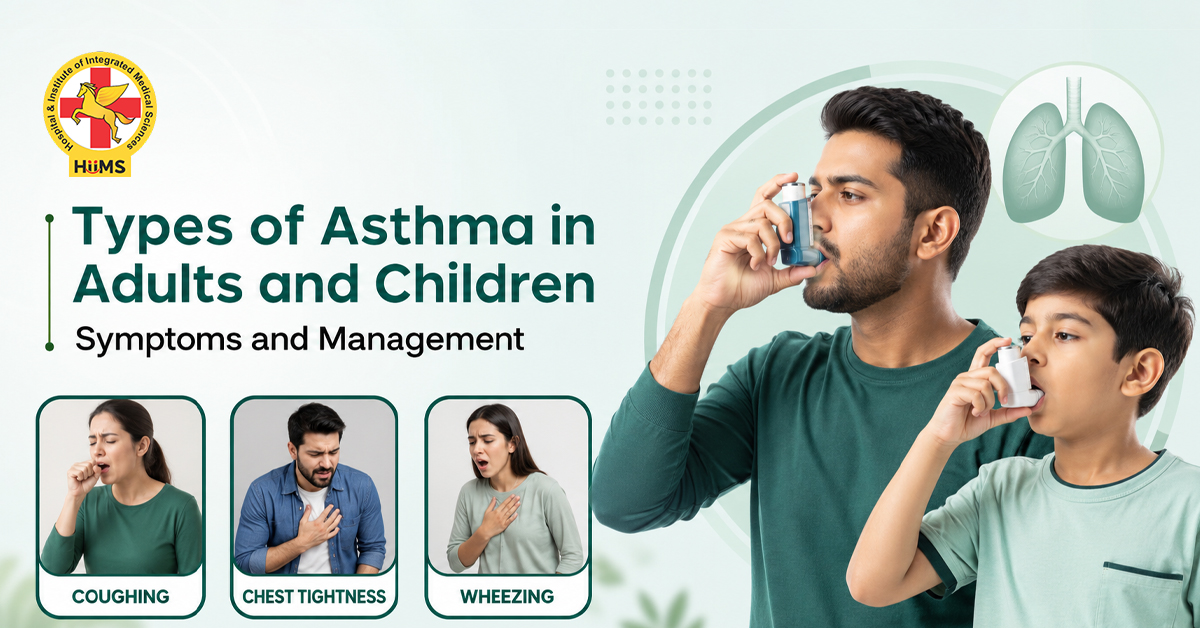
A whistling sound that only shows up during a child’s cricket match looks nothing like the ongoing breathlessness a 45-year-old develops after years of smoke exposure at work, yet both get labelled the same thing, asthma. Understanding the different types of Asthma, and how they show up differently in kids versus adults, genuinely changes how the condition gets managed day to day.
This blog breaks down the patterns, the symptoms specific to each age group, and practical management tips worth knowing.
Types of Asthma: Not One Condition, Several Patterns
Childhood Asthma
This remains the most common chronic disease in children, and it’s genuinely diverse in how it presents; no two kids necessarily experience it the same way. Genetics and environment both play a role; if one or both parents have asthma or allergies, children carry a noticeably higher risk.
Adult-Onset Asthma
Roughly half of all adults diagnosed with asthma actually developed it as adults, not carried it over from childhood. This form tends to be less allergy-driven and more tied to long-term exposure, cigarette smoke, workplace chemicals and fumes, or certain medications.
Exercise-Induced and Allergic Asthma
Some children only show symptoms during physical activity or sports, known as exercise-induced bronchospasm. Allergic asthma, triggered by pollen, dust, or pet dander, shows up across both age groups but is genuinely more common in childhood cases.
Asthma in Children: What Makes It Different?
Asthma in children tends to follow a specific pattern. Kids are more sensitive to allergens, largely because their airways are still developing and narrower to begin with, which means even mild inflammation can cause more noticeable symptoms.
Interestingly, almost half of children with asthma see their symptoms reduce or fully go into remission by adulthood, though there’s always a chance it can return later in life.
Childhood Asthma Symptoms Worth Watching
Childhood asthma often shows up differently than adults expect:
- Recurrent coughing, especially at night, during exercise, or even laughing
- A high-pitched sound while breathing in
- Chest tightness or pain
- Getting unusually tired or weak during play
Because children’s airways are smaller, symptoms can sometimes be mistaken for a regular respiratory infection, which is exactly why persistent coughing or breathlessness deserves a proper evaluation rather than being brushed off as “just a cold.”
Asthma in Adults: A Different Pattern Entirely
Breathlessness that just sticks around. Chest tightness that doesn’t fully go away. A cough that lingers between episodes instead of clearing up properly. That’s usually how Asthma in adults announces itself, quieter than a childhood wheeze, but sneakier too. Adults face serious asthma complications about six times more often than kids do. That gap alone is why monitoring and staying consistent with medication actually matters so much once asthma shows up later in life.
Adult Asthma Symptoms to Recognise
Adult asthma symptoms often include persistent breathlessness, chest tightness, and a cough that doesn’t fully resolve between episodes.
Compared to children, adults are statistically more likely to face serious asthma-related complications, roughly six times more likely which underlines why ongoing monitoring and proper medication management matter so much for adult-onset cases specifically.
Asthma Causes and Triggers: How Do They Differ by Age?
Asthma causes and triggers genuinely shift depending on when the condition develops:
- Childhood asthma: allergens, family history, frequent respiratory infections, secondhand smoke exposure
- Adult-onset asthma: long-term smoke exposure, occupational irritants like chemicals or fumes, obesity, certain medications
- Shared triggers across both groups: cold air, exercise, stress, and respiratory infections
Does Childhood Asthma Ever Go Away?
For a lot of children, yes, at least partially. Nearly half experience a genuine reduction in symptoms or full remission as they grow into adulthood, and boys in particular show higher rates of childhood-onset asthma that tends to ease with age.
That said, remission isn’t guaranteed, and symptoms can return later in life even after years of feeling fine, which is why ongoing awareness matters even for those who seem to have “outgrown” it.
Practical Management Tips for Every Age Group
A few habits genuinely help regardless of which type of asthma is involved:
- Keep track of specific triggers, cold air, certain foods, pets, or exercise, and adjust exposure where you can
- Use prescribed inhalers correctly and consistently, even on symptom-free days if a controller medication is prescribed
- Keep living spaces clean and well-ventilated to reduce dust and allergen buildup
- Encourage children to stay active, but warm up properly before exercise if it’s a known trigger
- Schedule regular follow-ups, since asthma management often needs adjusting over time, especially as children grow or as adult symptoms evolve
How Jeena Sikho HiiMS Supports Asthma Management
At Jeena Sikho HiiMS, asthma support generally combines Panchakarma-based therapies like Vamana to help clear excess mucus, a personalised diet plan built around reducing Kapha-aggravating foods, and breathing-focused practices aimed at strengthening lung capacity over time.
Whether the case is childhood-onset or adult-onset, the approach is tailored to the individual’s specific triggers and symptom pattern, working alongside prescribed inhalers and medication rather than replacing them.
Conclusion
Recognising which of the types of Asthma you or your child are actually dealing with, childhood, adult-onset, allergic, or exercise-induced, genuinely shapes how effectively it gets managed long-term.

If you like to explore how Ayurvedic support could work alongside your existing asthma treatment, you can book a VOPD consultation with Jeena Sikho HiiMS and talk with our team.
FAQs
Is childhood asthma basically the same thing as adult-onset asthma?
Same core symptoms, breathlessness, coughing, but the triggers, how bad it gets, and the odds of it easing off later all look different.
Why do kids react more strongly to asthma triggers than adults?
Smaller, still-developing airways. Even a little inflammation shows up louder in a child than it would in an adult.
Is adult-onset asthma actually worse than the childhood kind?
Tends to be less stable, yeah, more flare-ups, higher odds of things getting serious compared to cases that started in childhood.
Does carrying extra weight really raise the risk of getting asthma as an adult?
It does. Obesity is one of the known risk factors tied specifically to asthma that develops later in life.
Does Ayurveda work the same way for kids and adults with asthma?
Same broad approach, but adjusted, age-specific triggers, and whatever symptoms are actually showing up shape the plan differently each time.