
A mouth ulcer that won’t heal for weeks. A patch on the tongue or cheek that keeps catching your attention in the mirror. Most people wait far too long to get these checked, often because the early signs seem so minor. But oral cancer treatment genuinely depends on how early the disease is caught, and that single factor, stage at diagnosis, shapes nearly everything about what comes next, how intensive the treatment is, how long recovery takes, and what kind of support actually helps along the way.
This blog walks through what each stage generally involves, the symptoms worth catching early, and how Ayurvedic care genuinely supports a patient through the process, stage by stage.
Oral Cancer Symptoms Worth Knowing About
Catching oral cancer symptoms early genuinely changes what stage someone gets diagnosed at, which is why these are worth taking seriously rather than waiting out:
- A mouth sore or ulcer that doesn’t heal within a couple of weeks
- A white or red patch on the gums, tongue, or inside of the cheek
- Persistent pain, numbness, or a lump anywhere in the mouth
- Difficulty chewing, swallowing, or moving the jaw or tongue
- Unexplained bleeding in the mouth or loose teeth without a clear cause
Mouth Cancer Symptoms: Why Early Detection Genuinely Matters
Mouth cancer symptoms are often mistaken for something minor, a stubborn ulcer, an ill-fitting denture, or a canker sore. That delay is exactly why regular dental checkups matter; dentists often spot early changes before a patient notices anything themselves, and catching things at an earlier stage genuinely means a less intensive path ahead.
Early Stage (Stage 1 and 2): Small, Localised Tumours
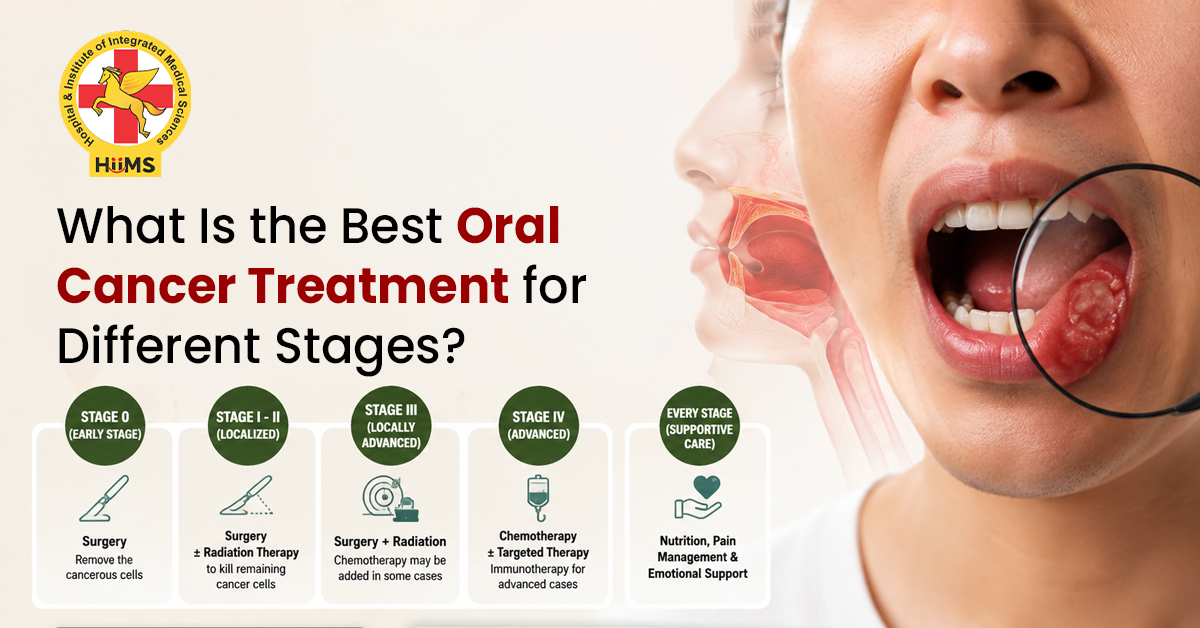
At this stage, the tumour is generally small and hasn’t spread to lymph nodes or other tissue. Medically, this stage is usually managed with a single treatment approach, most often surgical removal of the tumour, and outcomes at this stage tend to be considerably better than later ones, which is exactly why early detection matters so much.
Ayurvedic support at this stage focuses on strengthening the body ahead of and around treatment, personalised diet guidance to support healing, gentle detox practices, and stress management to help the patient feel steadier through what’s often a shorter, more contained treatment period.
Locally Advanced Stage (Stage 3): Larger Tumours or Nearby Spread
Here, the tumour has typically grown larger or spread to nearby lymph nodes, though not to distant parts of the body. Medically, this stage usually needs a combination approach, surgery paired with radiation, sometimes alongside chemotherapy, decided by a specialist based on imaging and biopsy findings specific to the patient.
Ayurvedic support at this stage becomes genuinely more involved. Diet correction shifts to accommodate treatment-related side effects like appetite loss and mouth sensitivity, alongside Golden Therapy and Cancer Detox Juice offered as part of the daily routine to ease fatigue and support digestion through a longer, more demanding treatment schedule.
Advanced Stage (Stage 4): Spread Beyond the Mouth
At this stage, the cancer has typically spread further, sometimes to distant organs. Medically, treatment approaches become more individualised, often combining multiple methods, and the focus increasingly includes managing symptoms and maintaining quality of life alongside treating the disease itself.
Ayurvedic support at this stage leans heavily into comfort and daily functioning, soft, nutrient-dense diet planning for patients struggling to eat, gentle therapies to ease physical discomfort, and consistent emotional support for both the patient and their family through a genuinely difficult stretch.
Ayurvedic Support Offered at Jeena Sikho HiiMS Across All Stages
Regardless of stage, a few specific practices form the core of supportive care at Jeena Sikho HiiMS:
- Golden Therapy, a herbal paste made from banyan, neem, peepal, guava leaves, bitter gourd, and raw turmeric, gently applied underfoot
- Cancer Detox Juice, made fresh from leafy greens like bathua and spinach, combined with fenugreek, mint, coriander, and turmeric
- A personalised, plant-based diet plan, adjusted for oral discomfort where needed, soft, easily swallowed meals that still bring genuine nutrition
- Panchakarma-based detox practices, including Virechana, are appropriate for the patient’s current strength
- Gentle yoga and breathing practices to support emotional steadiness throughout treatment
Conclusion
Understanding how oral cancer treatment shifts with each stage and recognising symptoms early enough to catch it sooner genuinely changes the path ahead for a patient and their family. Ayurvedic support can meaningfully ease the physical and emotional load of getting through diagnosis and treatment, at whatever stage someone is facing it. If you want to understand how this kind of coordinated support could work alongside your existing treatment plan, you can book a VOPD consultation with Jeena Sikho HiiMS and have that conversation directly with our team.

FAQs
1. What’s usually the earliest sign of oral cancer?
A mouth sore or ulcer that doesn’t heal within a couple of weeks is often one of the earliest, most commonly reported signs.
2. Does treatment differ a lot between early and late-stage oral cancer?
Yes, early stages often involve a single treatment approach, while advanced stages usually need a combination, decided by a specialist based on the tumour’s extent.
3. Does Ayurveda aid in lessening mouth discomfort during treatment?
Yes, supportive diet planning and gentle therapies can really help relieve oral discomfort in conjunction with a patient’s medical treatment.
4. Does diet really matter to an oral cancer patient?
Yes, since chewing and swallowing are often affected, soft, nutrient-dense meals help maintain strength through treatment.
5. Should Ayurvedic support be coordinated with a patient’s medical team?
Yes always. It is a good idea to let your medical team know about any additional therapy to keep everything safe and well-coordinated.