
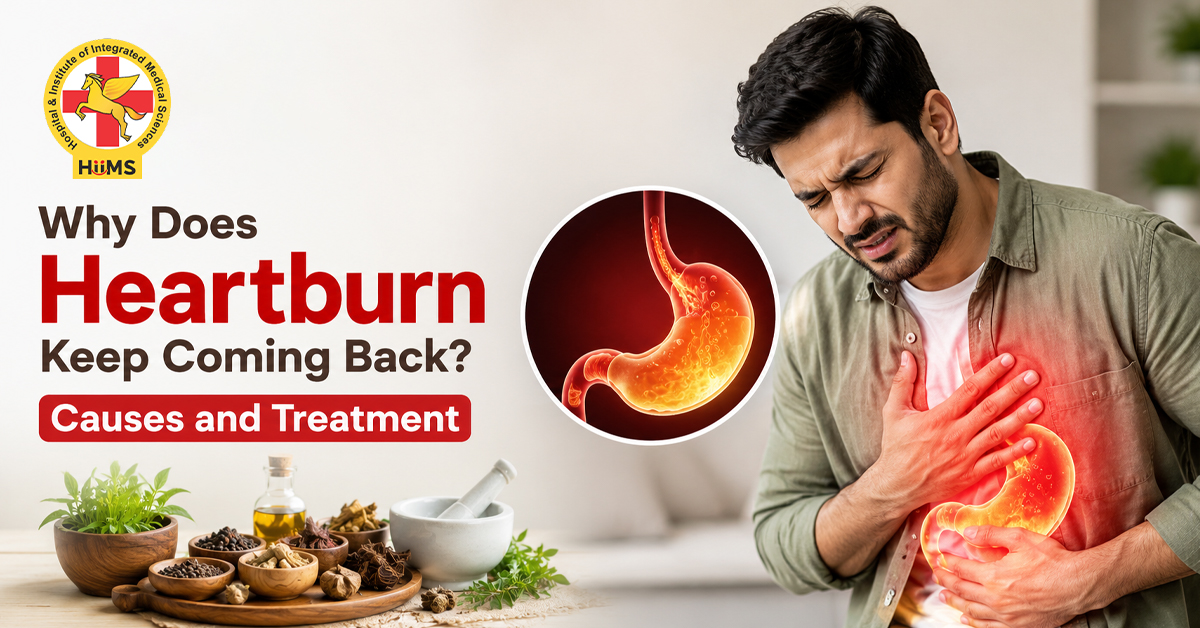

Many people experience heartburn after having a meal, and it is usually noticed as a burning feeling in the centre of the chest. At times, there may also be a sour or bitter taste in the mouth. While occasional heartburn may pass on its own, some people face the problem again and again, particularly after meals or during the night. In such cases, suitable heartburn treatment may be considered. Repeated discomfort can slowly affect sleep, food habits, and everyday activities.
Heartburn usually happens when stomach contents move back into the food pipe. This is known as acid reflux. When this happens again and again, it may be linked with the gastro-oesophageal reflux disease, commonly called GERD.
The good thing is that recurring discomfort should not simply be ignored. Understanding why it keeps coming back can help a person make better changes in food, eating habits, and daily routine. A natural and balanced approach also gives importance to digestion and regular lifestyle.
What Causes Heartburn to Keep Coming Back?
The main reason behind repeated heartburn is that stomach contents move upward into the food pipe. Normally, a muscular valve at the lower end of the food pipe helps keep stomach contents inside the stomach. When this valve opens at the wrong time or becomes weak, the contents of the stomach can come back into the food pipe and cause a burning feeling.
There can be several reasons why this happens repeatedly. Some common ones are:
- Eating very large meals
- Eating too close to bedtime
- Eating oily, spicy, or very heavy foods
- Drinking too much coffee or other caffeinated drinks
- Taking foods that personally trigger acidity
- Being overweight
- Lying down soon after eating
- Smoking or drinking alcohol
- Stress and an irregular daily routine
Certain people may also experience reflux because of pregnancy, a condition called hiatal hernia, or some medicines that can make reflux symptoms worse.
Frequent Heartburn Causes Related to Eating Habits
Food does not affect everyone in the same manner when it comes to heartburn. Tomatoes may be perfectly fine for one person, while they may cause a burning feeling in another. Knowing your frequent heartburn causes can make it easier to notice which foods trouble you, rather than cutting out many foods without any clear reason.
Some foods that may trigger heartburn include:
• Spicy foods
• Fried and high-fat foods
• Tomatoes and citrus fruits
• Chocolate
• Mint
• Coffee and other caffeinated drinks
• Carbonated drinks
• Large meals
It is also better to keep some time between dinner and bedtime. Having the evening meal at least three hours before lying down may be helpful for people who often experience reflux during the night.
Can Eating Too Much Make Heartburn Worse?
Eating too much at one time can sometimes increase heartburn. A very full stomach puts extra pressure on the stomach area, which may allow its contents to move upward. This is often noticed after a large dinner.
Taking time to eat and chewing food properly can be helpful for digestion. Very heavy meals can be avoided, while smaller and moderate portions can be taken at regular meal times.
Lying down immediately after food is also not a good habit for people who often have heartburn. Keeping some gap before sleeping gives the stomach time to digest the meal and may make nighttime discomfort less common.
Recurring Heartburn and Daily Routine
Some everyday habits may make recurring heartburn more noticeable. Late-night eating, lying down soon after meals, and sitting for long periods without enough movement are a few habits worth looking at.
Eating at regular times, taking a walk each day, sleeping well, and maintaining a healthy weight may support normal digestive comfort.
At Jeena Sikho HiiMS, the approach to digestive wellness includes attention to food, digestion, sleep, stress, and daily routine, rather than looking at the discomfort from only one side.
Simple Natural Ways to Manage Heartburn
A few simple changes may help reduce the frequency of heartburn in daily life.
1. Keep Dinner Light
A very heavy dinner, especially late at night, can increase discomfort. Try to keep the evening meal simple and moderate.
2. Give a Gap Before Sleeping
Avoid going to bed immediately after dinner. A gap of around three hours may be helpful, especially for the people whose symptoms become worse at night.
3. Notice Your Food Triggers
Keep a simple note of what you eat and when the burning occurs. This can help identify personal triggers. There is no need to avoid every food that is commonly linked with reflux if it does not trouble you.
4. Eat Slowly
When meals are taken too quickly, it is easy to eat more than the body needs. Take your time, chew each bite well, and finish your meal slowly.
5. Maintain a Healthy Weight
If excess weight is present, gradual and healthy weight management may support digestive comfort and may reduce pressure on the stomach.
6. Pay Attention to Sleep
People who experience heartburn at night may find it useful to raise the upper part of the body during sleep. Professional guidance also suggests that sleeping on the left side may help some people with nighttime reflux.
What About Ayurvedic and Natural Care?
Ayurveda gives importance to digestion and considers food, meal timing, daily routine, and individual constitution while planning wellness care. From this point of view, repeated acidity should not be looked at only as a burning sensation. Eating habits, irregular meals, poor sleep, stress and unsuitable foods may also need attention.
Natural care may include suitable dietary changes, mindful eating, yoga, breathing practices, relaxation and Ayurvedic therapies when considered appropriate by a qualified practitioner.
It is also important not to assume that every burning sensation is simply acidity. Persistent symptoms need proper evaluation so that other digestive or health problems are not missed.
When Should You Take Heartburn Seriously?
Heartburn once in a while may not be something to worry about. However, frequent heartburn symptoms need some attention, specially when they keep returning. Speak with a professional if:
- Heartburn occurs very often.
- Changes in food or routine are not helping.
- Swallowing becomes difficult.
- You have vomiting that does not settle.
- Your weight is going down without any known reason.
- There is blood in vomit or stool.
- Burning or discomfort keeps waking you at night.
- The chest pain is severe or unusual for you.
- Chest pain is followed by breathing trouble.
- The pain reaches the arm, shoulder, or jaw.
Do not assume that strong chest pain is only heartburn. Some heart-related problems may also feel like this and should be checked without delay.
What Is the Right Approach to Heartburn Treatment?
The suitable heartburn treatment depends mainly on the reason behind the burning and how often a person faces it. Simple habits like taking smaller meals, keeping the regular meal timings, avoiding late dinners, and having proper sleep can be helpful for the occasional discomfort.
When heartburn starts coming back again and again, it is better to understand the reason behind it. Ayurvedic care may give attention to food, digestion, daily habits, and the individual needs of a person for maintaining better digestive health.
Conclusion
When heartburn keeps returning, it is worth looking at the food and routine followed every day. Heavy meals, late dinners, going to bed soon after eating, and certain foods may be behind the repeated burning. Keeping meals moderate, eating at proper times and maintaining a good sleep routine can make a difference. The right heartburn treatment may also support better management of such digestive discomfort.
At Jeena Sikho HiiMS, attention may be given to food, daily habits, and lifestyle along with suitable Ayurvedic care. People who are dealing with repeated digestive problems can also take a VOPD consultation and discuss their symptoms for more suitable guidance.

FAQs
- What are the common causes of frequent heartburn?
Common causes include overeating, spicy or fatty foods, irregular meals, caffeine, stress, and eating close to bedtime.
- Can overeating cause heartburn?
Yes, overeating can increase pressure on the stomach and may make acid reflux more likely.
- Can spicy food make heartburn worse?
Spicy food may trigger heartburn in some people, although food triggers can differ from person to person.
- Can Ayurveda support digestive wellness?
Ayurvedic care may focus on suitable food, digestion, daily routine, lifestyle habits, and therapies according to individual needs.
- What lifestyle changes may help with heartburn?
Regular meals, moderate portions, avoiding personal food triggers, staying active, and avoiding late-night meals may help.