
Nails are often considered a simple cosmetic detail but changes in their texture, strength, or attachment can signal deeper health conditions. While many people associate psoriasis strictly with red, scaly patches on the skin, the condition frequently extends to fingernails and toenails.
When psoriasis affects the nails, it causes pitting, thickening, severe crumbling and painful nail separation from the nail bed. Because these signs mimic fungal infections, many people treat them with antifungal creams for months without seeing improvement. Understanding nail psoriasis and addressing its underlying causes from within is essential for restoring healthy nail growth
What is Nail Psoriasis
Nail psoriasis is an autoimmune manifestation of psoriasis that develops within the nail matrix (where the nail forms) and the nail bed (the tissue beneath the nail plate).
Instead of the normal gradual growth of the cells an overactive immune system causes the skin cells under the nail to multiply rapidly. This increased cell buildup alters the structure of the keratin layer, making the nail plate weak, discoloured and prone to breaking.
- Hand and Feet Involvement: It can affect a single nail or all twenty fingernails and toenails simultaneously
- Link to Skin Psoriasis: Up to 90% of people with plaque psoriasis experience nail changes at some point in their lives.
- Link to Psoriatic Arthritis: Nail changes are particularly common in people with psoriatic arthritis, making early observation crucial for overall joint health.
Recognising Common Nail Psoriasis Symptoms
The symptoms of nail damage vary depending on whether the inflammation originates in the nail matrix or the underlying nail bed. Identifying these changes early prevents long term damage to the nail root.
Common nail psoriasis symptoms include
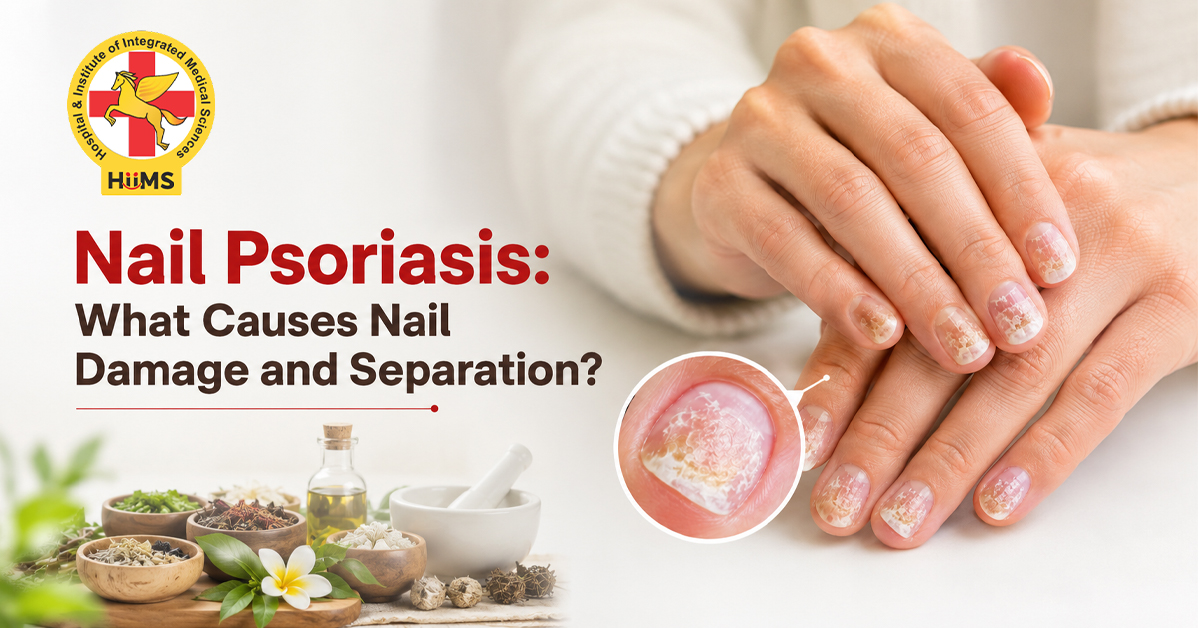
- Pitting: Small, shallow dents or dots appearing on the surface of the nail plate
- Discoloration: Yellowish-red patches under the nail that resemble drops of oil beneath the surface
- Subungual Hyperkeratosis: A chalky, whitish buildup of skin cells under the nail that lifts the nail plate upward
- Nail Separation: The nail plate detaches from the pink nail bed, creating a gap that starts at the tip and moves inward
- Brittle, Crumbly Nails: Weakened structural keratin causes nails to split, crack, or crumble away entirely
Understanding Causes of Nail Damage & Separation
Nail detachment and structural breakdown do not happen overnight. They are driven by internal immune dysfunction and aggravated by everyday physical factors.
Understanding nail psoriasis causes is useful in treating the root of the problem rather than just the surface symptoms:
Immune System Disruption
Psoriasis is basically an autoimmune disease. Hyperactive immune cells (T-cells) cause localised inflammation beneath the nail. This condition causes the skin cells under the nail bed to reproduce in days instead of weeks. This pushes the nail plate away from its base and causes onycholysis.
Micro-Trauma and the Koebner Phenomenon
Physical injury to the hands or feet can trigger or worsen psoriasis in that exact spot. Activities like stubbing a toe, aggressively picking cuticles, using sharp tools under the nail, or typing forcefully on a keyboard can cause minor trauma that sparks fresh nail inflammation.
Metabolic Toxins and Systemic Inflammation
In Ayurveda, chronic skin and nail inflammation are tied to poor digestion and toxin accumulation. When digestion slows down, metabolic waste circulates in the bloodstream causing immune related diseases in peripheral areas such as the nail beds.
Natural Support for Nail Psoriasis
Effective management of nail psoriasis requires an internal, root-cause approach because creams applied topically rarely penetrate the hard keratin plate to reach the inflamed nail bed underneath.
Jeena Sikho HiiMS is a renowned Ayurvedic hospital that offers comprehensive, natural care for complex autoimmune and skin conditions. Their approach focuses on balancing body energies (Doshas), purifying the blood and supporting natural tissue regeneration.
Natural support given at Jeena Sikho HiiMS:
Internal Detoxification
Jeena Sikho HiiMS utilises Raktamoshana therapy for treating nail psoriasis. It is a Panchakarma therapy designed to clear accumulated toxins from the bloodstream and soothe internal immune hyperreactivity.
Herbal Support
Specialised Ayurvedic oils and herbal washes that soften hyperkeratotic buildup, reduce inflammation, and protect open nail beds from secondary bacterial or fungal infections.
Dietary Changes
The treatment uses anti-inflammatory, pH-balanced diet plans that eliminate incompatible foods to heal the gut lining and prevent future flare-ups.
This natural approach enables patients to manage nail psoriasis naturally and address internal root causes to promote healthier new nail growth over time.
Daily Care Tips to Prevent Nail Damage
Protecting your nails is important while receiving internal treatment, gentle habits prevent additional trauma and reduce the risk of infection in detached nail beds.
- Keep Nails Short and Trimmed: Short nails are less likely to catch on clothing or experience leverage forces that tear the nail plate away from the bed
- Moisturise Regularly: Apply natural oils (like coconut or neem oil) or rich ointments to cuticles and surrounding skin to prevent dryness and cracking
- Protect Your Hands: Always wear cotton-lined rubber gloves while washing dishes, handling cleaning chemicals, or gardening
- Never Dig Under the Nail: Resist the urge to scrape out chalky buildup beneath a lifting nail with sharp tools, as this worsens separation and invites secondary infections
- Avoid Harsh Cosmetic Treatments: Avoid artificial acrylic nails, acetone polish removers, and aggressive cuticle pushing, which can trigger flare-ups
Building a calm, consistent daily care routine speeds up structural recovery from nail psoriasis and protects newly forming tissue.
Conclusion
Nail damage and separation caused by psoriasis reflect internal immune imbalances that require patience and root cause care. Because nails grow slowly, repairing the nail matrix takes time but addressing systemic inflammation from the inside gives lasting results.
Combining gentle daily protection with the Ayurvedic therapies available at Jeena Sikho HiiMS helps calm immune overactivity, restore healthy blood circulation to the nail beds, and support the growth of strong, smooth nails naturally. Book a VOPD (video consultation) today to receive holistic guidance from HiiMS experts.
FAQs
- Is Nail psoriasis contagious?
No. Nail psoriasis is an autoimmune condition caused by internal immune system dysfunction. It is not caused by bacteria or fungi and it cannot spread from person to person through contact.
- What are the earliest nail psoriasis symptoms?
The earliest nail psoriasis symptoms usually include a tiny hole on the surface of the nail plate, slight yellowish-red discolouration under the nail, or slight lifting at the tip of the nail.
- What are the key causes of nail psoriasis that lead to nail detachment?
The main nail psoriasis causes behind nail detachment (onycholysis) are rapid cell buildup (subungual hyperkeratosis) and inflammation under the nail bed which physically force the hard nail plate away from its base.
- How do Ayurvedic treatments at Jeena Sikho HiiMS help with nail recovery?
Ayurvedic treatments purify the blood, remove internal toxins and balance immune function. By treating root causes these therapies restore natural nail health from within.
- Can nails damaged by psoriasis grow back normally?
Yes. Fingernails take roughly 6 months and toenails take 12 to 18 months to grow out completely. Consistent therapies and proper nail care allow healthy, normal nail tissue to replace damaged areas over time.