
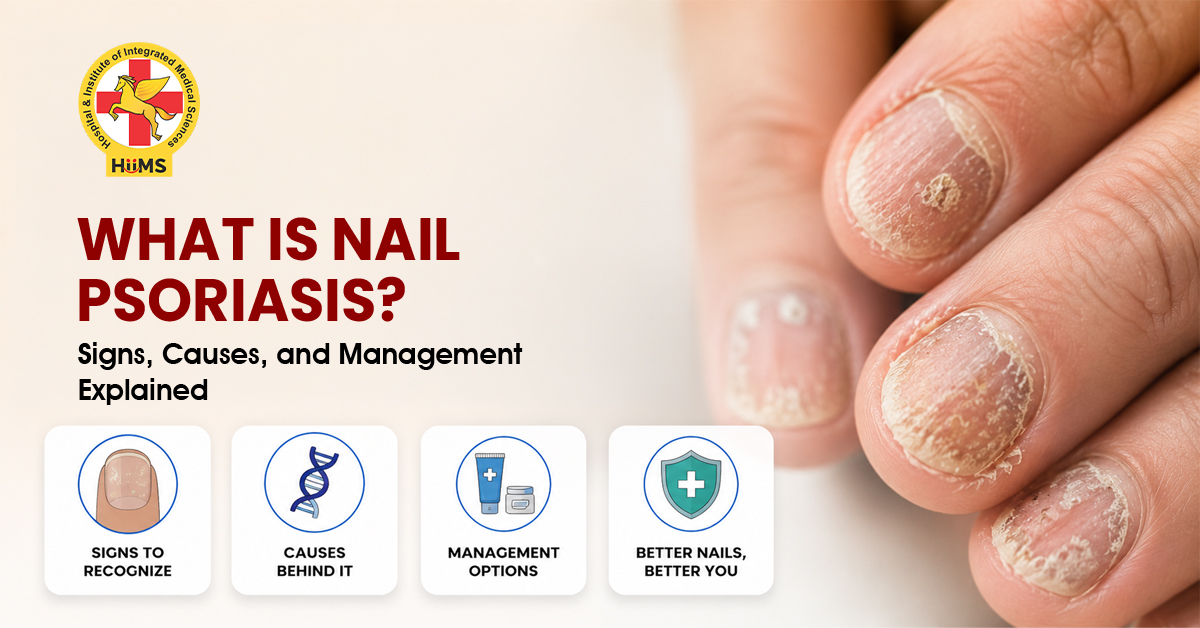
The condition of one’s nails says a lot about the general well-being of that individual. Things like small pits in the nails, thickened nails, discoloration of the nails or detaching of the nail from the nail bed are usually ignored or considered as being caused by fungus infections. These changes could be due to a disease called nail psoriasis which attacks either fingernails, toenails, or both.
Nail psoriasis occurs due to psoriasis, which is a chronic skin disease with an inflammatory nature affecting both the skin and, in some cases, the joints. The disease is non-contagious but may affect daily tasks such as writing, walking, or holding things when the nails are affected. Understanding signs of nail psoriasis, nail psoriasis causes, and treatment will go a long way in seeking early medical help. This blog covers all aspects of nail psoriasis in clear language.
What Is Nail Psoriasis?
Nail psoriasis is a condition in which psoriasis affects the nails. It can involve one or several fingernails and toenails. In some people, nail changes appear after skin psoriasis develops, while in others, nail problems may be the first noticeable sign.
The condition affects the nail matrix and nail bed, which are responsible for nail growth. As a result, the appearance and texture of the nails may change over time.
Signs of Nail Psoriasis
The signs of nail psoriasis can vary from person to person. While some have slight effects, others may be affected by more serious nail problems.
Some of the common signs are:
- Presence of small pits and slits on the surface of the nails
- Nail thickening
- Yellowish, brown or white discoloration
- Loosening of the nail from the nail bed or onycholysis
- Brittle or crumbling nails
- White spots on the nails
- Ridges and lines on the nail surface
- Pain and tenderness in serious cases
Such signs appear very much like those of a fungal infection of the nail.
What Causes Nail Psoriasis?
Many people wonder what causes nail psoriasis. The precise cause is not yet known, but scientists are of the opinion that the condition results from a hyperactive immune system that causes the accelerated production of skin and nail cells.
Risk factors include:
- A family history of psoriasis
- Already existing psoriasis of the skin
- Psoriatic arthritis
- Nail damage
- Emerging stress
- Some types of infection
- Smoking in some cases
These factors may bring about the signs of the disorder, but they don’t necessarily impact all people equally.
Who Is More Likely to Develop Nail Psoriasis?
The condition is more common in:
- People already living with psoriasis
- Individuals with psoriatic arthritis
- Those with a family history of psoriasis
- Adults, although children can also develop it
- People whose work involves repeated nail injuries
How Is Nail Psoriasis Diagnosed?
Diagnosis of nail psoriasis typically involves looking at your nails along with your personal and family history.
The diagnosis includes:
- Physical examination of the nails
- Examination of the skin and scalp for psoriasis
- Evaluation of joint symptoms
- Nail clippings or scraping to exclude a fungal infection
In Ayurveda, the diagnosis involves the identification of the overall well-being of the individual. The Ayurvedic practitioner might analyse the body constitution (Prakriti), dosha imbalance, digestive function (Agni), lifestyle practices, and other aspects to propose a personalised health regime.
At Jeena Sikho HiiMS, the practitioners make use of Ayurvedic diagnostic procedures as well as existing medical tests of the individual for understanding their condition.
Nail Psoriasis Treatment
The appropriate nail psoriasis treatment depends on how severely the nails are affected and whether the person also has skin psoriasis or psoriatic arthritis.
Common medical treatment options may include:
- Medicated creams or ointments
- Oral medicines for moderate to severe psoriasis
- Biologic medicines in selected cases
- Regular nail care and protection
Treatment may take several months because nails grow slowly.
Along with medical care, some people also choose Ayurveda as supportive care to improve overall skin health and well-being.
The treatment at Jeena Sikho HiiMS, using the Ayurveda method, would comprise of:
- Personalized herbal formulas
- Ayurvedic-based dietary advice
- Lifestyle changes
- Stress-relieving methods
- Panchakarma treatments, which can be recommended by the Ayurveda doctor if deemed appropriate
The Ayurvedic treatment will be tailored according to the health situation of the patient and will not conflict with conventional treatment.
Tips to Care for Nails with Psoriasis
Simple habits can help protect your nails and reduce discomfort.
- Maintain clean and well-trimmed nails.
- Do not bite and pick your nails.
- Use gloves during domestic chores.
- Ensure moisturisation of nails and skin around them.
- Take care to prevent injuries to your nails.
- Do not use any nail product if it makes your condition worse.
- Adhere to your treatment regime.
When Should You See a Doctor?
Consult a doctor if you observe:
- Persisting nail changes for several weeks
- Lifting of nails from their beds
- Painful and swollen nails
- Inability to use your hands or walk due to nail problems
- Nail symptoms with skin rash and joint pain
Early diagnosis may enable timely management of the problem before it gets worse.
Conclusion
Nail psoriasis may affect not only your nail appearance but their functionality too, however timely identification and management can prevent the unpleasant symptoms and preserve the health of your nails. Knowing about the nail psoriasis symptoms, their reasons, and possible treatment ways is helpful to take measures and avoid potential risks.
In the Jeena Sikho HiiMS, Ayurveda provides an approach that ensures the good condition of the whole skin with the help of customised diet plans, lifestyle advice, herbs, and other treatment methods for each patient individually. In case you have any concerns about your nail appearance or you need advice on how to cope with nail psoriasis, you can contact professional Ayurvedic doctors via the VOPD.

FAQs
- What are the early symptoms of nail psoriasis?
The first symptoms of nail psoriasis include pitting, discolouration, thickening, and detachment of nails from nail beds. - Why does nail psoriasis occur?
Nail psoriasis occurs because of an overreacting immune system. However, other possible causes of nail psoriasis include genes, psoriasis, stress, and nail damage. - Is nail psoriasis contagious?
No, nail psoriasis is not a contagious disease and, thus, cannot be transmitted from one person to another. - Are damaged nails able to grow healthy nails again with nail psoriasis?
Yes, damaged nails can regrow into healthy nails if properly treated. However, it would take some time since the growth of nails is a slow process. - Is it possible to treat nail psoriasis using Ayurveda?
It is possible to treat nail psoriasis using Ayurveda, which can improve the condition of skin using specific dietary advice and herbs with consultation of an Ayurvedic doctor.