
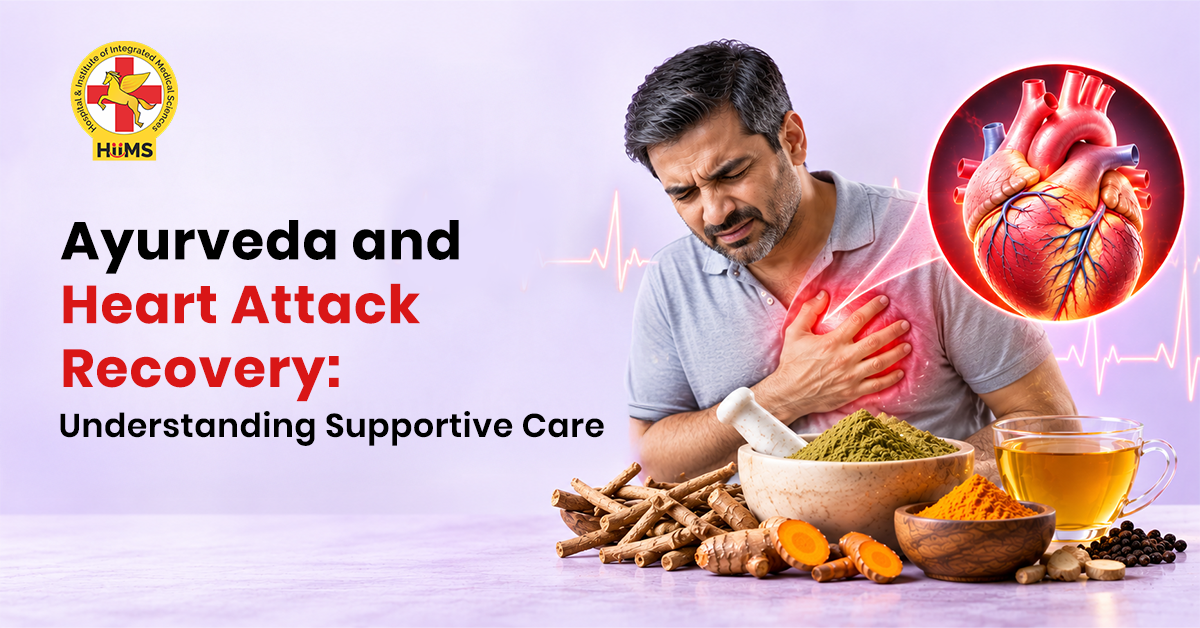
The weeks after a heart attack are confusing for most families. Discharge papers list medicines and follow-up dates, but very little about how daily life should actually look. A neighbour of mine went home after his angioplasty with a prescription and a single line of advice, “walk daily and avoid stress,” and spent months guessing the rest.
This blog covers what recovery generally involves, the heart disease symptoms worth knowing, and where Ayurvedic supportive care can sit alongside your cardiologist’s plan, not in place of it.
What Happens During a Heart Attack, and Why Recovery Needs More Than Medicine
A heart attack happens when blood flow to part of the heart gets blocked, usually by a clot forming over plaque inside an artery. According to the CDC, about 805,000 people in the US have one every year.
That repeat risk is exactly why the recovery period matters so much, since medicines treat the event, but daily habits shape what happens next.
Wondering how supportive care could fit around your current treatment? A quick consultation with Jeena Sikho HiiMS can help you sort out questions before your next follow-up.

Heart Disease Symptoms You Shouldn’t Ignore
Knowing the heart disease symptoms early can genuinely change outcomes. Watch for:
- Chest pressure, tightness, or a heavy feeling, especially during exertion
- Shortness of breath during ordinary activity
- Pain spreading to the arm, jaw, neck, or back
- Cold sweats, nausea, or sudden lightheadedness
- Unusual tiredness that doesn’t match what you’ve done
Sudden chest pain is an emergency. Call for medical help immediately instead of waiting to see if it passes.
How Does Recovery After a Heart Attack Actually Work?
Recovery usually runs on three tracks at once: prescribed medication, gradual physical activity, and lifestyle correction.
The CDC recommends cardiac rehabilitation, a supervised programme covering exercise, healthy eating, and stress counselling, and a systematic review found people who used it were 53% less likely to die from any cause than those who didn’t. In India, structured rehab programmes are still hard to find, which leaves a lot of families improvising at home.
Building a Heart-Healthy Lifestyle After a Heart Attack
A heart-healthy lifestyle doesn’t need dramatic changes. It’s mostly a handful of habits done consistently:
- Short, regular walks increase slowly with your doctor’s approval
- Quitting smoking completely
- Fixed sleep and wake times
- Simple stress relief, like breathing exercises or quiet time
- Keeping every follow-up and lab appointment
Cholesterol Management Beyond the Lab Report
Numbers on a lipid profile matter, but cholesterol management works best when diet, movement, and medication align.
Cutting back on fried and processed food, adding fibre through vegetables and whole grains, and staying active all support what your doctor prescribes. This is also where regular blood tests help, since they show whether your routine is actually working.
Ayurvedic Diet for Heart Disease
An Ayurvedic diet for heart disease leans toward light, freshly cooked, less oily food. Warm meals, cooked vegetables, millets, moong dal, and fruits are common choices, while heavy, deep-fried, and very salty food is reduced.
Meal timing also matters, with dinner kept early and light so digestion isn’t overloaded overnight. Ayurveda links weak digestion with a buildup of toxins, called Ama, believed to burden circulation over time, which is why food choices get so much attention in this system.
Can Ayurveda Support Recovery Alongside Regular Care?
Many people ask this, and the honest answer is that it can work as supportive care. Commonly used approaches at Jeena Sikho HiiMS Nepal include:
- Hridaya Basti, where warm medicated oil is held over the chest area to ease tension and calm the nervous system
- Panchakarma therapies such as Rakhtamokshana, are aimed at detoxification
- Herbs traditionally used for heart support, like Arjuna, Guggulu, and Ashwagandha
- Personalised diet, yoga, and breathing practices for long-term routine
Always tell your doctor about any herb or therapy you plan to add, especially if you’re taking blood thinners or other cardiac medicines.

Choosing the Right Heart Hospital for Ongoing Care
A good heart hospital offers more than emergency treatment. Look for proper diagnostics, clear follow-up plans, guidance on diet and lifestyle, and openness to coordinating supportive therapies with your main treatment. Ask how recovery is tracked after discharge, since that’s where many patients feel left on their own.
Heart Disease Prevention: Small Habits That Add Up
Heart disease prevention is mostly about what you do on ordinary days. Keep blood pressure and sugar in check, stay active, limit salt, avoid tobacco, and get screened if heart disease runs in your family.
None of these is dramatic, but together they lower the chance of a repeat event far more than any single change.
Conclusion
Recovering from a heart attack isn’t a one-time event; it’s a routine built over months, with medicines, movement, food, and calm all pulling in the same direction.

If you need help understanding how Ayurvedic support could fit around your cardiologist’s plan, you can book a VOPD consultation with Jeena Sikho HiiMS Nepal and go through your reports and daily routine with our team.
FAQ’s
1) How soon can I start exercising after a heart attack?
This depends on your condition and treatment, so your cardiologist should set the timeline, usually beginning with light walking and increasing gradually.
2) Can Ayurvedic therapies replace my heart medicines?
Supportive therapies are meant to support heart care. It is always best to talk with your doctor.
3) Is cardiac rehabilitation really necessary?
It’s strongly recommended by the CDC because it combines supervised exercise, education, and counselling, and has been linked with lower risk of death after a heart attack.
4) What foods should I limit after a heart attack?
Deep-fried items, packaged snacks, excess salt, sugary drinks, and red or processed meats are generally the first to cut down on.
5) Does stress really affect recovery?
Yes. Ongoing stress can raise blood pressure and heart rate, which is why relaxation practices are usually part of a recovery plan.