
Skin changes are easy to ignore at first. A small mole looks harmless. A patch on the skin stays there for months. Sometimes people think it is only tanning, allergy, or dryness. But honestly, not every skin change should be ignored for too long. Some forms of skin cancer grow slowly, while others spread much faster than expected. This is why learning about different skin cancer types matters more than most people realise.
Many people hear the word “skin cancer” and assume all forms are equally dangerous. That is not true. Some remain limited to one area for years, while some can spread quickly to other organs if not detected early.
Knowing the warning signs, common risks, and the real difference between different skin cancer types may help people reach proper medical guidance earlier instead of waiting too long.
What Is Skin Cancer and Why Does It Happen?
Skin cancer develops when skin cells begin growing abnormally. This often starts after long-term damage from ultraviolet rays, but other factors may also play a role.
Excess sun exposure is one of the biggest causes. Repeated tanning, weak immunity, family history, exposure to certain chemicals, smoking, and skin damage may also slowly increase the risk over time.
Some common signs connected with skin cancer types and symptoms include:
- A mole changing shape or color
- A wound that does not heal
- Bleeding skin patches
- Dark uneven spots
- Raised bumps
- Itching or irritation
- Skin thickening in one area
Honestly, people often delay checkups because the symptoms do not always cause pain in the beginning.
Understanding Different Skin Cancer Types
Not all skin cancers behave in the same way. Some remain localised, while others spread aggressively.

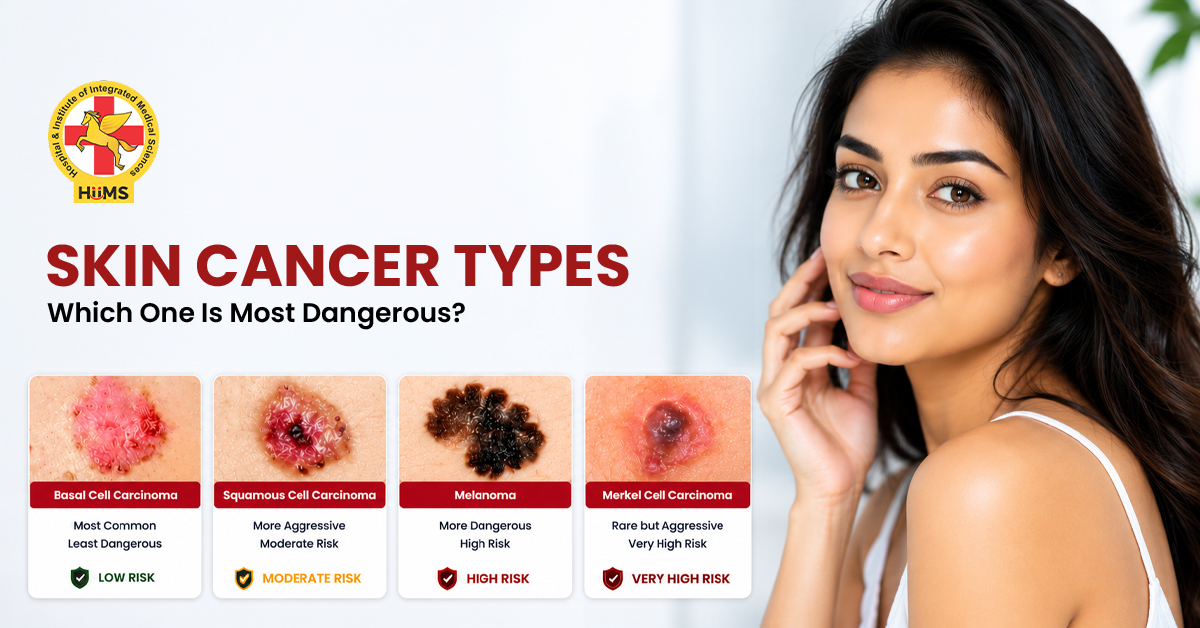
Basal Cell Carcinoma
This is the most common among all skin cancer types. It usually develops slowly and is considered less aggressive compared to other forms. It often appears as:
- A shiny bump
- Pink patch
- Small sore that keeps returning
Although it spreads slowly, ignoring it for years may still damage nearby tissue badly.
Squamous Cell Carcinoma
This type is usually more aggressive than basal cell cancer. It may develop as rough patches, crusty growths, or thick skin lesions.
People with long-term sun exposure commonly experience this condition more often. If left untreated, it may spread deeper into nearby tissues.
Which Skin Cancer Is Deadly?
Most doctors consider melanoma the most dangerous skin cancer because it can move quickly to other body parts when not found early.
Melanoma develops from pigment-producing cells called melanocytes. It may start from an existing mole or appear as a completely new dark patch. This dangerous skin cancer type can spread to:
- Liver
- Brain
- Lungs
- Bones
That is why early detection becomes extremely important. Many people searching online about which skin cancer is deadly are usually referring to melanoma because of its aggressive nature.
Merkel Cell Carcinoma
This is a rare but highly aggressive skin cancer. In many cases, it grows rapidly and spreads faster than expected. Though less common, doctors often consider it another dangerous skin cancer type because delayed diagnosis may become serious very quickly.
Skin Cancer Types and Symptoms You Should Never Ignore
Honestly, the body often gives small warning signs first. The problem is that many people ignore them for months. A simple way many doctors observe suspicious moles is through the ABCDE pattern:
- Asymmetry
- Border irregularity
- Color changes
- Diameter larger than normal
- Evolving appearance over time
These skin cancer symptoms should never be ignored repeatedly:
- Bleeding moles
- Rapid color change
- Painful lesions
- Persistent itching
- Sudden skin growth
- Dark irregular patches
Even mild-looking skin changes deserve proper examination if they continue changing slowly.
Why Early Detection Matters So Much
One important thing people should remember is this: early-stage skin cancer usually becomes easier to manage compared to advanced spread.
Many forms respond better when diagnosed before deeper tissue or organs become involved. This is especially important in cases linked with the most dangerous skin cancer forms.
At places like Jeena Sikho HiiMS, some people also explore supportive Ayurvedic wellness approaches along with medical care for digestion, immunity, recovery support, and overall body balance.
Can Lifestyle Habits Affect Skin Health?
Yes, really. Most of us don’t realise the impact of our everyday activities on the skin. The danger may slowly increase with long-term sun exposure without protection. Smoking, poor nutrition, stress, and a weakened immune system may also affect skin health over time. Simple habits often help support healthier skin naturally:
- Staying hydrated
- Eating fresh fruits and vegetables
- Avoiding excessive tanning
- Reducing smoking
- Sleeping properly
- Paying attention to unusual skin changes
These small routines cannot replace medical treatment, but they do support overall wellness better in the long run.
Why People Should Not Ignore Unusual Moles
Many people keep postponing checkups because the mole “doesn’t hurt.” But pain is not always the first symptom.
Some aggressive cancers stay silent during the early stages. That is exactly why awareness about skin cancer types is important. A changing mole today may look small, but delayed attention can lead to bigger complications later.

Conclusion
Skin cancer is not always easy to identify early because many symptoms appear mild in the beginning. A little patch, changing mole, strange bump, or irritation of the skin may get worse and worse if ignored time after time. There are numerous varieties of skin cancer but melanoma is thought to be the most aggressive one since it can spread fast to other organs. Early care, regular observation and competent medical direction often make a major difference.
At Jeena Sikho HiiMS, people also explore supportive Ayurvedic wellness approaches alongside proper medical care to support overall balance, recovery, and long-term wellness naturally.
In case you are still confused about which step would be more suitable for your condition, you can also book a VOPD consultation with the experts at Jeena Sikho HiiMS to get a better understanding of your health status before deciding on your next course of action.
FAQs
Q1) Which is the most dangerous skin cancer?
Melanoma is generally considered the most dangerous skin cancer because it can spread quickly to organs if not detected early.
Q2) Which skin cancer is deadly if ignored?
Melanoma and Merkel Cell Carcinoma are often considered highly aggressive when diagnosed late.
Q3) What are the common types of skin cancer and symptoms?
Common indicators are changing moles, bleeding patches, dark spots, itching, wounds that do not heal, and strange skin growths.
Q4) Is every dangerous skin cancer type painful?
Not always. Some cancers stay painless during the early stages, which is why regular observation becomes important.
Q5) Does early diagnosis improve chances of recovery?
Yes, early discovery can often help doctors better handle many types of skin cancer before it spreads deeper.