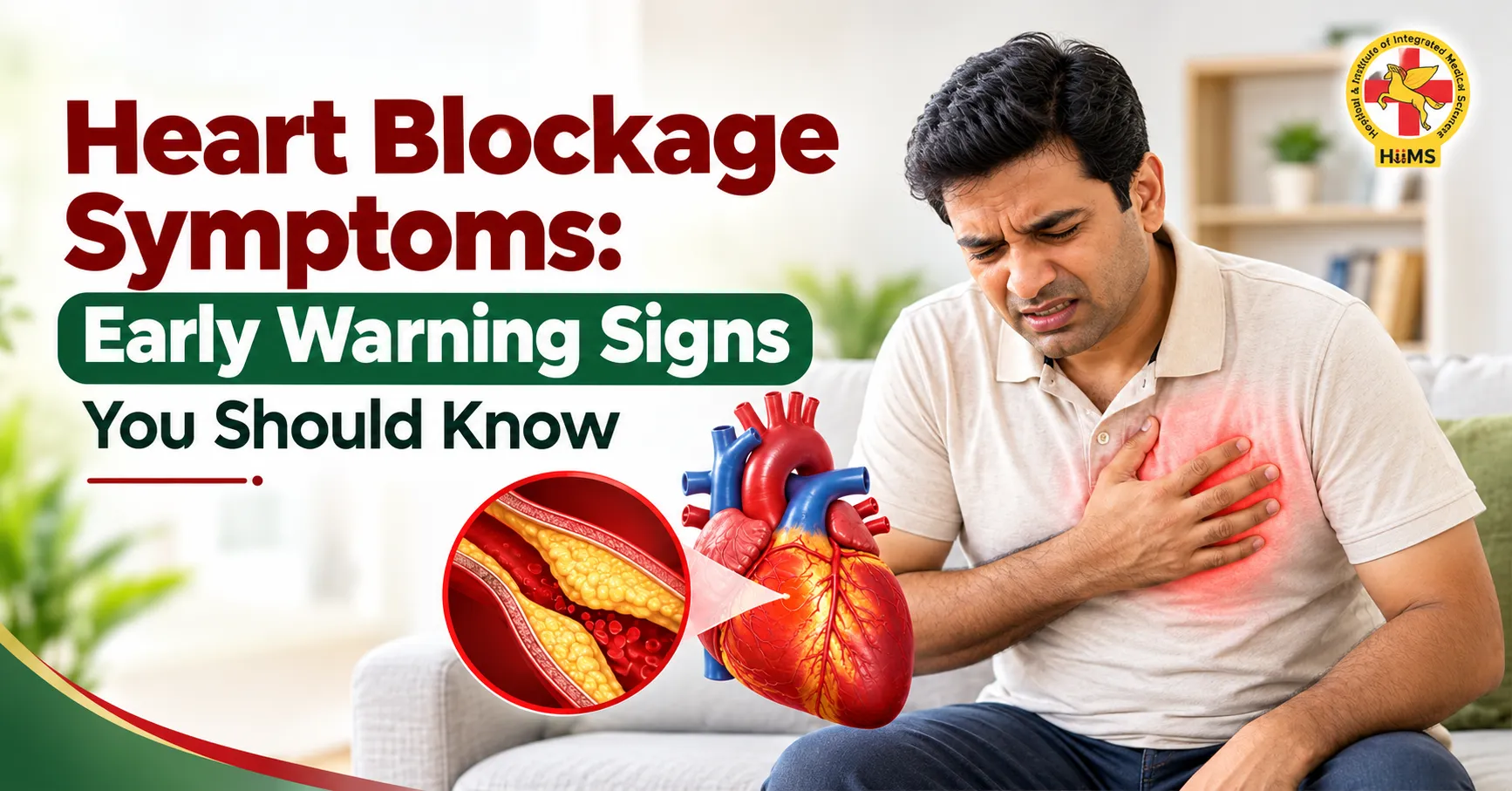

Many people dismiss a little breathlessness on the stairs or a tight feeling in the chest, thinking it is age, gas or stress. Sometimes that is true, but sometimes it is the first hint that an artery is narrowing. Knowing the heart blockage symptoms helps you decide when a symptom is worth getting checked.
In this blog, we go through the early warning signs, how they can look different in women, which symptoms need emergency care, how doctors check for blockages, and what Ayurveda heart care looks like at Jeena Sikho HiiMS.
What Causes a Blockage? Understanding Heart Blockage Symptoms
“Heart blockage” is the everyday term for coronary heart disease. Plaque, made of cholesterol and other fats, slowly builds up inside the arteries that feed your heart and narrows them. The U.S. National Heart, Lung, and Blood Institute (NHLBI) explains that this often develops over many years and can be “silent”.
You may not notice anything until a heart attack or another complication. That is why symptoms tend to show up only once the narrowing is more advanced.
If you feel congestion in your chest area, you need to consult a doctor now.
Early Symptoms of Heart Disease to Notice
These are the main heart blockage symptoms:
- Chest pressure, squeezing, tightness or burning, often during activity
- Shortness of breath
- Pain or discomfort that spreads to the shoulders, arms, neck, jaw or back
- Neck pain when you exert yourself
- Discomfort that feels like indigestion or an upset stomach
- Cold sweats, nausea or lightheadedness
These symptoms often go away with rest and return when you are active or under stress. These early symptoms of heart disease are easy to explain away. At Jeena Sikho HiiMS, patients often tell us they put their breathlessness down to age or weight for months before getting a heart check.
Chest Pain and Heart Blockage: How Angina Feels
The most common link between chest pain and heart blockage is angina. NHLBI describes angina as chest discomfort that happens when part of the heart muscle does not get enough oxygen-rich blood.
It can feel like pressure, squeezing or tightness, and it can even feel like an upset stomach. It may come on while you are active or at rest. All chest pain should be checked by a healthcare provider, so please do not guess.
Signs of Blocked Heart Arteries in Women
Women are somewhat less likely than men to have chest pain with a heart attack. This means heart blockage symptoms in women, such as breathlessness, unusual tiredness, nausea or back and jaw discomfort, can be missed or put down to something else.
For anyone, the signs of blocked heart arteries may also be absent for years. That is why regular check-ups matter if you have diabetes, high blood pressure, high cholesterol, a family history of heart disease or if you smoke.
Coronary Artery Blockage Symptoms That Need Emergency Care
Angina is a warning sign, but a heart attack needs immediate help. Coronary artery blockage symptoms such as chest pain that does not go away with rest, or that comes on while you are resting, are a reason to act quickly.
The same applies if they come with cold sweats, nausea, lightheadedness or breathlessness. It is adviced calling emergency services if you cannot tell whether chest pain is a heart attack. In India, you can call 112 or your local ambulance number. If heart blockage symptoms keep returning, even if they settle, book a check-up soon.
Why This Matters in India
A nationwide study in The Lancet Global Health found that cardiovascular disease caused more than 2.1 million deaths in India in 2015, over a quarter of all deaths.
Among people aged 30 to 69, the chance of dying from ischaemic heart disease rose from 10.4% to 13.1% in men and from 4.8% to 6.6% in women between 2000 and 2015. In other words, heart blockages are not only a concern of old age.
How Doctors Check for Blockages
Doctors usually begin by asking about your symptoms and family history. They may then order blood tests, a chest X-ray, an ECG or an exercise stress test.
Depending on the results, they may add an echocardiogram, a CT coronary angiogram or a coronary angiography. A normal ECG does not always rule out a blockage, which is why doctors sometimes need a second test.
Ayurveda Heart Care: What Jeena Sikho HiiMS Offers
Jeena Sikho HiiMS in Mumbai lists heart disease among the conditions it provides Ayurveda-based care for. In its own guide on heart blockage, HiiMS states that the focus is on caring for the heart through diet, lifestyle and herbal support. For people with heart blockage symptoms, the Ayurveda heart care plan at HiiMS can include:
- Diet guidance: The plan focuses on seasonal vegetables and fruits, lighter dinners and avoiding processed food, maida, alcohol and smoking. The doctors adjust it based on your weight, reports and daily routine.
- Hridya Basti: In this procedure, warm medicated oil is held over the chest area for a set time, often within a ring made of dough. Ayurveda describes it as a therapy for the heart region and circulation, and the doctors decide whether it suits your condition.
- Herbs: HiiMS mentions arjuna, guggul, turmeric and garlic in its heart guide. These should be taken only after consulting a doctor, especially if you already take heart medicines.
- Panchakarma and yoga: Panchakarma is suggested for people with stressful routines, along with yoga and daily activity. The aim is to support heart health and ease stress, not to replace medical care.

Conclusion
Most heart blockage symptoms start quietly: breathlessness on stairs, tightness when you hurry, unusual tiredness. These early symptoms of heart disease are easy to explain away, but a short check-up can give you clear answers.
Know your numbers (blood pressure, sugar and cholesterol), move daily, eat lighter, and get symptoms that keep returning looked at without waiting. If you want guidance on diet, lifestyle and Ayurveda heart care alongside your cardiologist’s plan, you can speak to the doctors online.
FAQs
Q1. Can a blockage exist without symptoms?
Yes. Coronary heart disease can be silent until a heart attack or another complication occurs.
Q2. Is all chest pain related to the heart?
No, but it should not be guessed. Chest pain should always be checked by a doctor.
Q3. Which tests find a blockage?
ECG, stress test, echocardiogram, CT coronary angiogram and coronary angiography, depending on your symptoms.
Q4. Can younger people have blockages?
Yes. Blockages build up over many years, and risk factors like diabetes, smoking and family history can bring symptoms earlier.
Q5. Can Ayurveda help in heart care?
Yes. Ayurveda care is meant to work on root cause of the disease.