

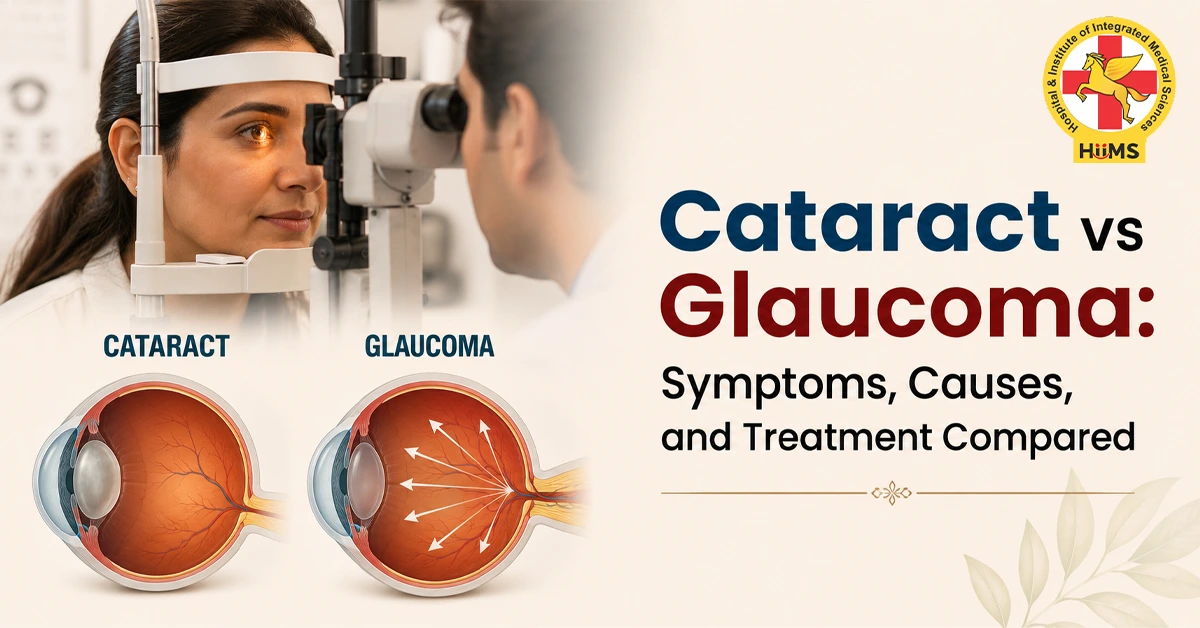
Have you ever wondered why your grandmother’s vision turned cloudy with age, while your uncle was told his eye pressure was too high even though his eyes looked perfectly normal? Both situations are common, and both point to two very different eye conditions that people often mix up. When it comes to cataract vs glaucoma, many patients assume they are the same problem, simply because both affect vision and both become more common as we grow older.
In reality, they affect completely different parts of the eye and need completely different care. In this blog, we will break down cataract and glaucoma in simple language, their symptoms, their causes, and how they are generally managed, including how Ayurveda looks at long-term eye wellness.
What Is a Cataract and What Is Glaucoma?
Before comparing cataract vs glaucoma, it helps to understand what each condition actually is.
The formation of a cataract is a condition where the clear lens of the eyes, located within the eye, gradually becomes cloudy. This is analogous to having a foggy view through a window, and hence, light does not penetrate easily, leading to vision becoming blurry, cloudy, or dim. The cataract occurs either gradually with age or because of an accident, steroid medication, or diabetic condition.
Glaucoma is a set of eye diseases characterised by increased pressure within the eyes, resulting in damage to the optic nerves, the nerves that transfer visual information to the brain. Unlike a cataract, glaucoma does not cloud your vision directly. Instead, it quietly narrows your field of vision from the sides, often without the person realising it until quite a lot of damage has already happened.
Cataract and Glaucoma: Key Differences in Simple Words
When people search for cataract and glaucoma, they usually want a simple, side-by-side understanding. Here is the easiest way to remember it:
- Cataract affects the lens of the eye. Glaucoma affects the optic nerve.
- Cataract vision loss can often be improved with treatment. Glaucoma-related vision loss, once it happens, generally cannot be brought back.
- Cataract develops gradually and is usually painless. Glaucoma can develop silently too, but some types may cause sudden eye pain, redness, or headache.
- Cataract is diagnosed by checking the clarity of the lens. Glaucoma is diagnosed by measuring eye pressure and examining the optic nerve.
Understanding this difference is the first step toward taking the right action at the right time.

Cataract Symptoms You Should Not Ignore
Cataract symptoms tend to build up slowly, which is why many people ignore them for years. Common cataract symptoms include:
- Blurry or cloudy vision, almost like looking through a dusty glass
- Trouble seeing clearly at night or while driving after dark
- Increased sensitivity to bright light or headlights
- Colours appearing faded, dull, or slightly yellowish
- Frequent changes in spectacle power without much improvement
If changing your glasses no longer helps your vision, it is a strong sign that a cataract may be forming and an eye check-up is due.
Glaucoma Symptoms You Should Watch For
Glaucoma symptoms can be tricky because, in many cases, there are no early warning signs at all. This is exactly why glaucoma is sometimes called the silent thief of sight. Still, some signs to watch for include:
- Slow, gradual loss of side or peripheral vision
- Difficulty noticing objects at the edges of your vision
- Eye pain, redness, or headache, mainly in sudden or acute cases
- Seeing halos around lights, especially at night
- Blurred vision that comes and goes
Because glaucoma symptoms often appear only after some vision has already been lost, regular eye pressure checks are important, especially after the age of 40 or if glaucoma runs in your family.
Cataract vs Glaucoma Causes: What Puts You at Risk
Looking closely at cataract vs glaucoma causes helps explain why both conditions become more common with age but for different reasons.
Common causes of cataracts include the following:
- Natural ageing of the eye lens
- Long-term diabetes
- Prolonged use of steroid medicines
- Eye injury or previous eye surgery
- Excess exposure to sunlight over the years
- Smoking and poor dietary habits
Common causes of glaucoma include:
- Increased pressure inside the eye
- Family history of glaucoma
- Age above 40 years
- Diabetes and high blood pressure
- Thin cornea or certain eye structural patterns
- Long-term steroid use, similar to cataract
Interestingly, some risk factors like age, diabetes, and steroid use overlap in both conditions, which is one reason people confuse cataract and glaucoma so often.

How Are Cataracts and Glaucoma Treated?
Modern eye care generally uses different approaches for each condition, and it helps to know what to expect.
Cataract treatment is mainly surgical. When the cloudy lens starts affecting daily life, doctors usually recommend removing it and replacing it with an artificial lens. This is a well-established procedure, and most people notice clearer vision afterwards.
Glaucoma treatment, in comparison, focuses on controlling eye pressure rather than removing anything. This may include prescription eye drops, regular monitoring, and in some cases, further intervention as advised by a specialist. Since damage already caused to the optic nerve cannot be undone, the main goal of glaucoma treatment is to protect whatever vision remains.
It’s worth remembering that modern treatments for both conditions mainly focus on symptom management and slowing down disease progression, which is exactly why long-term lifestyle support is so valuable alongside them.
Jeena Sikho HiiMS Approach: Supporting Eye Health the Ayurvedic Way
At Jeena Sikho HiiMS, we believe that healthy eyes are closely connected to how the whole body functions digestion, stress levels, sleep, and daily habits all play a role. Holistic wellness, and not just the health of the eyes, will be the core of our strategy. The care plan for each person will depend on his/her body constitution (prakriti), lifestyle, and eye conditions. These could include:
- Diet recommendations for healthy eye tissue and good metabolism
- Changes to one’s lifestyle, such as proper sleep and minimising screen fatigue
- Eye relaxation techniques through yoga
- Classic Ayurvedic herbs traditionally used to maintain healthy eye tissue and overall good health
- Some panchakarma procedures were appropriate as part of the wellness program
This strategy will not replace routine eye examination or professional care of patients with cataracts or glaucoma. It will be only an additional step in the way of maintaining overall body balance and general well-being. The idea is simple: while conventional eye care focuses on the eye itself, Ayurveda looks at supporting the person as a whole.
Conclusion
Understanding cataract vs glaucoma is not just about medical terms; it’s about recognising the small signs your eyes are giving you and acting on them early. Cataract clouds your lens, while glaucoma quietly affects your optic nerve. Both need timely attention, and both can benefit from a lifestyle that supports overall eye and body wellness.
If you or a loved one is experiencing blurry vision, night vision trouble or has a family history of glaucoma, don’t wait for symptoms to worsen. Jeena Sikho HiiMS offers VOPD consultations where our team can guide you toward a personalised, holistic wellness plan. Book your VOPD consultation today and take a simple step toward long-term eye wellness.

FAQs
Q1. What are the differences between the causes of cataracts and glaucoma?
Cataract develops due to the presence of fogging of the natural lens of the eye, leading to blurred vision, but in glaucoma, the disease arises due to high pressure within the eye that damages peripheral vision.
Q2. Can someone suffer from cataract and glaucoma simultaneously?
Both diseases occur together very commonly, especially when it comes to elderly patients. Both conditions can be detected separately by conducting an eye exam.
Q3. Are there any similar symptoms associated with both conditions?
The common symptoms of cataract are the appearance of blurriness or cloudiness, while the common signs of glaucoma include gradual loss of vision, particularly side vision.
Q4. Which is the more severe condition among cataract and glaucoma?
Glaucoma is the more severe condition since it leads to irreversible vision loss, whereas the blurry vision in the case of cataracts is reversible.
Q5. Does Ayurveda help in dealing with cataract and glaucoma?
Even though Ayurveda does not replace the treatment of eye diseases, it helps maintain good eye health using proper diet, lifestyle, yoga, and herbs in addition to eye examination.