

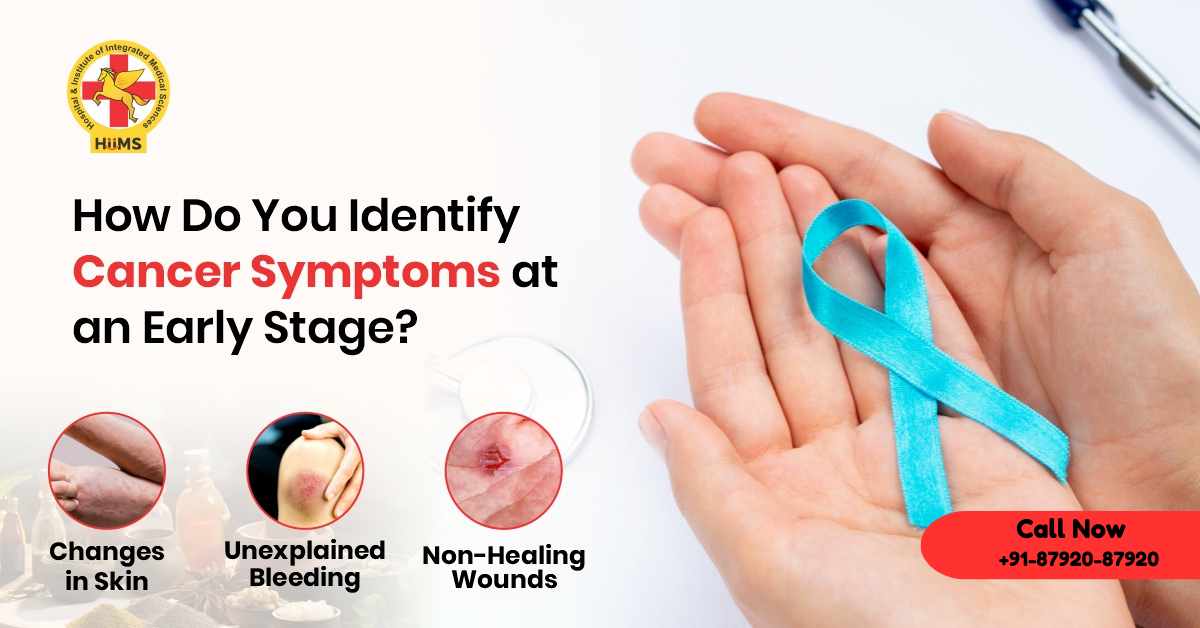
Our body keeps a daily record of how we eat, sleep, move, and recover, and sometimes that record shows small changes we should not ignore. Some of these changes may even appear as early cancer symptoms, which is why paying attention to subtle signals from the body is important. Learning to notice those shifts is not about panic; it is about giving yourself the chance to act before a small problem grows into a large one. Many people who later receive a serious diagnosis first notice several odd feelings, such as slowed digestion, nights without restful sleep, or a constant tiredness that does not match activity levels, and those early observations matter.
When you understand common patterns and compare what is normal for you, you gain an advantage with earlier checks, clearer answers, and simpler treatment options. This blog explains the main cancer symptoms to watch for, links them to systems in the body, and offers practical steps so you can move from concern to care without confusion.
In this blog you will learn what to notice, when to act, and how integrated care at Jeena Sikho HiiMS supports early, balanced recovery.
What Happens Before Cancer Becomes Serious?
Cells can sometimes lose the normal controls that keep growth balanced, and such changes usually develop over months or years. Sometimes the first symptoms of cancer appear mild, such as a small sore that stays longer, new shortness of breath, or a gradual change in appetite, and people dismiss them because life feels otherwise fine.
One single change hardly proves anything; what matters is longevity and pattern. Lifestyle issues like poor digestion, low immunity, long-term stress, tobacco or alcohol use, and irregular sleep quietly make the body less able to correct small cellular mistakes.
From an Ayurvedic viewpoint, when digestion and balance weaken over time, the internal environment becomes less resilient and early warning signs become more likely, so spotting early cancer signs is very important.
Common Cancer Symptoms You Should Not Ignore
Several common cancer symptoms are likely to show up in many different conditions. If any of these continue for more than two to three weeks, talk to a healthcare professional.
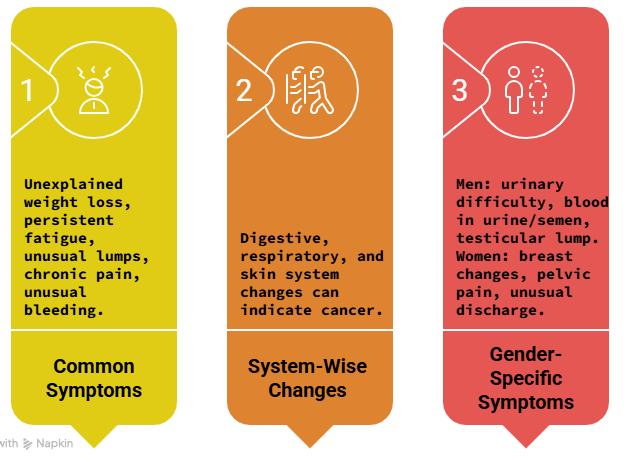
Unexplained weight loss
Losing about four to five kilograms without dieting or added exercise can be the body signaling that something is using extra energy; investigate rather than ignore.
Persistent fatigue
A deep, draining tiredness that rest does not fix often appears early. When normal tasks feel unusually hard, note the change.
Unusual lumps or swelling
A new, firm lump in the breast, neck, armpit, or groin should prompt a health check even if it does not hurt.
Chronic or unexplained pain
Pain that stays in the back, abdomen, or bones without a clear reason deserves evaluation and follow-up.
Unusual bleeding
Blood in stool, urine, phlegm, or any abnormal vaginal bleeding should be assessed promptly as a potential cancer warning sign.
Signs of Cancer in the Body: System-Wise Changes
Looking at symptoms by body system helps connect small complaints to possible causes.
Digestive system
Persistent bloating, difficulty swallowing, chronic indigestion, or changes in bowel habits and blood in stool can point to digestive tract issues.
Respiratory system
A cough or hoarseness lasting beyond three weeks, or breathlessness with no clear infection, should be need to evaluated.
Skin and external signs
A mole that changes shape or colour, a sore that refuses to heal, or a skin thickening can act as visible signs of cancer in body tissue.
Cancer Symptoms in Men and Women: What to Watch Specifically
Gender matters for certain organs and symptoms.
Cancer symptoms in men
New urinary difficulty, blood in urine or semen, or a testicular lump should not be delayed for assessment.
Early warning signs in women
Breast shape changes, persistent pelvic pain, and unusual discharge or bleeding after menopause require immediate checks and tests.
Why People Miss Early Cancer Signs
Work pressures, family responsibilities, fear of bad news, or the habit of self-medicating mean symptoms are frequently postponed. Many accept mild problems as “part of life” rather than signals.
That delay reduces the benefit of early detection of cancer, so acting sooner usually helps both treatment and recovery.
When Should You See a Doctor Immediately?
Seek immediate attention for heavy bleeding, sudden severe breathlessness, fainting, sudden weakness, or rapidly worsening pain. For all other continuing changes lasting two to three weeks, schedule a healthcare review without delay to support accurate diagnosis and timely care.

Conclusion
Attending to small changes helps you keep options open and reduces the need for aggressive treatment later on. Repeated cancer symptoms such as ongoing weight loss, non-resolving fatigue, persistent lumps, or unexplained bleeding are not invitations to fear but to prompt action.
With early detection of cancer, outcomes generally improve, and treatment becomes more focused and manageable. Choose timely assessment, combine modern tests with lifestyle support, and seek help when patterns repeat rather than waiting for crises to occur.
For guidance and integrated care, contact Jeena Sikho HiiMS at +91 82704-82704 or email care@jeenasikho.com and take the next practical step toward your health.
FAQs
Q1. What counts as an early sign I should not ignore?
Ongoing changes that continue for more than two to three weeks, like unexplained weight loss or newly formed lumps, need proper medical evaluation.
Q2. Does a single symptom always mean cancer?
A single symptom rarely gives a diagnosis; patterns and persistence guide the need for tests.
Q3. What methods are used in Ayurveda for early detection?
Ayurvedic doctors focus on detailed body examination, pulse diagnosis, tongue observation, lifestyle review, and symptom analysis to understand internal imbalance before the disease becomes advanced.
Q4. Can lifestyle change reduce risk over time?
Improving diet, quitting tobacco, regular activity and stress reduction support stronger immunity and lower risk.
Q5. Who should I contact if I notice worrying signs?
Speak with a trusted doctor or a specialist at an integrated hospital like Jeena Sikho HiiMS for timely assessment and advice.