
In many Indian homes, the words “Safed Peelia” or “white jaundice” can make people worry about a serious liver problem. Some people understand it as a separate form of jaundice, while others connect it with pale stools, weakness or a change in the usual yellow colour seen in jaundice. This confusion often makes people search for white jaundice treatment before they even know what is happening inside the body.
In reality, “white jaundice” is not a standard medical diagnosis, so understanding the signs behind this commonly used term is more important than the name itself. Knowing what jaundice is, how bilirubin behaves and why bile flow can change can help a person take the right next step instead of following a myth.
In this blog, we will understand its symptoms, possible causes, diagnosis, treatment, and the Ayurvedic approach in simple terms.
What Is White Jaundice?
The first fact to clear up is that “white jaundice” is not recognised as a separate disease in standard medical terminology. People may use this term when they notice unusually pale, clay-coloured or whitish stools along with other signs associated with jaundice. This can happen when bile does not reach the intestine normally, particularly when a blockage affects the bile ducts.
To understand this better, we need to look at bilirubin. It is a yellow pigment produced when old red blood cells break down. The liver processes bilirubin and passes it into bile, which then moves towards the intestine. If this process is disturbed, bilirubin can build up in the blood and cause jaundice. These changes are the real concern behind bilirubin disorder symptoms, not the word “white” itself.
White Jaundice Symptoms: What Changes Should You Notice?
Common Jaundice Symptoms
The signs can differ from one person to another, depending on the reason behind the bilirubin increase. Common jaundice symptoms include:
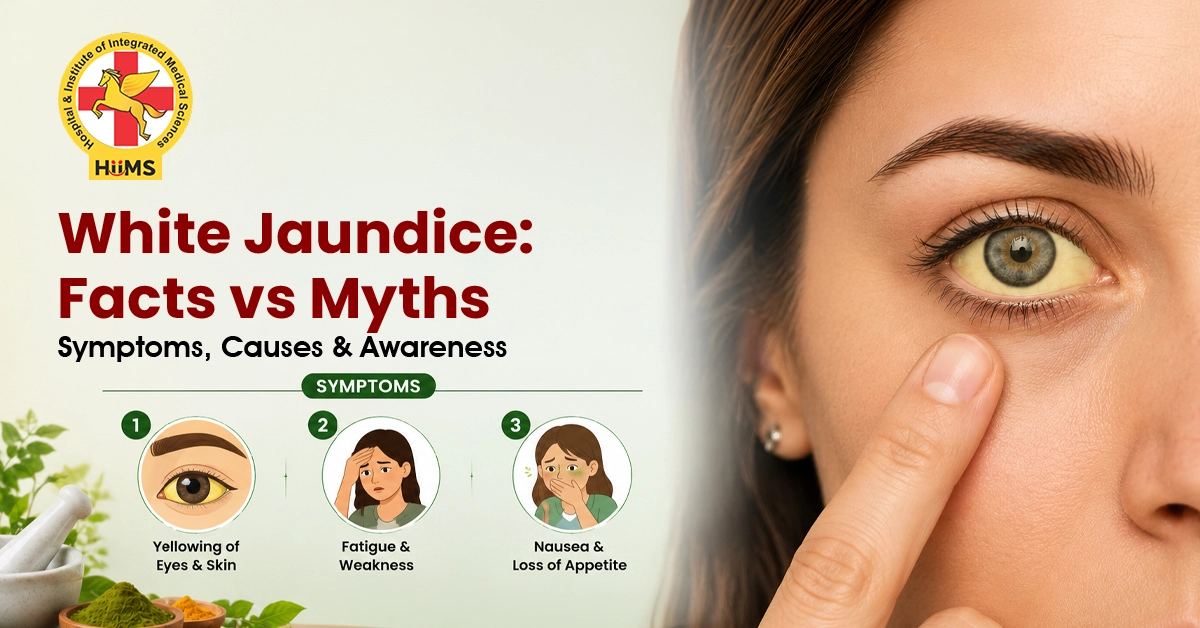
- Yellowing of the eyes or skin
- Dark yellow or tea-coloured urine
- Pale or clay-coloured stools
- Loss of appetite
- Nausea or vomiting
- Tiredness and weakness
- Itchy skin
- Abdominal discomfort
- Fever in some cases
Pale stools become especially important when discussing “white jaundice.” Normally, bile contributes to the colour of stools. When bile flow into the intestine is reduced or blocked, stools can become much lighter than usual, while urine may become darker.
Why Can Stools Become Pale or White?
A pale stool does not automatically mean that a person has “white jaundice.” Food, digestion, and several other factors can influence stool colour. However, stools that remain unusually pale, particularly when they occur with yellow eyes, dark urine or itching, should not be ignored. This is where bilirubin disorder symptoms need proper evaluation rather than a home diagnosis.
What Causes Jaundice? Looking Beyond “White Jaundice”
Once the symptoms are clear, the next question is, “What causes jaundice?” The answer is not the same for everyone. Jaundice can develop because of problems in the liver, blockage in the bile ducts, or increased breakdown of red blood cells. Hepatitis, alcohol-related liver disease, gallstones, and some other conditions can raise bilirubin levels.
Some medicines and substances can also affect the way the liver processes or releases bilirubin. Therefore, jaundice treatment should start only after the underlying reason has been understood.
Ayurveda describes jaundice under the broader condition of Kamala and relates it to an imbalance of Pitta and disturbances in digestion and liver function. This traditional perspective can be considered alongside appropriate medical evaluation rather than being used to identify the cause on its own.
Myth vs Fact: What Should You Really Believe About White Jaundice?
Myth 1: White jaundice is a completely different disease.
Fact: “White jaundice” is a commonly used phrase, not a separate standard medical diagnosis. The actual cause behind the symptoms needs to be identified.
Myth 2: Pale stools always mean white jaundice.
Fact: Pale stools have several possible explanations, but persistent clay-coloured stools with other jaundice signs require medical attention.
Myth 3: Jaundice can be managed only through diet.
Fact: A balanced diet can be part of recovery, but jaundice treatment depends on the underlying cause and may require specific medical care.
Myth 4: Yellow eyes are the only warning sign.
Fact: Changes in urine and stool, itching, weakness, appetite and abdominal discomfort can also provide useful clues.
Jaundice Diagnosis and Tests: Why Finding the Cause Matters
Jaundice symptoms can tell you that something may be wrong, but they cannot explain the exact reason. This is why jaundice diagnosis and tests become important. Doctors may recommend bilirubin testing and a Liver Function Test (LFT) to understand how the liver is working and whether bilirubin levels are raised.
A Complete Blood Count may help when a blood-related cause is suspected, while hepatitis testing can be considered according to the person’s symptoms and history. Ultrasound or other diagnostic techniques may help examine the liver, gallbladder, and bile ducts when obstruction is suspected.
White Jaundice Treatment: An Ayurvedic and Integrated Approach
Good white jaundice treatment should focus on the reason behind the condition rather than treating the name “white jaundice” itself. At Jeena Sikho HiiMS, an Ayurveda-based approach can include individual assessment, suitable dietary changes, daily routine, rest, and selected Ayurvedic therapies according to the person’s condition.
Ayurveda may also consider traditional approaches such as Panchakarma when a qualified practitioner finds them appropriate. However, serious liver disease or a blocked bile duct needs timely medical assessment and treatment. It should not be treated with self-prescribed herbs or home remedies. Bile duct obstruction can sometimes require procedures to restore normal drainage.
Conclusion
“Safed Peelia” or “White Jaundice” may sound like a separate illness, but the name itself does not tell us what is happening inside the body. Persistent pale stools, dark urine, yellow eyes, itching or weakness should be understood in relation to bilirubin, the liver and bile flow.
This is why proper white jaundice treatment starts with identifying the underlying cause rather than relying on common beliefs. Ayurveda can form part of an integrated approach through personalised diet, lifestyle and suitable therapies, while necessary medical evaluation should not be delayed.
If you notice unusual jaundice symptoms or have concerns about your liver health, you can also opt for an online video consultation (VOPD) at Jeena Sikho HiiMS and discuss your health concerns with expert doctors.

FAQs
Q1: What does white jaundice mean?
“White jaundice” is a commonly used term, often linked with pale stools or unusual jaundice signs, rather than a separate medical disease.
Q2: What are the common signs of white jaundice?
Pale stools, dark urine, yellow eyes or skin, itching, weakness, and appetite changes can occur depending on the underlying cause.
Q3: Can pale stools be linked with jaundice?
Persistent pale or clay-coloured stools can occur when bile flow is reduced, especially when other jaundice symptoms appear.
Q4: Which tests help diagnose jaundice?
Doctors may use bilirubin testing, LFT, CBC, hepatitis tests, and imaging such as an ultrasound depending on the suspected cause.
Q5: Can Ayurveda be considered for jaundice care?
Ayurvedic care can be considered as part of a personalised, integrated approach after the underlying condition has been properly assessed.