

Many people feel tired, gain weight or lose hair for months and blame stress, studies or a busy routine. Often, the real cause is a small gland in the neck. The thyroid controls your energy, body heat, heartbeat and weight, so when it slows down or speeds up, your whole body feels it.
A study across eight Indian cities found that about 1 in 10 adults has hypothyroidism. The good news is that thyroid problems are easy to test for and can be managed with the right care. If you are looking for thyroid treatment in Kota, this blog explains the symptoms, causes and treatment options, including Ayurvedic care.
What Does the Thyroid Do?
The thyroid is a small, butterfly-shaped gland at the front of your neck. It makes hormones that control how fast your body uses energy. Two main problems can occur:
- Hypothyroidism: The gland works too slowly and makes too little hormone.
- Hyperthyroidism: The gland works too fast and makes too much hormone.
Even a small change in this gland can affect how you feel every day. That is why it helps to understand it early.
Early Signs of Thyroid Problems You Should Notice
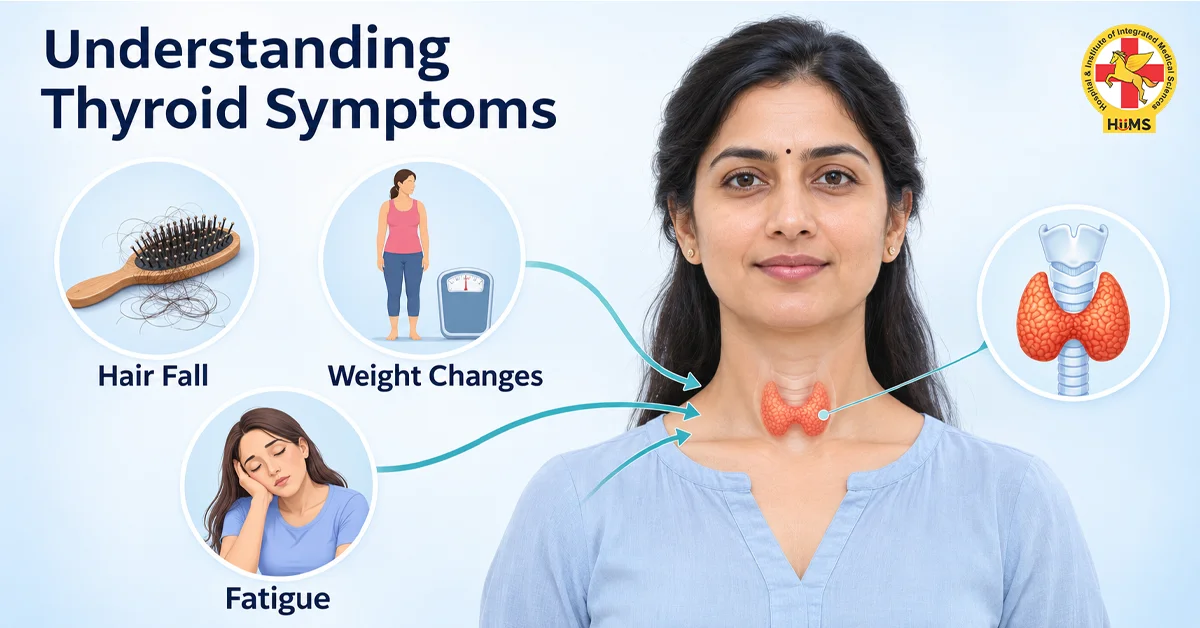
Thyroid disease symptoms depend on whether the gland is slow or fast. Many signs look like normal tiredness, so people often ignore them.
When the Thyroid Is Slow (Hypothyroidism)
- Constant tiredness, even after a full night’s sleep
- Weight gain without a change in food
- Hair fall and dry, rough skin
- Feeling cold more than others
- Constipation
- Low mood and poor focus
- Irregular or heavy periods in women
When the Thyroid Is Fast (Hyperthyroidism)
- Weight loss despite normal eating
- Fast heartbeat or palpitations
- Feeling hot, sweating a lot
- Anxiety, restlessness and trouble sleeping
- Shaky hands and loose motions
- Light or irregular periods
Other Signs to Notice
- Swelling at the front of the neck (goitre)
- Hoarse voice or trouble swallowing
If several of these signs appear together, get a thyroid test. Do not wait for them to get worse.
Why Do Thyroid Problems Happen in Adults?
Doctors find thyroid problems in adults for many reasons. These include autoimmune conditions, iodine imbalance, stress, poor sleep and irregular meals. Genes and hormone changes also play a role.
Research shows who is more at risk:
- Hypothyroidism was far more common in women than in men (15.86% vs 5.02%) and in older adults than in younger ones (13.11% vs 7.53%). Inland cities, such as Kota, had more cases than coastal cities.
- A study from North India found that thyroid problems were common and that women aged 18 to 35 years were often affected.
Many people in Kota also deal with long study hours, desk jobs, irregular meals and little movement. These habits can add stress to the body, so it helps to watch the signs early.
When Should You See a Thyroid Doctor in Kota?
See a thyroid doctor in Kota if you have:
- Tiredness, weight change or hair fall for more than a few weeks
- A swelling or lump in the neck
- Irregular periods or trouble conceiving
- A family history of thyroid disease
A thyroid specialist in Kota will usually order a simple blood test. It checks TSH, T3 and T4, and sometimes anti-TPO antibodies, which show if the immune system is involved. The test is quick, and it gives a clear answer.

Understanding Thyroid Care Options
The right treatment depends on the type of thyroid problem, your age and your test results.
- Hypothyroidism: Doctors usually give a daily hormone tablet to replace the missing thyroid hormone. You need regular blood tests to adjust the dose.
- Hyperthyroidism: Doctors may give medicines that slow down the gland. Some people need radioactive iodine treatment or surgery.
- Goitre or thyroid nodules: The doctor may suggest tests such as an ultrasound. Treatment depends on the size and type of the swelling.
Side Effects to Know About
These treatments help many people, but they can also cause problems:
- Hormone tablets: A dose that is too high can cause a racing heart, poor sleep, anxiety and weaker bones over time. Many people also need to take them for years.
- Anti-thyroid medicines: They may cause rashes, joint pain or, rarely, liver problems and a drop in white blood cells.
- Radioactive iodine or surgery: They can leave the thyroid underactive, so many people need lifelong tablets afterwards.
That is why many people look for supportive care to use along with their treatment, and this is where Ayurveda comes in.
Ayurvedic Thyroid Care in Kota at Jeena Sikho HiiMS
Thyroid care in Kota at Jeena Sikho HiiMS focuses on the root cause of problems. Ayurveda links them to an imbalance of Kapha and Vata and to weak digestion (Agni). When food is not digested well, a sticky waste called ama builds up, blocks the body’s channels and slows the metabolism.
How Ayurveda Plans the Care
- Checks your body type, digestion, sleep and stress
- Clears toxins with suitable cleansing therapies
- Strengthens digestion with herbs and warm, simple food
- Calms the mind with yoga, breathing and a steady routine
Panchakarma Detox Therapies
Before cleansing, the doctor prepares your body with oil massage and herbal steam. Then, depending on your condition, the doctor may suggest:
- Vamana: Removes extra Kapha from the upper body
- Virechana: A gentle bowel cleanse that clears excess heat and toxins
- Basti: Herbal oil or decoction given through the rectum to calm Vata
- Nasya: Medicated oil drops placed in the nose to support the head and neck
- Raktamokshana: A blood-purifying method used only when the doctor finds it necessary

Herbal Support
After cleansing, a doctor may suggest herbs such as Ashwagandha, Guggul and Triphala. The right herb depends on your body type and thyroid condition. For example, some herbs may not suit people with an overactive thyroid. So take herbs only with a doctor’s advice, and never stop your thyroid tablets on your own.
Diet and Natural Remedies for the Thyroid
What you eat every day can help your thyroid work better, so a few simple food choices and home remedies can support your treatment.
Foods That Help
- Freshly cooked vegetables, moong dal and khichdi
- Pumpkin and sunflower seeds, for selenium and zinc
- A few soaked almonds or walnuts
- Iodised salt in normal amounts
Foods to Limit
- Packaged snacks, bakery items and sugary drinks
- Too much soy
- Raw cabbage and cauliflower (cook them first)
Simple Home Remedies
- Coriander seed water: Soak one teaspoon overnight and drink it in the morning
- Tulsi tea: A calming drink that helps with stress
- Amla: Taken fresh or as juice
Small, steady changes in your plate work better than strict rules. Start with one or two and build from there.
Daily Habits for Thyroid Care
Your daily routine has a big effect on your thyroid, so a few steady habits can help you feel more energetic.
- Sleep by 10 pm and wake up early
- Walk for 30 minutes every day
- Practise Surya Namaskar, Sarvangasana and Ujjayi pranayama
- Eat meals at fixed times and finish dinner early
- Take a few quiet minutes daily to ease stress
Small habits, followed every day, support your treatment and help your body find its balance.
Conclusion
Thyroid problems often grow slowly, but you can catch them early. Notice the symptoms, get a simple blood test and choose a care plan that suits your body.
Thyroid treatment in Kota at Jeena Sikho HiiMS follows a natural, holistic approach. Doctors listen to your concerns first, then look at your digestion, sleep, stress, routine, and plan care around your body and lifestyle. Book a VOPD consultation today and take the first step towards a healthier thyroid.

FAQs
1. What are the early symptoms of thyroid disease?
Constant tiredness, weight change, hair fall and feeling too cold or too hot are common early signs.
2. Which test checks the thyroid?
A blood test for TSH, T3 and T4 is the main test. Doctors may also check anti-TPO antibodies.
3. Can Ayurveda cure thyroid problems?
Ayurveda offers herbs, therapies, diet and routine changes that support the body. It works best under the guidance of a qualified doctor.
4. Which foods are good for the thyroid?
Cooked vegetables, moong dal, khichdi and seeds like pumpkin and sunflower are good choices.
5. Are thyroid problems more common in women?
Yes. Research shows women have hypothyroidism more often than men.