

Most people can’t tell when their kidneys are struggling. The CDC says that as many as 9 in 10 adults with chronic kidney disease don’t know they have it, because early damage rarely causes symptoms.
Knowing the signs of poor kidney function helps you notice small changes and get tested before they add up. In this blog, we cover the early and later signs, what causes kidneys to slow down, how doctors check them, and everyday habits that help.
Early Signs of Kidney Disease: Why They Are Easy to Miss
Your kidneys can lose a good part of their function before you feel anything. NIDDK, part of the U.S. National Institutes of Health, says that most people in the early stages of CKD have no symptoms, and that for many people the only way to know is a blood and urine test.
When the early signs of kidney disease do show up, they are mild and look like everyday problems: a bit of puffiness around the eyes in the morning, feeling more tired than usual, or waking up at night to pass urine. Because these are so common, people often explain them away.
Puffy eyes in the morning or foamy urine lately? Visit a Jeena Sikho HiiMS doctor before it becomes something you get used to.

Chronic Kidney Disease Symptoms in the Later Stages
As kidney function drops further, the signs of poor kidney function become clearer. The chronic kidney disease symptoms involve loss of appetite, nausea or vomiting, tiredness, sleep issue, trouble focusing, changes in urination, foamy urine, itching, weight loss, muscle cramps, and chest pain or shortness of breath. Swelling is more prone when the disease is advanced or when a lot of protein is leaking into the urine.
Get urgent help if you pass very little or no urine, feel confused, have severe breathlessness or chest pain, or have severe pain with fever.
Common Signs of Poor Kidney Function
These are the changes most often linked with weaker kidneys. They can come from other causes too, so treat them as a reason to get tested and not as a diagnosis:
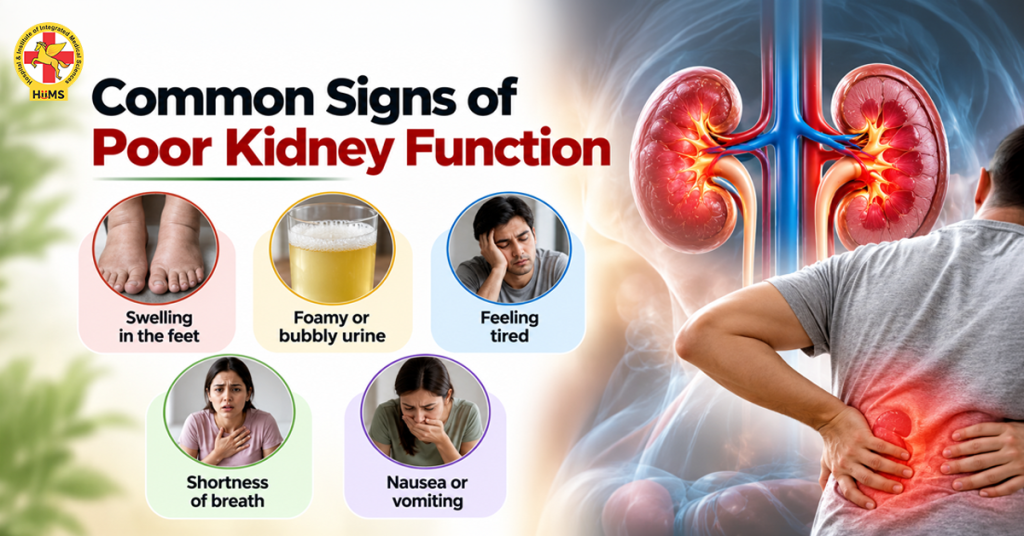
- Swelling in the feet, ankles, hands or around the eyes
- Passing urine more often or less often than usual, especially at night
- Foamy or bubbly urine
- Blood in the urine, or urine that looks dark brown
- Feeling tired, weak or having trouble sleeping
- Loss of appetite, nausea or vomiting
- Itchy or dry skin
- Muscle cramps
- Shortness of breath
At Jeena Sikho HiiMS, people often tell us the first thing they noticed was puffy eyes in the morning, or getting up at night to urinate, and they put it down to sleep or drinking too much water.
Causes of Poor Kidney Function
The causes of poor kidney function are usually long-term conditions that strain the kidney’s tiny filters. The main ones are diabetes and high blood pressure. Others include kidney stones, repeated infections, blocked urine flow, long-term use of painkillers such as ibuprofen, certain herbal or unverified products, smoking and a family history of kidney disease. Knowing these helps you read the signs of poor kidney function in context.
Numbers from India show why this matters. The ICMR-INDIAB study, which tested 25,408 adults across 31 states and union territories, found impaired kidney function in about 3.2% of adults in India, as published in the Indian Journal of Medical Research. The rate was higher in people with diabetes or hypertension.
How Doctors Check Kidney Function
You can’t confirm the signs of poor kidney function by looking at them. Doctors use two simple tests: a blood test for serum creatinine, which is used to calculate your eGFR (a measure of how well the kidneys filter), and a urine test for albumin (protein).
They also check your blood pressure and sometimes do an ultrasound. If you have diabetes, NIDDK advises getting checked every year. People with high blood pressure or a family history of kidney disease should also ask about regular testing.
Natural Ways to Support Kidney Health
Some natural ways to support kidney health are simple, and they work best alongside your doctor’s plan:
- Keep salt low (pickles, papad, namkeen and instant noodles add up fast).
- Check your blood pressure and your sugar if you have diabetes.
- Stay active, keep a healthy weight and don’t smoke.
- Drink water as your doctor advises, since some kidney patients need to limit fluids.
- Avoid frequent use of painkillers like ibuprofen, and don’t take herbal powders, supplements or detox products without checking with a doctor.
If your kidney function is already low, you may also need to limit foods high in potassium or phosphorus, so ask a doctor or renal dietitian for a plan that fits you.
Ayurvedic Kidney Care at Jeena Sikho HiiMS
Ayurveda looks at diet, daily routine and overall balance. At Jeena Sikho HiiMS, the support can include:
pH-balanced diet: Acharya Manish Ji’s diet follows a Plate 1 and Plate 2 pattern, built around fruits, vegetables and millets. If your kidneys are weak, the doctor decides which foods and portions are safe, since potassium, phosphorus, protein and fluid needs differ at each stage.
Panchakarma: HiiMS hospitals give therapies such as Virechana and Basti (including Kal Basti) under supervision, along with therapies like Hot Water Immersion and Contrast Therapy that HiiMS teaches in its OPD, VOPD and IPD care. The doctor first checks your kidney tests, blood pressure and strength, because fasting, dehydration and some cleansing procedures can be harmful in kidney disease. Talk to your nephrologist before starting any of them.
Yoga and lifestyle guidance: Gentle movement, regular sleep and stress management, planned around your condition.
GRAD System at HiiMS
For kidney patients, HiiMS follows the GRAD (Gravitational Resistance and Diet) system. As described, it is a holistic approach that combines three parts:
Hot Water Immersion (HWI): You sit in a tub of water up to neck level, heated to 42°C. HiiMS says the warm water improves blood circulation, helps with detoxification through sweat and relieves stress, and lists kidney, liver and heart conditions among those it is used for.
Head Down Tilt (HDT): You lie on a specially designed incline bed with your head lower than your feet. HiiMS says it helps blood flow to the brain, eases pressure on the spine and supports circulation.
pH-balanced diet: A structured way of eating built around whole foods, adequate hydration and portion control, which HiiMS says supports the body’s natural rhythms and digestion.
Natural Detox for Kidneys: HiiMS Kadhas and Juice
HiiMS also shares a set of herbal drinks used as natural detox for the kidneys. These are the four it lists:
Kidney Care Kadha: A naturopathic blend created under the guidance of Acharya Manish Ji. HiiMS presents it as a kadha for a kidney cleanse, drawing on herbs from nature.
White Pumpkin (Kushmanda) Juice: HiiMS describes it as a natural kidney detox drink meant to support kidney health, including creatinine levels. Keep getting your creatinine checked, and ask your doctor about it if you are on a potassium-restricted diet.
Corn Silk Kadha: A remedy by Acharya Manish Ji made with corn silk, ajwain, fennel, cardamom and cloves. HiiMS says it is meant to detox the kidneys and improve urine flow, so check with your doctor if you take water tablets or have a fluid limit.
Kidney Stone Removal Kadha: A decoction of Makoy, Punarnava and other herbs, which HiiMS presents as a home remedy to help ease the passage of stones through urine. Stones still need proper evaluation, and severe pain, fever or blocked urine need urgent care.
Kidney Support Combo From the Jeena Sikho Store

If you’d like a ready routine, the Kidney Support Combo from the Jeena Sikho Store brings together three products: the Pet Yakrit Pleeha Shuddhi Kit, Dr. Liver and Shuddhi Dr. Kidney Care. According to the store, it is meant to help maintain urinary comfort, fluid balance and digestion as part of a daily wellness routine.
It includes traditional herbs such as Pashan Bhed, Varun Chhal, Punarnava, Gokhru and Sheetal Chini for urinary comfort. The store suggests 1 to 2 Dr. Kidney Care tablets twice a day or as advised, with the 28-day Pet Yakrit Pleeha kit taken before bed.
The kit also contains herbs that act on the bowels, such as Nishoth, so please check with your doctor first, especially if your kidney function is low or you take tablets for blood pressure or diabetes.
Conclusion
Kidney trouble often stays quiet, so the most reliable step is a simple blood and urine test, especially if you have diabetes, high blood pressure or a family history. Watch for the signs of poor kidney function we covered, such as swelling, changes in urination, foamy urine and ongoing tiredness.
And keep your early signs of kidney disease checks regular, even if you feel fine. If you want guidance on diet and lifestyle alongside your nephrologist’s plan, you can talk to a doctor online.
Can’t get away for a visit? Share your kidney reports from home in a VOPD consultation with Jeena Sikho HiiMS.

FAQs
1. What is the first sign of poor kidney function?
Often there isn’t one. Early kidney disease usually has no symptoms, which is why blood and urine tests are the only way to know.
2. Does foamy urine always mean kidney problems?
No. It can have other causes, but if it keeps happening, get a urine test for protein.
3. Can swelling in the feet be from the kidneys?
It can be, but it also has other causes, such as heart or vein problems. A doctor needs to find out which.
4. Which tests check the kidneys?
Serum creatinine with eGFR, a urine albumin test and a blood pressure check are the usual ones.
5. Can Ayurveda or Panchakarma cure kidney disease?
No. They are not proven cures. Talk to your nephrologist before trying any therapy, and never stop dialysis or medicines on your own.