
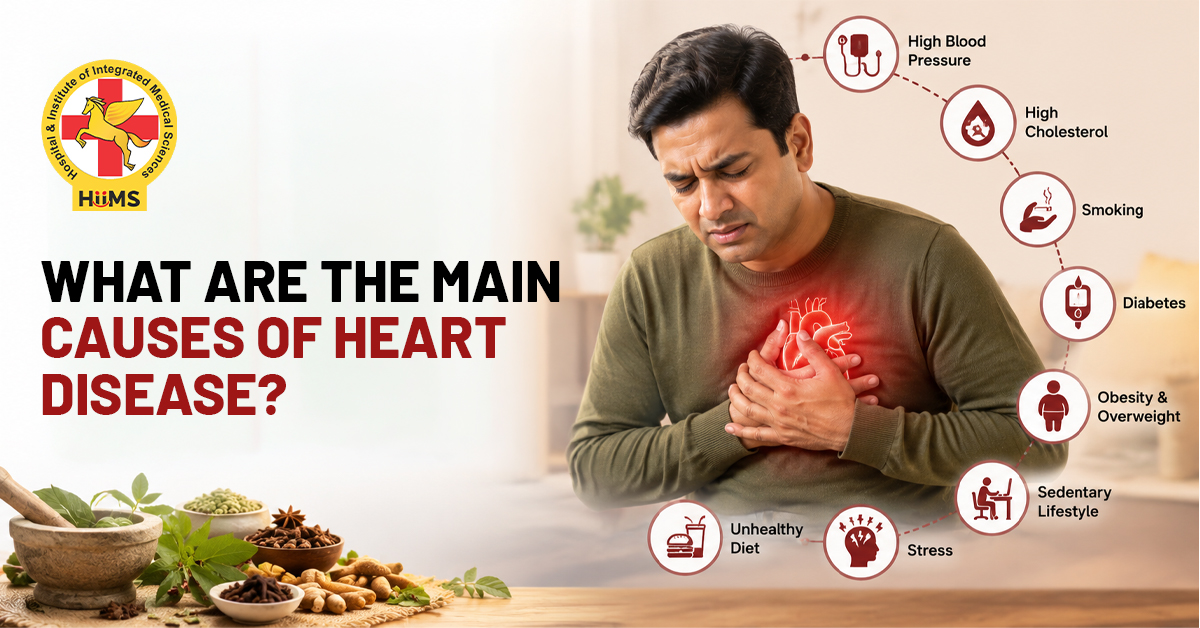
Ask someone what causes heart disease, and you’ll usually hear the same two things: bad diet, not enough exercise. Not wrong, exactly. But that’s only scratching the surface. There’s an actual process happening inside your blood vessels, quietly, for years, long before anyone notices anything’s wrong.
This blog gets into what’s really going on, so these risk factors actually make sense instead of just sounding like warnings you’ve heard a hundred times.
What’s Actually Happening Inside Your Blood Vessels?
Most causes of heart disease eventually lead back to one thing: damage building up inside your blood vessels over time. It starts small, tiny injuries to the inner walls of the vessels carrying blood to your heart. Once that happens, fatty deposits start sticking to those damaged spots, slowly piling up into what’s basically a blockage.
Give it years, and that buildup hardens, narrows the passage, and restricts blood flow. If a piece of that buildup breaks loose, it can trigger a clot right there, blocking the vessel completely, which is how most heart attacks actually happen.
The Main Causes of Heart Disease
1) High Blood Pressure: The Biggest Contributor
Of all the risk factors researchers have studied, high blood pressure has the strongest, most consistent link to this kind of vessel damage. Constant pressure pushing against the vessel walls causes repeated small injuries, exactly the kind of damage that lets fatty buildup take hold.
It’s one of the few risk factors doctors treat aggressively even before any symptoms of heart disease show up, precisely because the evidence linking it to real damage is that strong.
2) Diabetes: How It Speeds Everything Up
Diabetes doesn’t just increase your risk;; it also changes how quickly things progress. In people with diabetes, this buildup happens earlier, spreads faster, and affects more blood vessels than in people without it.
High blood sugar damages vessel walls directly, triggers inflammation, and messes with how fat gets processed in the blood, three things working together to speed everything up. That combination is a big reason diabetic patients face noticeably higher heart risk, even when other numbers look fairly controlled.
3) Smoking: What It Actually Does to Your Blood Vessels
Smoking remains one of the most damaging and, honestly, most avoidable causes of heart disease. Every single cigarette injures the inner walls of your blood vessels directly, and that damage isn’t limited to your lungs; it travels through vessels all over your body.
Even secondhand smoke, or chewing tobacco, carries a similar risk. Here’s the encouraging part, though: this particular risk factor drops significantly once someone quits, unlike some others that leave more lasting changes behind.
4) Cholesterol and Diet: What You’re Actually Feeding the Problem
LDL cholesterol, the “bad” kind, is literally raw material for that buildup inside your vessels. Diets high in saturated fat, trans fat, and ultra-processed foods raise LDL levels, giving the buildup more to work with at every injured spot.
This is exactly why dietary changes and cholesterol medications like statins target the same root issue, reducing the fuel available in the first place.
5) Extra Weight
Here’s something worth knowing: obesity doesn’t just sit alongside other risk factors; it actively fuels several of them at once.
Extra body fat, especially around the belly, triggers inflammation and insulin resistance, which then raises blood pressure, worsens cholesterol, and increases diabetes risk, all pushing toward heart disease from different angles simultaneously. Not moving enough makes this worse, too, since regular activity is one of the better ways to counter that inflammation.
6) Family History: Does Heart Disease Run in Families?
To some extent, yes. Age, gender, and genetics count as fixed risk factors, meaning family history genuinely shifts your starting point regardless of how well you live.
That said, having it in your family doesn’t guarantee you’ll get it, and not having it doesn’t guarantee you’re safe either. It just means the things you can control, blood pressure, blood sugar, smoking, and cholesterol, deserve extra attention if your genetics already carry some risk.
What Symptoms Actually Show Up From All This?
Symptoms of heart disease usually don’t show up until this damage has already progressed quite a bit, which is exactly why understanding the causes matters more than just watching for symptoms.
Chest discomfort, getting winded during normal activity, and unusual tiredness are the most common symptoms of heart disease, and they often appear only after years of the process described above. That gap between cause and symptom is precisely why catching and controlling risk factors early makes such a real difference down the line.
Conclusion
Understanding what actually causes heart disease, beyond surface-level advice, gives you a much clearer reason to take blood pressure, blood sugar, and cholesterol seriously, well before any symptoms of heart disease show up.
If you want to explore how Ayurvedic support could work alongside managing these underlying risk factors, reach out to Jeena Sikho HiiMS to book a VOPD session and talk it through with their team.

FAQs
- Is plaque buildup the same thing as heart disease?
Not exactly, it’s the underlying process that leads to several forms of heart disease including blocked arteries and heart attacks.
- Why does high blood pressure damage blood vessels specifically?
Constant pressure against the vessel walls causes small, repeated injuries, exactly the kind of damage that lets fatty buildup take hold.
- Does quitting smoking actually undo the damage already done?
Not fully, but it significantly slows further damage, and your risk drops measurably once you quit.
- Why does diabetes speed up heart disease so much?
High blood sugar damages vessel walls directly, triggers inflammation and disrupts fat metabolism, all of which accelerate the buildup.
- Can extra weight cause heart problems even with normal cholesterol?
Yes excess body fat independently triggers inflammation and insulin resistance, both of which raise heart risk.