
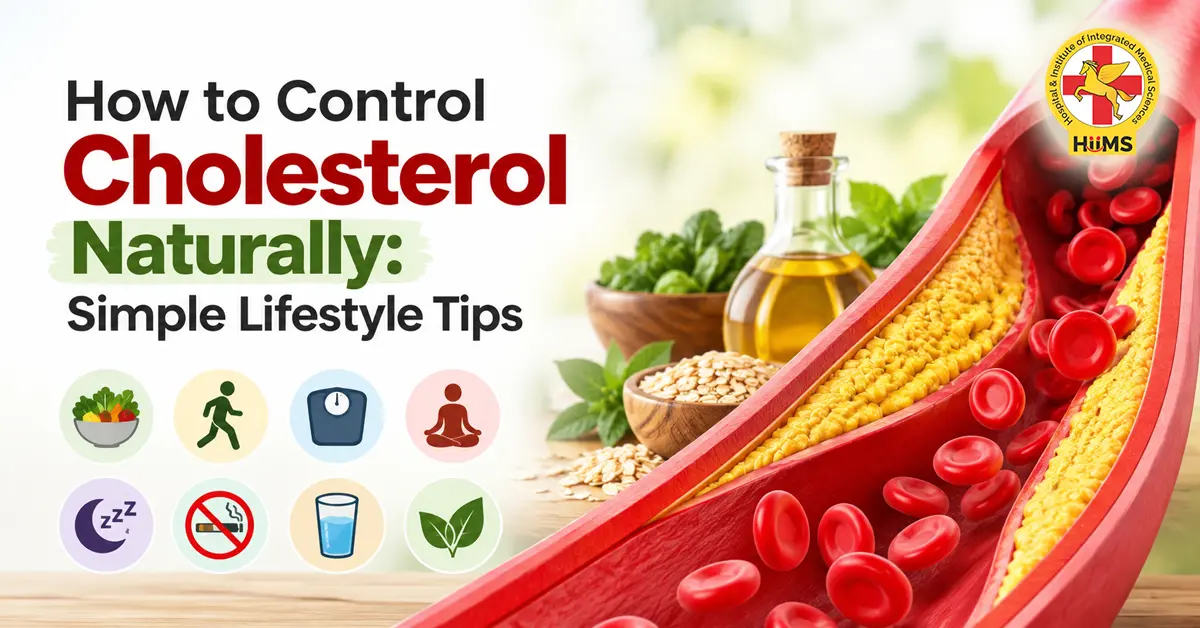
You can feel perfectly normal and still have high cholesterol. Many people discover it during a routine blood test, often when they have no particular health complaint. What you eat, how active you are and your family history can all affect your cholesterol levels. If your report has come back higher than expected, start by looking at your everyday habits.
But learning how to control cholesterol naturally doesn’t mean you have to give up all the foods you love or go on a restrictive diet. So it’s about trying practical changes that fit with your routine, and seeing if they help. For some people, lifestyle changes are enough to improve their numbers; others may also need medication.
What Does High Cholesterol Mean?
Your body needs cholesterol to make cells and certain hormones. The problem is having too much of the wrong type in your bloodstream.
- LDL cholesterol: Often called bad cholesterol, it can build up inside artery walls.
- HDL cholesterol: Helps carry cholesterol back to the liver.
- Triglycerides: Another type of blood fat that can add to heart disease risk when levels are high.
High cholesterol usually has no noticeable symptoms. A lipid profile blood test is the way to check your levels. Your doctor will look at the results alongside factors such as age, blood pressure, diabetes and family history before deciding what they mean for you. The 2026 ACC/AHA cholesterol guideline also stresses assessing a person’s overall cardiovascular risk, rather than looking at one number alone. Contact Jeena Sikho HiiMS Bhopal experts now to manage your cholesterol!
Tips to Control Cholesterol Naturally
Here are the tips to control cholesterol naturally:
1. Start With Foods That Lower Cholesterol
You do not need expensive health foods to improve your diet. Many useful options are already part of Indian kitchens. When considering how to control cholesterol naturally, look at what you can add to your meals, not just what you need to avoid.
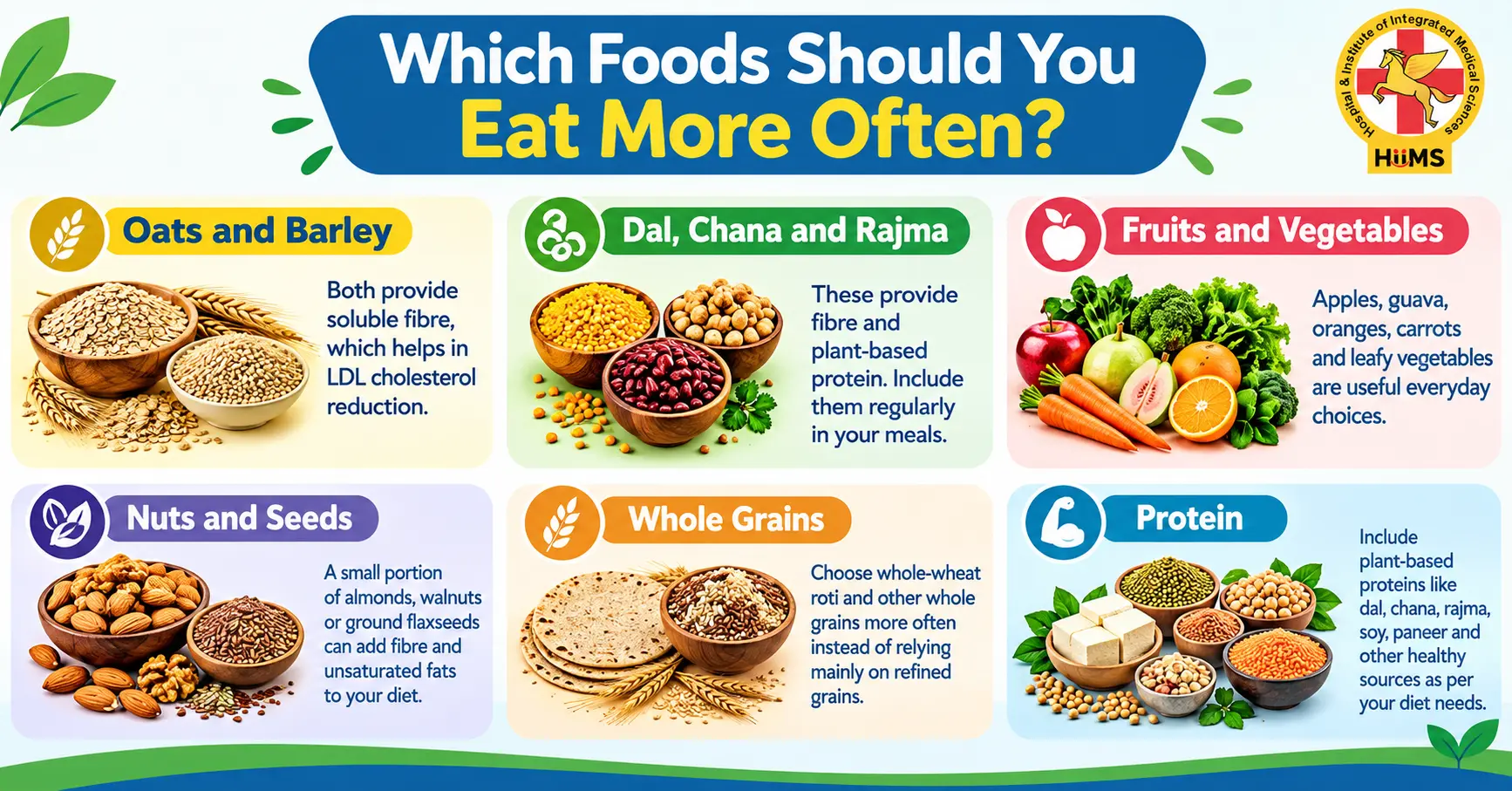
Which Foods Should You Eat More Often?
These foods that lower cholesterol can help as part of a balanced diet:
- Oats and barley: Both provide soluble fibre, which helps in LDL cholesterol reduction.
- Dal, chana and rajma: These provide fibre and plant-based protein. Include them regularly in your meals.
- Fruits and vegetables: Apples, guava, oranges, carrots and leafy vegetables are useful everyday choices.
- Nuts and seeds: A small portion of almonds, walnuts or ground flaxseeds can add fibre and unsaturated fats to your diet.
- Whole grains: Choose whole-wheat roti and other whole grains more often instead of relying mainly on refined grains.
These cholesterol-lowering foods are not quick fixes. Eating oats once will not bring high cholesterol down overnight. The benefit comes from your overall eating pattern over time. The National Heart, Lung, and Blood Institute recommends soluble fibre, lower saturated fat intake and other dietary changes as part of its cholesterol-lowering plan.
2. Change the Way You Cook
Sometimes the issue is not the meal itself but how often it is fried or how much fat goes into preparing it. If you are exploring how to reduce cholesterol naturally, a few changes in your kitchen can be a good starting point.
Try these adjustments:
- Cut back on frequent deep-fried snacks, packaged pastries and processed meats.
- Use less butter, ghee, cream and vanaspati, especially if your diet contains them in large amounts.
- Replace some foods rich in saturated fat with options containing unsaturated fats.
- Keep sweets and sugary drinks occasional, particularly if your triglycerides are high.
- Pay attention to portion sizes instead of eating extra simply because a food is considered healthy.
You can still eat familiar meals. For example, have dal, sabzi and roti with less oil rather than changing your entire menu. If you enjoy parathas, adjust the amount of fat used and balance the meal with vegetables or another suitable side.
These are practical natural ways to lower cholesterol because they focus on changes you can maintain. The aim is not to make every meal perfect; it is to improve your usual routine.
3. Make Walking Part of Your Day
You may not have time for a gym, and that is fine. Start with an activity you can fit into your schedule. Regular exercise supports heart health and can improve triglyceride levels and other measures of cardiovascular health.
Here is one way to build a routine:
- Walk for 10–15 minutes at a time and gradually increase the duration.
- Take a short movement break if you spend most of the day sitting.
- Try cycling, swimming or another activity you enjoy.
- Add strength exercises on two days each week if suitable for your fitness level.
Adults are generally advised to aim for at least 150 minutes of moderate-intensity aerobic activity each week, along with muscle-strengthening activity on two days. You can build up gradually if you are currently inactive. If you have a heart condition or another medical concern, ask your doctor which activities are suitable for you.
4. Do Not Ignore Sleep, Weight and Smoking
When people ask about how to control cholesterol naturally, diet and exercise usually come to mind first. Other habits deserve attention too.
If you have excess weight, gradual weight loss may help improve triglycerides and some other risk factors. Avoid crash diets because they are difficult to maintain. Try to stick to a regular sleep schedule, and get help if stress is keeping you from following your healthy habits.
Smoking is another concern because it harms cardiovascular health. If you smoke, getting help to quit is a worthwhile step.
You do not have to change everything in one week. Pick one or two habits, stick with them and add more when you are ready. That approach is often easier to maintain than making several strict rules at once.
5. When Do You Need Cholesterol Treatment?
Natural changes can make a difference but they don’t affect everyone equally. Cholesterol levels can be affected by genetics, diabetes, thyroid problems and other health conditions.
Either lifestyle changes or high cholesterol treatment options could be considered by your doctor depending on your cholesterol levels and the associated risks. These cholesterol treatment options could involve:
- Diet and exercise changes: A key part of cholesterol management
- Prescription medicines: Statins are commonly used to lower LDL cholesterol and reduce the risk of heart attacks and strokes
- Follow up testing: Repeat lipid profiles help your doctor see how well the plan is working
If your cholesterol is very high or you already have cardiovascular disease do not delay medical advice while trying home remedies. Do not stop prescribed medicines without discussing it with your doctor. Supplements and herbal products can also interact with medicines, so check before using them.
How Does Jeena Sikho HiiMS Bhopal Support Cholesterol Management?
So, how to lower cholesterol naturally? At Jeena Sikho HiiMS Bhopal it could be a matter of diet, ayurvedic therapies and daily lifestyle changes. The care plan is based on the person’s health, cholesterol reports and medical history.
- Personalised Diet Plan: HiiMS follows a two-plate dietary approach. The first plate includes raw fruits and vegetables, while the second focuses on light, home-prepared meals such as daliya, poha and millet-based dishes. The plan can be adjusted to suit individual dietary needs.
- Panchakarma Therapies: Ayurvedic procedures such as Virechana and Basti may be considered as part of an individualised care plan. An Ayurvedic practitioner should assess whether these procedures are appropriate for the person.
- Contrast Water Therapy: Alternating applications of warm and cool water, usually to the lower legs. Its cholesterol lowering properties are not proven but it may be added to a treatment plan after individual assessment.
- Head-Down Tilt Therapy: In this procedure, the body rests on an inclined surface with the head positioned below the feet. Because this position can affect blood pressure and pressure within the head and eyes, it requires careful medical assessment and is unsuitable for some people.
Conclusion
Knowing how to control cholesterol naturally starts with everyday decisions: eat more fibre-rich foods, cut back on frequent fried meals, stay active and follow up on your blood reports. You do not need to change everything at once. Begin with a few manageable steps and review your progress with a healthcare professional. If your cholesterol remains high, ask about the treatment that best suits your risk and medical history. Jeena Sikho HiiMS Bhopal can be one option to explore for personalised guidance.
FAQ’s
1. Can cholesterol be lowered naturally?
Yes, diet and exercise can help improve cholesterol levels although some people also need medication.
2. Which foods are good for high cholesterol?
Oats, beans, lentils, fruits, vegetables, nuts and whole grains are useful choices.
3. Does walking help lower cholesterol?
Regular walking supports heart health and may improve some blood fat levels.
4. How often should I get a cholesterol test?
It depends on your age, results and health risks. Ask your doctor when to repeat it.
5. Can Ayurveda help with cholesterol management?
Ayurvedic care may support lifestyle changes, but discuss treatments with a qualified practitioner and do not stop prescribed medicines without medical advice.