
A breast cancer diagnosis often brings one question before anything else: what does the future look like? The answer depends on several details, and the breast cancer survival rate is one of the statistics doctors use to explain the outlook.
However, a survival figure is not a personal deadline or a guarantee of what will happen to one patient. The stage at diagnosis, type of Breast Cancer, tumour characteristics, overall health and response to treatment can all influence the outcome. Understanding these details can make medical discussions easier and help families ask better questions.
In this blog, we will look at survival figures by stage, common symptoms, treatment considerations and how Ayurveda-based supportive care may fit into the more holistic path of life.
What Does Breast Cancer Survival Rate Actually Mean?
A 5-year relative survival rate compares people diagnosed with the same type and stage of cancer with people in the general population. The five-year figure is often misunderstood. If the relative survival rate is 90%, it means that the people included in that statistic had about 90% of the survival likelihood of people without the disease. It is a way of looking at outcomes across a large group, not a prediction of how long one particular patient will live.
These figures come from large groups of patients, so they describe patterns rather than predict an individual outcome. The breast cancer recovery rate is also not the same as a formal survival statistic, which is why the exact meaning of any percentage is crucial when discussing prognosis.
Breast Cancer Survival Rate by Stage: What the Numbers Show
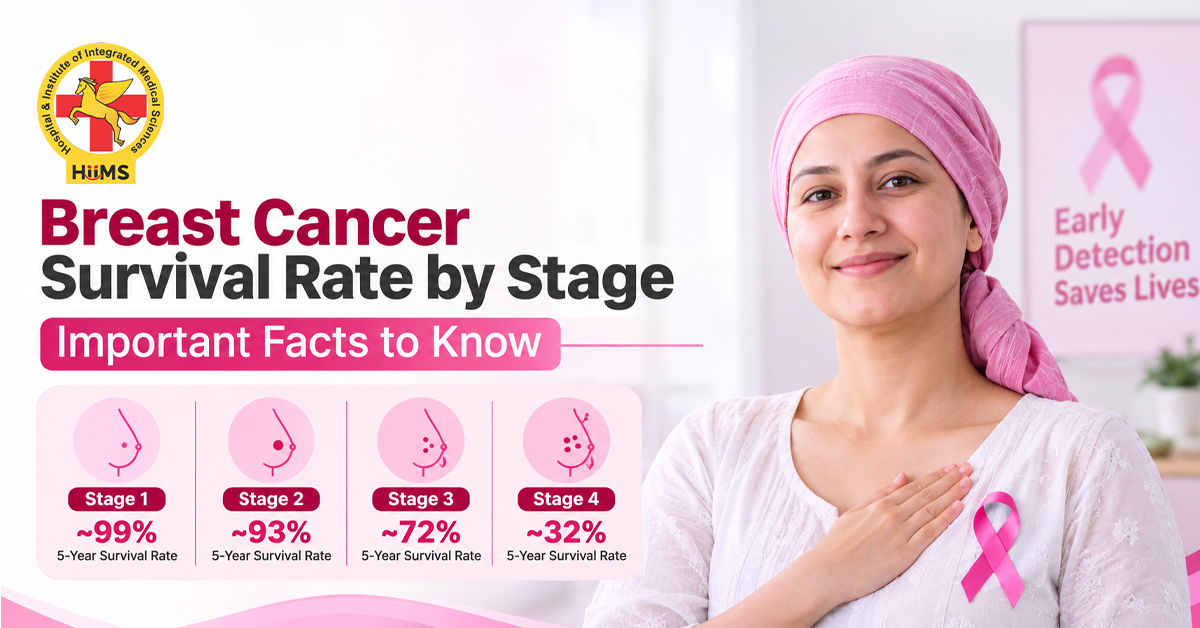
The latest American Cancer Society figures based on SEER data report a 5-year relative survival of more than 99% when invasive breast cancer is locally invasive, 87% when it has spread to nearby structures or lymph nodes, and 32% when it has spread to distant parts of the body.
Localised Breast Cancer
When cancer remains within the breast, the reported 5-year relative survival is more than 99%. This is one reason timely assessment of unusual breast changes matters, although early detection does not guarantee the same outcome for every person.
Regional Breast Cancer
Regional disease means the cancer has moved beyond the breast to nearby structures or lymph nodes. The reported 5-year relative survival is 87%, showing why the extent of spread becomes an important part of prognosis.
Distant or Metastatic Breast Cancer
When cancer has spread to distant organs such as the bones, liver or lungs, the reported 5-year relative survival is 32%. Metastatic disease needs individualised medical management and should not be reduced to one percentage.
Important Note: One useful detail is often missed: SEER uses the categories localized, regional and distant rather than the AJCC Stage I, II, III and IV system. Therefore, these figures should not be treated as exact survival percentages for each of the four numbered breast cancer stages.
Why Can Survival Differ Between Two People?
Stage gives important information, but it is only one part of the picture. The cancer subtype, tumour grade, hormone receptor status and HER2 status can influence the outlook and the choice of treatment. Age, general health and how well the cancer responds to treatment also matter.
This means two people with the same stage may receive different care and may have different outcomes. Current statistics also reflect people diagnosed several years earlier, while treatment continues to improve.
Recognising Breast Cancer Symptoms Early
Knowing the possible breast cancer symptoms can help a person notice a change that deserves medical attention. A new lump or thickened area in the breast or underarm is a common sign, but breast cancer can also cause swelling, skin dimpling, redness, scaling or thickening, nipple retraction, unusual discharge, or persistent breast or nipple pain.
Not every breast change means cancer, since hormonal changes and normal breast conditions can cause similar symptoms. Still, a new or ongoing change should be checked by a qualified healthcare professional rather than left unexplained.
Where Can Ayurveda Fit Into Breast Cancer Care?
When people explore Ayurveda during a cancer journey, the focus can extend beyond the disease itself to food habits, digestion, sleep, daily routine, physical strength and emotional wellbeing. At Jeena Sikho HiiMS Bhopal, the hospital describes an integrated approach involving Ayurveda, Panchakarma, diet and lifestyle guidance, naturopathy, yoga and meditation.
Such care should be understood as supportive and individualised rather than a replacement for medically indicated cancer treatment. The appropriate approach can depend on the person’s diagnosis, current treatment, strength and overall condition.
Supportive Care at Jeena Sikho HiiMS Bhopal
The approach at Jeena Sikho HiiMS Bhopal places considerable attention on personalised diet and lifestyle guidance. Patients may receive recommendations around food, sleep, physical activity, breathing exercises and meditation according to their individual needs. The hospital also provides Ayurvedic therapies and Panchakarma under practitioner supervision.
For someone undergoing breast cancer treatment, these measures may be considered as part of broader supportive wellbeing, particularly when the patient and healthcare team agree that they are appropriate. They should never be used as a reason to delay diagnosis, stop prescribed treatment or replace oncology care.
What a Patient Experience Can Tell Us
At Jeena Sikho HiiMS, a patient describes a breast lump and changes she says she noticed during her stay. She also speaks about following dietary guidance and taking part in yoga and meditation, along with improvements in some of the other health concerns she had been experiencing.
What it does show is how some patients value learning about food, routine, movement and self-care while navigating a difficult health journey.
Breast Cancer Survival Rate Is a Statistic, Not Your Whole Story
The breast cancer survival rate can help explain broad patterns, but it cannot tell one person exactly what will happen next. The most useful conversation comes from looking at the diagnosis, stage, cancer subtype, treatment response and overall health together. Statistics can provide perspective, while proper evaluation and timely treatment guide individual decisions. Supportive Ayurvedic care may also have a place when planned responsibly alongside appropriate medical care.
Conclusion
Understanding the breast cancer survival rate can make a difficult subject a little easier to discuss, especially when the numbers are explained alongside stage, tumour characteristics and treatment response.
Survival statistics describe groups of people. They do not decide an individual’s future. If you or a loved one has been diagnosed with breast cancer, proper medical evaluation and personalised care remain important.
Jeena Sikho HiiMS Bhopal brings together Ayurveda, Panchakarma, diet and lifestyle guidance, yoga and meditation as part of its approach to personalised care. If you are unsure where to begin, an online video consultation (VOPD) with expert doctors at Jeena Sikho HiiMS can help you discuss your concerns from home and understand the care options available to you.

FAQs
Q1: What is the 5-year relative survival rate for breast cancer?
It is a population-based measure comparing people with breast cancer with people in the general population over a five-year period.
Q2: Does breast cancer stage affect survival?
The extent to which breast cancer has spread at diagnosis is an important factor when doctors assess prognosis and plan treatment.
Q3: What are the common breast cancer symptoms to watch for?
A new breast or underarm lump, skin changes, nipple changes, unusual discharge and persistent breast pain are among the symptoms that warrant medical evaluation.
Q4: How is breast cancer treatment decided?
There is no single treatment plan that works the same way for everyone. The doctor looks at the stage and type of cancer, tumour details, overall health and the patient’s circumstances before suggesting the next step.
Q5: Can Ayurveda be considered during breast cancer care?
Ayurvedic supportive care may be discussed with qualified practitioners alongside appropriate medical treatment, with the approach personalised to the individual’s condition.
Disclaimer: The information provided on this blog is for general educational and informational purposes only. It is not intended to replace professional medical advice, diagnosis, or treatment. Always consult a qualified healthcare professional before making any changes to your diet, lifestyle, or treatment plan. Individual results may vary.