
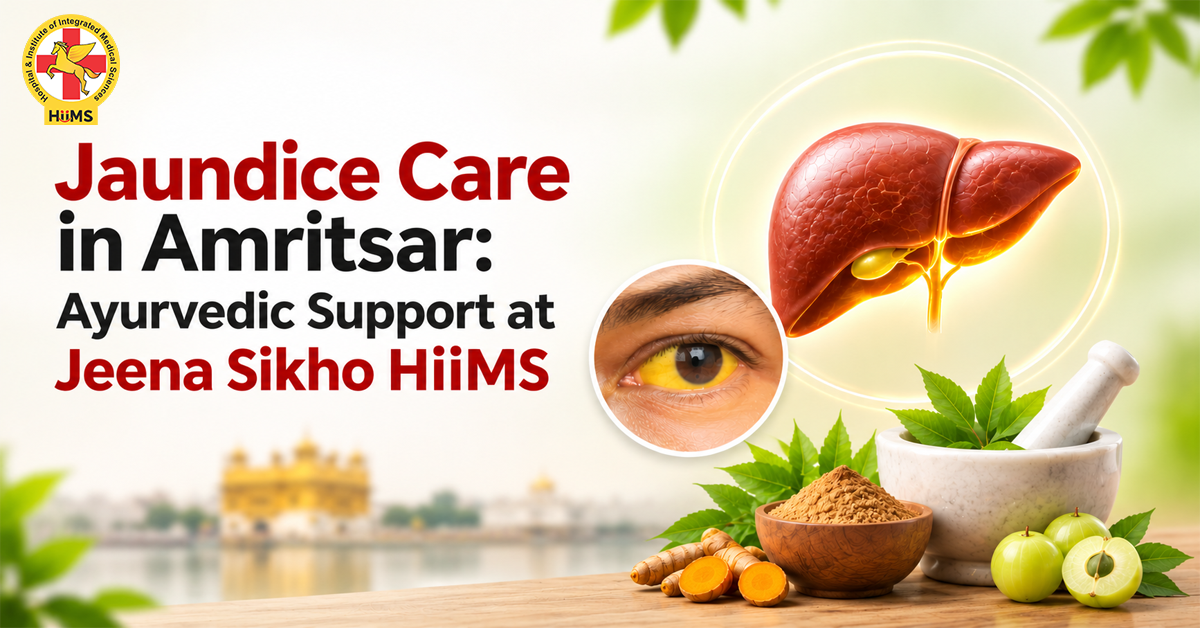

Most people notice it first in the mirror: the whites of the eyes turn yellow and the urine is darker than usual. Then comes the family advice, mostly about sugarcane juice and kadha. But jaundice is a sign, not a diagnosis, and the right step depends on what is causing it.
If you are looking for Jaundice Care in Amritsar, understanding the symptoms and seeking timely medical evaluation are important first steps. Here is what the symptoms mean, what to eat and how to rest, and how an Ayurvedic approach can complement your doctor’s advice.
Jaundice Symptoms and Causes: What Amritsar’s Own Outbreak Showed
Yellow eyes and skin are the main signs, often with dark urine, pale stools, tiredness, nausea, loss of appetite, itching, and mild belly discomfort. Behind them can be a viral infection of the liver (hepatitis A or E), gallstones blocking the bile duct, alcohol, certain medicines, or a blood disorder.
In Amritsar, water is the cause; people should know best. In 2013, an outbreak in Labour Colony and five nearby colonies led to 159 cases of jaundice and one death, according to a case-control study in BMC Public Health. Every one of the 14 patients tested had hepatitis E antibodies, and 21 of 23 tap water samples from affected homes had faecal contamination.
People with jaundice were four times more likely to report foul-smelling piped water, and the likely source was a water pipeline damaged during sewer construction. The same paper notes the WHO estimate of 20 million hepatitis E infections and 44,000 deaths a year, with more than 60% in South Asia.
report through with a Jeena Sikho HiiMS Amritsar doctor. Eyes turning yellow and not sure why? Get a bilirubin test first, then talk to the
Jaundice Recovery Tips You Can Start at Home
Because water and food carry most of the infections, hygiene is half the plan:
- Drink only boiled or properly filtered water, and skip ice from outside
- Wash hands with soap before meals and after using the toilet
- Avoid street food, cut fruit from carts and roadside juices for now
- Rest as much as your body asks for
- Stop alcohol completely
- Ask your doctor before any painkiller, herbal powder, or home mixture, since some can strain the liver
None of these replace blood tests. A bilirubin and liver panel, along with a hepatitis check, tells your doctor what is going on.
Jaundice Diet and Nutrition: What Goes on the Plate
When the liver is under stress, light and simple food is easier on it. A good jaundice diet and nutrition plan usually means moong dal khichdi, daliya, thin dal, boiled or steamed vegetables like lauki and tori, ripe papaya, and fresh buttermilk, in small portions several times a day.
Oily, fried, very spicy, and packaged food is better left out until you recover. Keep drinking fluids through the day, and don’t cut protein on your own, since dal is generally fine unless your doctor says otherwise.
Healthy Diet for Liver Health After You Feel Better
Once the yellow fades, the healthy diet for liver health is the same plain pattern kept going: whole grains and millets, vegetables, pulses and fruit, with less sugar, refined flour and deep-fried food, and no alcohol or very little if your doctor allows it. Repeat your liver tests when the doctor advises, because feeling fine and normal results are not always the same thing.
How the Plan Works at Jeena Sikho HiiMS Amritsar
Jeena Sikho HiiMS has a hospital at B-13, Block-B, Ranjeet Avenue, opposite Hotel Sarover Portico in Amritsar. Ayurveda calls jaundice Kamala and links it with aggravated Pitta, so the plan leans on light, cooling food, bitter herbs, and gentle cleansing. Here is how it unfolds.
Step 1: Reports Come Before Remedies
The doctor starts with your bilirubin (total and direct), SGOT/SGPT, ALP, hepatitis A and E markers, and, if needed, an ultrasound. These show whether the problem is the liver, the bile duct, or the blood, and that decides what is safe to do next.
Step 2: The Two-Plate System (pH-Balanced Diet)
HiiMS Amritsar follows Acharya Manish Ji’s pH-balanced diet, a plant-based pattern built on two plates per meal. Here is how a day usually looks:
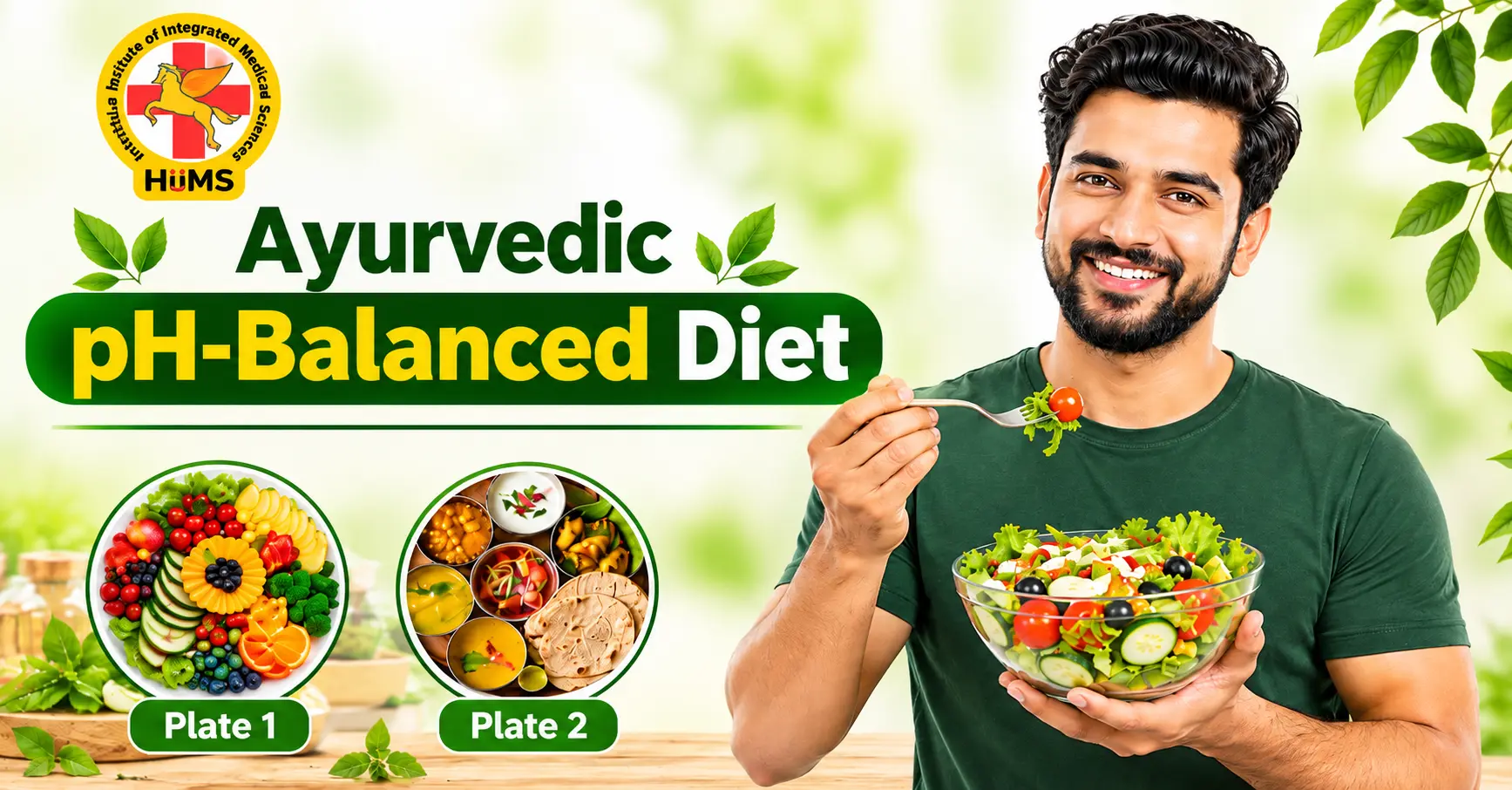
| Meal | Plate 1 | Plate 2 |
| Breakfast (7 to 9 AM) | Seasonal fruit, about 10 g for every kg of body weight | A normal home meal or a millet dish like poha, daliya or upma |
| Lunch (1 to 2 PM) | A salad of seasonal vegetables, about 5 g per kg of body weight | Home meal or millets, such as khichdi, roti or dhokla |
| Dinner (before sunset) | Fruit or vegetable salad | Homemade vegetable soup |
In jaundice, the doctor adjusts this to your appetite and reports. If you feel nauseous or your digestion is weak, cooked vegetables and soft fruit replace raw salad, and the amounts are cut down. If you also have diabetes, the fruit portion is set by the doctor.
Step 3: Panchakarma, Taken in Order
Panchakarma at HiiMS Amritsar includes Vamana, Virechana, Basti, Nasya, and Raktamokshana, and it begins with preparation. Snehana, a warm oil massage, and Swedana, a gentle herbal steam, loosen the body first. Virechana, a controlled cleansing of the bowel, is the therapy Ayurveda most links with liver and Pitta problems. Hospital admission (IPD) allows these to be done under supervision, with the diet matched to each step. It isn’t suitable while bilirubin is rising fast or when you have vomiting, fever, or marked weakness, so the doctor decides the timing from your reports.
Step 4: The Home Routine HiiMS Amritsar Shares: Juice First and Kadha an Hour Later
HiiMS Amritsar shares a simple home routine for jaundice recovery, inspired by Acharya Manish Ji’s approach:
- Make a small fresh juice: Mix 4 teaspoons of sugarcane juice with 1 teaspoon each of mint, lemon, coriander, and ginger juice.
- Sip it slowly: Take 5 teaspoons of the mix, one spoon at a time, spending about a minute on each spoon, as if you were lightly chewing it.
- Have a warm kadha an hour later: Make a warm decoction of neem, giloy, tulsi, mulethi, dry ginger, and pipli, and drink it once.
- Repeat in the evening: Follow the same order as in the morning and evening.
A few cautions. Use sugarcane juice only if it is made hygienically at home, because roadside juice is exactly the kind of source the Amritsar outbreak points to. If you have diabetes, ask your doctor first. Some herbs in the kadha can affect the liver or interact with medicines, and mulethi can raise blood pressure in some people, so get your doctor’s go-ahead before starting. And if you are pregnant and your eyes look yellow, seek medical care right away, since hepatitis E can be more serious in pregnancy.
Want to know if the juice and kadha routine suits your reports? Ask a Jeena Sikho HiiMS Amritsar doctor before you begin.
Step 5: Check-Ins and Lifestyle Tips for Jaundice Recovery
Follow-ups are done in person at the hospital (OPD) or on a video call (VOPD), and the doctor repeats the liver tests to see how you are doing.
The lifestyle tips for jaundice recovery are simple: sleep at a fixed time, rest in the first days, take short walks as your energy returns, ease into gentle yoga only when the doctor says so, and keep alcohol off the table. This works alongside your own doctor’s care, so keep taking any prescribed medicines.
Conclusion
The first yellow tinge in the eyes is worth acting on quickly: get the tests done, drink clean water, eat light, and rest. Jaundice has many causes, and in Amritsar contaminated water has been a proven one.
Good jaundice recovery tips start with hygiene and your doctor’s reports, and Ayurveda can add food, rest, and a steady routine around them. If you’d like someone to read your reports with you, you don’t need to travel for the first conversation.

Yellow eyes and a bilirubin report in hand? A video call with a HiiMS Amritsar doctor can help you make sense of both. Start a VOPD here.
FAQs
1. How long does the yellow colour last?
It depends on the cause. Your doctor tracks it with repeat blood tests, so go by the numbers and not just the colour.
2. Is sugarcane juice safe in jaundice?
Only if it is made hygienically at home. Avoid roadside juice, and check with your doctor if you have diabetes.
3. Can I have ghee and oil?
Keep it light and home-cooked, and avoid fried food. Your doctor can tell you the right amount for your stage.
4. When is it an emergency?
Drowsiness or confusion, repeated vomiting, severe belly pain, high fever, or yellow eyes during pregnancy need urgent care.
5. Can I consult without travelling to Amritsar?
Yes. A VOPD is a video consultation with a Jeena Sikho HiiMS doctor, and you can share your reports from home.