

Asthma can be extremely disturbing. It can make simple, regular activities tough. Walking, doing regular household chores, climbing stairs, or getting a good night’s sleep becomes a challenge for an asthma patient. Some people experience coughing, sneezing, or shortness of breath, whereas some people get it occasionally. Now, many people ask if asthma can be controlled naturally, and the good news is that it can be managed, but only with the right management, healthy habits, and awareness of personal triggers. If a disciplined life is followed, asthma can be controlled without much hassle. In this blog, we will understand what asthma is, whether it is a lifelong condition or not, common asthma triggers and prevention methods, and how to control asthma naturally while following appropriate medical care and a disciplined lifestyle.
What Is Asthma?
Have you seen people who struggle to breathe? Out of nowhere, they suddenly start panting for oxygen as if there is no air. This kind of problem arises when they have asthma. Asthma is a long-term condition that affects the airways in the lungs. In asthmatics, the airways can become inflamed, narrow and produce extra mucus, making it difficult to move air in and out of the lungs.
There are some obvious symptoms that can be noticed during an asthma attack.
- Frequent coughing, especially at night or early in the morning.
- Wheezing or a whistling sound when you breathe.
- Shortness of breath with usual activities.
- Chest tightness or discomfort.
Not every asthma patient shows the same symptoms. Some people have only a few mild symptoms, while others may have them more often. Although asthma can occur at any age, symptoms may change over time in children and adults.
Is Asthma a Permanent Disease?
Asthma is generally considered a chronic condition, which means it can continue year after year. Despite its severity, most people do not experience breathing difficulties every day. Among children, the symptoms improve with age. Symptoms tend to lessen as they get older. Some have asthma that persists into adulthood or returns after a period of remission. One thing to remember is that asthma can strike at any age, even adults.
Currently there is no permanent cure for asthma, but it can be controlled with proper treatment and regular monitoring. Many people who keep their asthma under control can work, exercise, travel and do the things they want to do each day without many limits.
The important thing is to understand your condition, follow your ongoing treatment, and maintain a disciplined lifestyle even if you feel better.
Know about asthma triggers and prevention.
Knowing about asthma triggers and prevention tips can be very important for an asthma patient. Asthma symptoms do not stay all the time. If they appear, it is usually for some obvious reason. Things like certain substances, environmental conditions, and normal activities can irritate the airways and trigger an asthma episode. These are called asthma triggers. Figuring out your personal triggers is one of the most helpful tips for asthma management. Not everyone has the same triggers. They can vary from one person to another.
Common triggers for asthma
- Dust and dust mites
- Dust mites live in house dust, bedding, carpets and upholstered furniture and can cause breathing problems in susceptible people.
- Pollution of air and smoke
- Irritants to the airways can be cigarette smoke, vehicle exhaust, industrial pollution, or smoke from cooking or burning materials.
- Allergies and pollen
- Pollen, mould, pet hair and animal dander can trigger symptoms of allergic asthma.
- The Cold Weather
- Cold dry air can irritate the airways of sensitive people and induce coughing, wheezing or chest tightness.
- Respiratory tract infections
- Colds, flu and other respiratory infections are common and can increase inflammation in the airways and make asthma symptoms worse.
- Exercise
- In some people symptoms may be triggered by running or strenuous exercise particularly if asthma is not well controlled. But people with asthma shouldn’t avoid exercise altogether.
- Stress and intense emotions
- Sometimes stress, anxiety and strong feelings can make asthma symptoms worse.
Easy ways to avoid asthma triggers
- To minimise dust build-up, keep your home clean.
- Wash bed sheets and pillow covers frequently.
- Don’t smoke. Don’t breathe passive smoke.
- Check the air quality in your area before spending time outdoors.
- Keep rooms dry and deal with damp and mould.
- In cold weather, cover your nose and mouth if your symptoms are triggered by exposure to cold air.
- Follow your doctor’s advice on taking your prescribed treatment before physical activity.
- Work with a health care professional to identify personal triggers.
You don’t have to avoid everything that may cause asthma. The goal is to determine what is impacting your breathing and take practical measures to reduce exposure.
How to Control Asthma Naturally
Knowing how to control asthma naturally can be one of the most sensible steps initially. Some Ayurvedic therapies and protocols from Jeena Sikho HiiMS Amritsar can help manage asthma. Ayurvedic doctors there also offer expert tips for better breathing.
Below are some practical steps that can help you to better manage asthma.
CAAT Protocol to Ease Breathing During an Asthma Attack
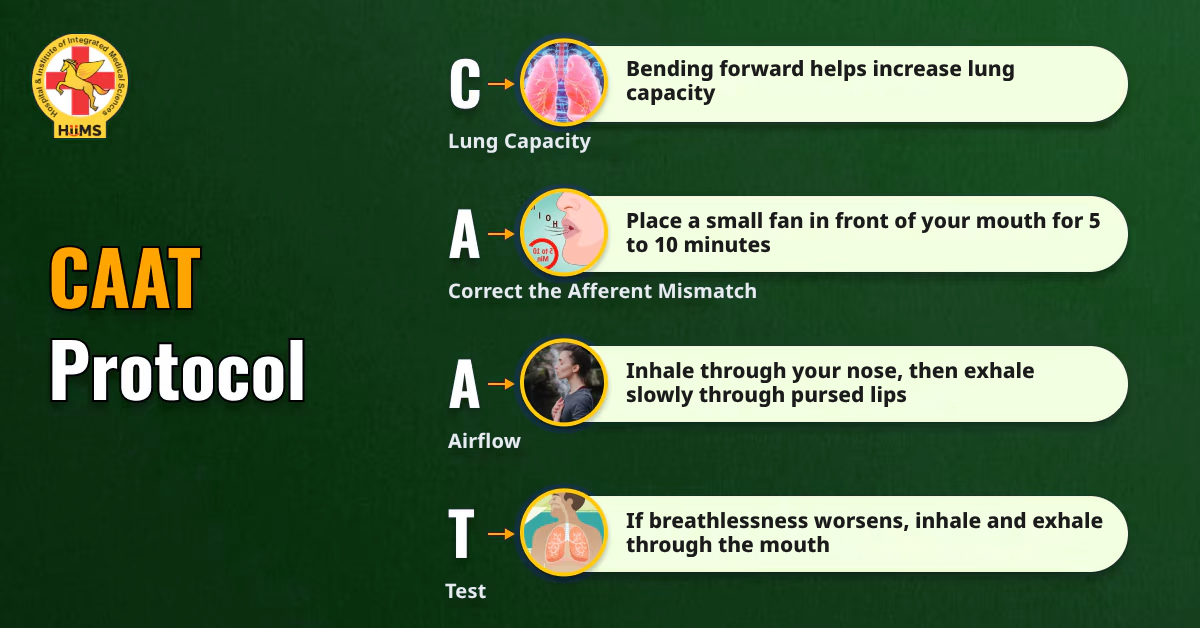
The CAAT Protocol is a simple method that helps manage breathing in a calm and controlled way during an attack. It focuses on relaxing the body and improving airflow so that the person can breathe more easily. In this approach:
- C – Capacity of Lungs
- A – Afferent Mismatch Correction
- A – Air Flow
- T – Test
The person slightly bends forward and maintains a light airflow near the mouth with calm, steady breathing. This position makes the chest muscles relax and helps with tightness.
At the same time, staying calm is important because panic can make breathing more difficult. When practiced properly, this method helps bring breathing back to normal and makes the person feel more stable and relaxed.
2. Maintain a healthy diet
A balanced diet with fruits, vegetables, whole grains and adequate protein develops overall health. Eat a variety of foods and watch out for any particular food that seems to be causing an allergic reaction or worsening your symptoms.
3. Be Active and Keep Moving
Doing regular physical activity can increase your fitness and help you maintain your general health. “Walking, cycling, and swimming may be appropriate depending on your condition.
Take it slow and listen to your doctor. Don’t just stop exercising altogether because you have asthma.
4. Learn Breathing and Relaxation Techniques
Slow breathing, meditation and relaxation practices may help you feel better about your breathing and be able to deal with stress. These practices can be useful as part of a routine for asthma care, but always consult your doctor if you are on any medical prescription.
- Try Ayurvedic Panchakarma therapies
Ayurvedic Panchakarma therapy like Nasya helps clear the nasal passage and calm down asthma symptoms. Some supporting therapies like Swedana are also recommended by many Ayurvedic doctors.
6. Keep a healthy weight
Maintaining a normal weight can help improve your overall health and may help some people gain better control of their asthma. Adopt sustainable eating habits and appropriate physical activity.
7. Sleep Well
Good sleep is essential for better health. Maintain your circadian clock and keep your sleeping area clean and free of known triggers like dust.
8. Don’t smoke or use strong irritants
Stay away from cigarettes and even their smoke, and other things that irritate your airway. Limit exposure if strong perfumes, sprays or household chemicals trigger coughing or breathing discomfort.
These lifestyle steps are helpful ways to help care for and prevent asthma, but should always be done with an appropriate medical plan in mind.
When Should You Seek Proper Treatment?
Many people delay treatment, thinking the problem will go away. But you should take action if:
- Symptoms happen frequently.
- Breathing becomes difficult during daily work.
- You fail to sleep because of breathing issues.
- You experience fatigue due to poor breathing
In such cases, choosing the right management, like Jeena Sikho HiiMS Amritsar, can prevent future complications.
Takeaway
Asthma can be a serious problem if not properly taken care of. Though medical advice becomes very important in case of serious attacks, mild symptoms can be controlled with a disciplined lifestyle and proper care. Jeena Sikho HiiMS Amritsar is one such integrated Ayurvedic wellness centre where you can get natural asthma care under the guidance of experts. Here you can get a planned diet, yoga and meditation, herbal support, and therapies all under one roof. You can make a call for a better understanding. Though asthma is considered a chronic condition, awareness and proper lifestyle can give the patient an opportunity to live a normal life. Always pay attention to even the smallest symptoms if they appear again and again. Know your triggers and how to manage them. Sometimes knowledge is the best treatment to control asthma.
FAQ
1. Can asthma be controlled permanently?
Asthma has no permanent cure, but proper treatment, regular monitoring, and trigger management can help keep symptoms under control.
2. What are the most common triggers of asthma?
Dust, smoke, air pollution, pollen, cold air, respiratory infections, exercise, and stress can trigger asthma symptoms.
3. How can I control asthma naturally?
Healthy eating, suitable physical activity, good sleep, avoiding personal triggers, and relaxation practices can support asthma management.
4. Can Ayurvedic therapies like Nasya help with asthma?
Nasya and other traditional Ayurvedic therapies may be discussed as complementary approaches.
5. What should I do during an asthma attack?
Follow your asthma action plan and use your prescribed reliever as directed. Seek emergency medical help if breathing becomes severely difficult or symptoms do not improve.