
Getting a little breathless walking up stairs you used to climb without thinking twice, or feeling unusually tired doing something ordinary, a lot of people brush this off as “just getting older”. But heart blockage often builds up quietly for years before it actually announces itself. We have come across more than one person who dismissed mild chest tightness for months, assuming it was gas or stress, before finally getting it checked.
This blog walks through what causes heart blockage, the warning signs, and how a more integrated, Ayurveda-based approach fits alongside standard medical care.
What Is Heart Blockage, and Why Does It Happen?
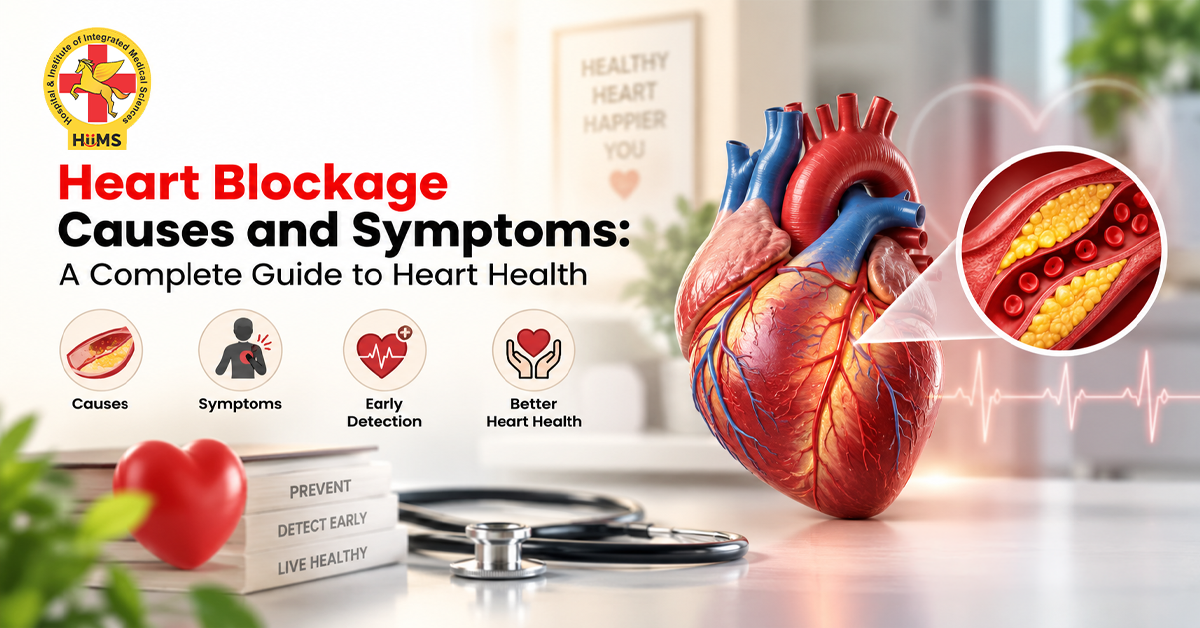
Heart blockage, or coronary artery disease as doctors call it, happens when plaque builds up inside the arteries carrying blood to your heart. That plaque is made up of cholesterol and other deposits, and over the years, it narrows the arteries and chokes off blood flow, a process known as atherosclerosis.
The scale of cardiovascular disease is also worth noting. In 2024 cardiovascular disease (CVD) was the underlying cause of 42,300 deaths, accounting for 23% of all deaths. Another reported figure shows that coronary heart disease was the main cause of disease burden among males and ranked sixth among females in 2024.
These numbers are a useful reminder that heart health is not something to think about only after symptoms appear.
If you’ve noticed unusual fatigue or breathlessness lately, it’s worth talking to the team at Jeena Sikho HiiMS about a proper heart health assessment alongside your regular check-ups.

What Are the Main Heart Blockage Causes?
Understanding heart blockage causes goes a long way in explaining why this sneaks up on so many people without warning. A few things keep showing up again and again:
- High cholesterol, usually from a diet heavy on fried or processed food
- High blood pressure quietly strains artery walls year after year
- Smoking damages the inner lining of blood vessels
- Diabetes and insulin resistance
- Family history of early heart disease
- A sedentary routine mixed with chronic stress
What Are the Causes of Heart Blockage Beyond Diet Alone?
Worth being upfront here: the causes of heart blockage aren’t just about what’s on your plate. Long-term inflammation, poor sleep, years of stress you never really dealt with, all of it quietly speeds up how fast plaque builds inside your arteries.
That’s part of why more thoughtful, lifestyle-focused approaches don’t stop at just watching your cholesterol numbers.
What Are the Early Signs of Heart Blockage?
Catching the early signs of heart blockage genuinely matters, mostly because symptoms creep in so slowly that people don’t notice until they’re pushed to do something more physically demanding than usual. Keep an eye on:
- Chest discomfort or a heavy, pressing feeling, especially when exerting yourself
- Getting short of breath during things that never used to bother you
- Fatigue that just doesn’t match the effort you put in
- Pain spreading to the arm, jaw, or back
- Cold sweats or lightheadedness that comes out of nowhere
What Are the Common Symptoms of Heart Blockage to Watch For?
Beyond those early warnings, more advanced symptoms of heart blockage can look like persistent angina, an irregular heartbeat, or swelling in the legs and ankles from fluid retention. If any of these turn up alongside chest discomfort, don’t sit on it hoping it passes; get it checked.
How Do Heart Blockage Symptoms Differ From General Heart Disease Symptoms?
Fair question, since these two overlap quite a bit. Heart blockage symptoms usually center around chest pain and breathlessness, specifically tied to exertion, while heart disease symptoms more broadly can also include palpitations, dizziness, or swelling that shows up even when you’re not being physically active.
Since they look so similar on the surface, proper diagnostic testing is really the only way to actually know what’s going on inside.
How Does Ayurveda Approach Heart Blockage?
In Ayurveda, the heart goes by Hridaya, and it’s treated as the centre of circulation and vitality, not just a mechanical pump doing its job.
The thinking here is that weak digestion slowly lets toxins, called Ama, build up, and over time that buildup disturbs blood flow and adds to the blockage. At Jeena Sikho HiiMS, this understanding shapes a treatment plan that leans on more than one therapy at once.
What Does Heart Blockage Treatment Look Like at Jeena Sikho HiiMS Amritsar?
Our approach usually starts with:
- Hridaya Basti: medicated oil of special quality, gently poured over the chest in special way to relax the tension, support the circulation and calm the nervous system.
- Alongside this, Panchakarma therapies like Rakhtamokshana help with detoxification, and patients typically get personalised diet guidance through our pH-balanced diet.
- Plus herbal support using ingredients like Arjuna, Guggulu, and Ashwagandha: herbs traditionally valued for strengthening the heart muscle and keeping cholesterol in check.

Doctors and therapists at HiiMS go through a patient’s reports carefully before starting Hridaya Basti, and they keep tracking progress through regular follow-ups rather than treating it as a one-off session.
Conclusion
Heart blockage builds up slowly, and that’s exactly why paying attention to early symptoms and getting proper testing done matters so much. Whether you’re sticking with conventional cardiac care, thinking about adding Ayurveda alongside it, or just want a clearer sense of where your heart health actually stands, getting checked early genuinely changes what your options look like from there.

If you want to understand what an integrated approach could look like for your specific case, you can book a VOPD consultation with Jeena Sikho HiiMS Amritsar and go through your reports and symptoms with our team.
FAQ’s
1) How is heart blockage usually diagnosed?
Common tests include ECG, echocardiogram, stress tests, and in some cases, a coronary angiogram to check for actual narrowing in the arteries.
2) Is chest pain always a sign of heart blockage?
Not always, but persistent or exertion-related chest discomfort should never be ignored and warrants proper medical evaluation.
3) Can Ayurvedic therapies be combined with conventional cardiac treatment?
Many patients do use both, but it’s important to keep your cardiologist in the loop so that everything is well coordinated and monitored.
4) At what age should screening for heart blockage be started?
Risk increases substantially with age, but anyone with high cholesterol, diabetes or a family history of heart disease should discuss screening with their doctor, regardless of age.
5) Is it possible to reverse heart blockage naturally?
Many cases can be managed with lifestyle changes, correcting diet and consistent monitoring that can also slow progression. This is very dependent on severity and should always be done in conjunction with your treating doctor.