

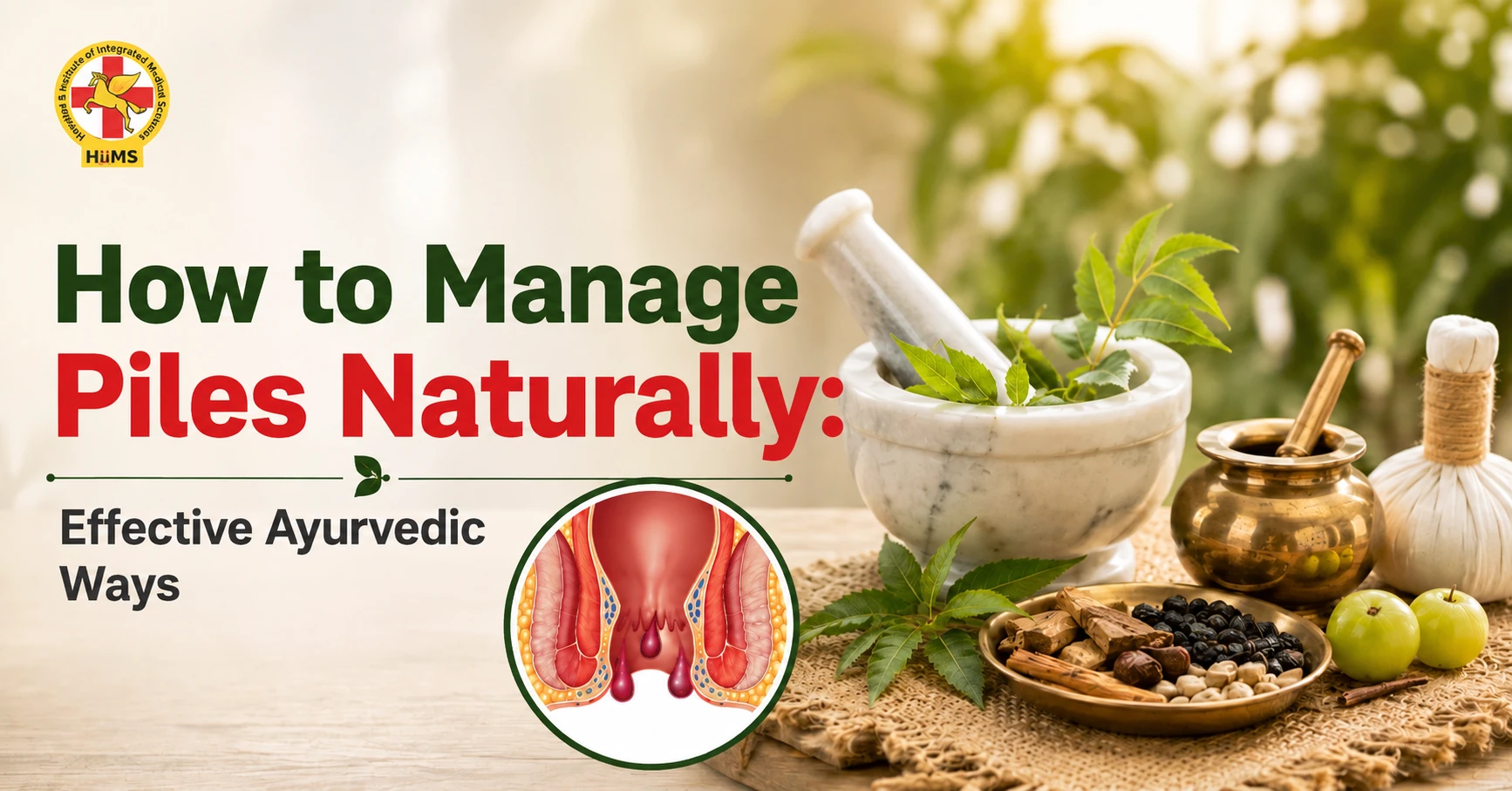

Piles, also known as haemorrhoids, are a common condition that can cause discomfort, itching, swelling, or bleeding around the anal area. Although piles are common, many people hesitate to discuss their symptoms. Ignoring the early signs may sometimes allow the discomfort to continue or become more troublesome.
If you are searching for how to piles cure naturally, it is important to understand that natural care mainly focuses on improving bowel habits, digestion, diet, and lifestyle. Consistent healthy habits may help manage symptoms and support better bowel health. At Jeena Sikho HiiMS, Ayurvedic care focuses on individual health needs along with appropriate diet and lifestyle guidance.
What Are Piles (Haemorrhoids)?
Piles are swollen or enlarged blood vessels in the lower rectum or around the anus. They are generally classified into two types: internal piles and external piles.
Internal piles develop inside the rectum, while external piles occur under the skin around the anus. Some people may have mild or no symptoms initially, whereas others may experience bleeding, itching, swelling, or discomfort during bowel movements.
Understanding the symptoms early can help you take suitable steps for better management.
Common Symptoms of Piles
Recognising the common symptoms of piles can help you understand when professional guidance may be needed. Common symptoms include:
- Bright red blood during or after bowel movements
- Itching or irritation around the anus
- Pain or discomfort while passing stools
- Swelling or a lump near the anus
- Difficulty sitting comfortably
- A feeling of incomplete bowel evacuation
Symptoms can differ depending on the type and severity of piles. Persistent or heavy bleeding should not be ignored, as rectal bleeding can also occur due to other health conditions.
What Causes Piles?
Many people ask, What Causes Piles? Piles can develop when increased pressure is placed on the veins around the rectum and anus. Several everyday factors may contribute to this pressure.
Common factors include:
- Chronic constipation
- Repeated straining during bowel movements
- Spending too much time on the toilet
- Low intake of dietary fibre
- Lack of regular physical activity
- Being overweight
- Pregnancy
- Regular heavy lifting
Addressing these factors can be helpful in supporting healthier bowel habits and reducing the chances of recurring discomfort.
How to Manage Piles Naturally with Lifestyle Changes
People looking for how to piles cure naturally often want simple changes they can follow at home. Lifestyle measures cannot replace medical evaluation when symptoms are severe or persistent, but they can support digestive and bowel health.
Increase Fibre in Your Diet
Fibre can help add bulk and softness to stools, which may make bowel movements easier and reduce the need for excessive straining.
Good sources of dietary fibre include:
- Fruits
- Green vegetables
- Whole grains
- Oats
- Lentils and beans
- Nuts and seeds
Increase fibre gradually and maintain adequate fluid intake to support comfortable digestion.
Stay Well Hydrated
Drinking sufficient water throughout the day can support normal digestion and help maintain softer stools. Proper hydration is especially important when increasing dietary fibre.
Stay Physically Active
Regular movement supports overall digestive health. A daily walk, light exercise, or other suitable physical activity can help maintain regular bowel movements and prevent prolonged inactivity.
Avoid Prolonged Sitting
Sitting continuously for many hours may contribute to discomfort, particularly for people who already experience piles. If you have a desk-based routine, take short breaks to stand, stretch, or walk.
Follow Healthy Toilet Habits
Avoid delaying bowel movements when you feel the urge. Try not to strain excessively or spend unnecessary time sitting on the toilet. These simple habits can also support efforts on how to prevent piles naturally.
How Ayurveda Supports Piles Management
Ayurveda takes a holistic approach to health by considering digestion, food habits, lifestyle, daily routine, and overall well-being. For piles management, maintaining healthy bowel habits and supporting proper digestion can be important parts of an overall care plan.
At Jeena Sikho HiiMS, Ayurvedic guidance may include personalised diet recommendations, lifestyle modifications, yoga, and other supportive wellness practices according to an individual’s condition. In suitable cases, qualified Ayurvedic professionals may also consider Kshar Sutra, an Ayurvedic para-surgical procedure used in the management of certain anorectal conditions.
The appropriate approach depends on the person’s symptoms, condition, and overall health. Professional assessment is recommended before choosing any specific treatment.
When Should You Consult a Doctor?
Lifestyle changes may support mild symptoms, but professional evaluation is important when symptoms are persistent, severe, or recurrent.
Consider consulting a qualified healthcare professional if you experience:
- Repeated or persistent rectal bleeding
- Severe or increasing pain
- Significant swelling around the anus
- Symptoms that do not improve
- Piles that repeatedly return
- Changes in bowel habits along with bleeding
Early evaluation can help identify the underlying cause and determine an appropriate management approach.
Conclusion
If you are searching for how to piles cure naturally, start by focusing on healthy bowel habits, a fibre-rich balanced diet, adequate hydration, regular physical activity, and avoiding excessive straining. These simple measures can support better digestive and bowel health.
At Jeena Sikho HiiMS, Ayurvedic care focuses on personalised guidance based on individual needs, with attention to diet, lifestyle, digestion, and overall wellness. Book an appointment can help you discuss your symptoms and receive appropriate guidance from qualified healthcare professionals from the comfort of your home.

FAQs
1. What are the early symptoms of piles?
Early symptoms may include itching, mild discomfort, swelling around the anus, difficulty during bowel movements, or small amounts of bright red bleeding.
2. How to cure piles naturally?
Healthy lifestyle habits may help manage mild piles symptoms. A fibre-rich diet, adequate water intake, regular physical activity, and healthy toilet habits can support better bowel health.
3. Which foods are good for people with piles?
Fruits, vegetables, whole grains, oats, lentils, beans, nuts, and seeds can provide dietary fibre and may help support smoother bowel movements.
4. Can constipation increase the risk of piles?
Yes. Long-term constipation and repeated straining can increase pressure on the veins around the rectum and may contribute to the development or worsening of piles.
5. Does Ayurveda support piles management?
Ayurveda takes a holistic approach by focusing on digestion, diet, lifestyle, and bowel habits. The recommended care plan depends on an individual’s symptoms and overall health condition.

Leave a comment