


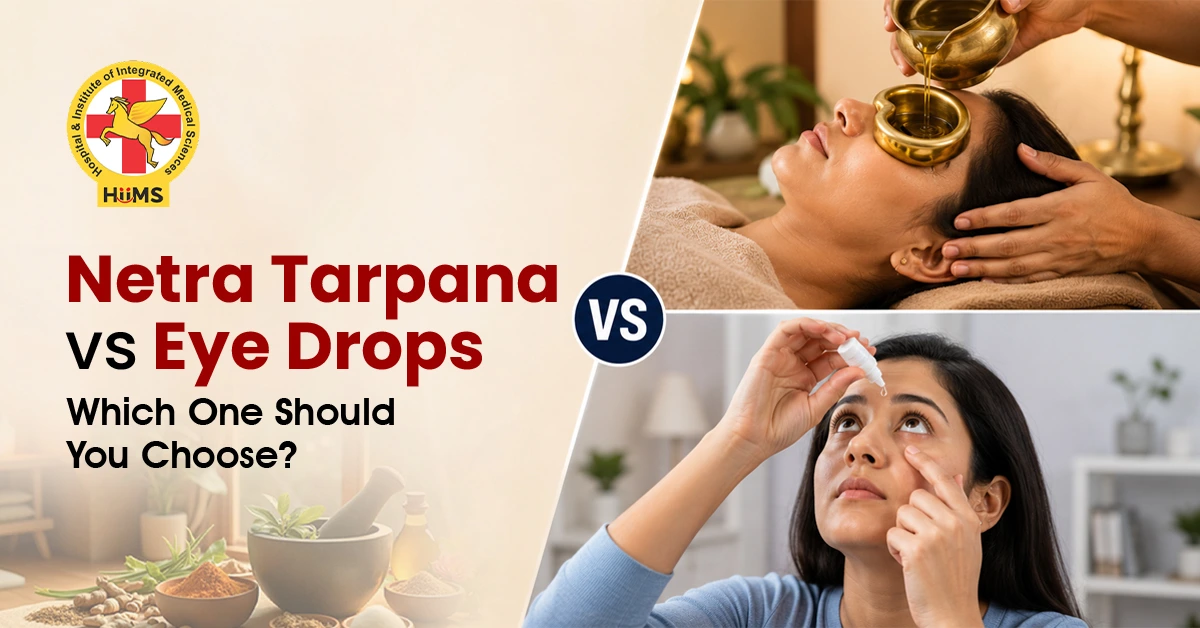
If your eyes feel tired, dry, or irritated by the end of the day, you’re not alone. Between scrolling through phones, staring at laptops, and binge-watching shows, our eyes barely get a break anymore. Most people reach for a bottle of eye drops the moment their eyes start burning. It’s fast, it’s familiar, and it works in the moment.
But lately, more people are asking about something else: Netra Tarpana, a centuries-old Ayurvedic eye treatment that takes a completely different approach to eye care. This has led to an ongoing debate Netra Tarpana vs eye drops over which one actually helps more.
The honest answer is: it depends on what you’re trying to fix. Eye drops handle the moment. Netra Tarpana works on the bigger picture. Let’s break down exactly what that means.
Why Are Our Eyes So Exhausted These Days?
Think about how much your eyes do in a single day reading messages, driving through traffic, staring at a screen for work, then relaxing (or not) with more screen time at night. There’s barely any rest in between. This constant strain shows up as:
- Dryness that won’t go away
- Itching or a gritty feeling
- A burning sensation, especially by evening
- General eye fatigue
- Watery eyes from overuse
- Blurry vision that comes and goes
None of these symptoms feel serious on their own, but ignoring them over months (or years) tends to catch up with you. That’s usually when people start looking for something beyond just another bottle of drops.
Eye Drops: The Quick Fix Everyone Knows
Eye drops are exactly what they sound like a liquid solution you put directly into your eyes for fast relief. They’re the go-to option for a reason: you can grab them at any pharmacy, they’re cheap, and they work within minutes. In cases where comparisons are made Netra Tarpana vs eye drops, it is this convenience that normally puts the scales in favor of eye drops.
Strengths of eye drops:
- Very convenient (take anywhere, use anytime)
- Easy to get since they can be bought without a doctor’s prescription
- Quick relief when the eyes feel irritated
- Very useful immediately, particularly when working for extended periods of time
Weaknesses of eye drops:
It is important to note, however, that the effects of the eye drops normally do not last. Many people find themselves reaching for the bottle again just a few hours later, which turns into a cycle of dry eyes, drops, temporary comfort, dry eyes again. It manages the symptom without really addressing what’s causing it in the first place. This is exactly where the Netra Tarpana vs eye drops conversation shifts because one offers a quick patch, while the other aims at the root cause.
What Exactly Is Netra Tarpana?
Netra Tarpana comes from classical Ayurvedic medicine, and it works nothing like a drop or a spray. Instead, medicated ghee is gently held around the eyes for a set period of time, under the supervision of a trained Ayurvedic practitioner.
The name itself gives away the intent Tarpana translates to nourishment or satisfaction. Rather than just wetting the surface of the eye, the goal is to nourish the eyes at a deeper level and give them genuine rest.
It’s not something you do casually at home like a drop, it’s a guided therapy, usually done in a clinical or wellness setting.
What People Notice After Netra Tarpana

People who try Netra Tarpana often mention a few recurring Netra Tarpana benefits:
- A noticeable sense of relaxation in tired eyes
- Better natural lubrication
- Less of that persistent dry, gritty feeling
- Relief from strain caused by screens or long work hours
- An overall feeling of lightness and freshness around the eyes
These aren’t overnight miracles, but for people dealing with chronic eye fatigue rather than occasional dryness, the difference can feel more lasting than a quick drop. These Netra Tarpana benefits tend to build up gradually with regular sessions, rather than offering the instant (but short-lived) relief you get from a drop.
Netra Tarpana vs Eye Drops: A Side-by-Side Look
| Factor | Netra Tarpana | Eye Drops |
| Approach | Traditional, nourishing therapy | Quick moisture support |
| Goal | Long-term eye wellness | Immediate symptom relief |
| How long relief lasts | Often longer-lasting for regular users | Usually just a few hours |
| Who administers it | Trained Ayurvedic practitioner | You, at home |
| What it targets | Deep nourishment of the eyes | Surface-level dryness |
Is Netra Tarpana Right for You?
You might want to look into Netra Tarpana if you’re dealing with:
- Eyes that feel heavy or tired most days
- Chronic dryness that eye drops keep failing to fix
- Strain from spending most of your day on screens
- Stress that seems to be showing up in your eyes too
- Long hours at a desk with barely any breaks
That said, this is a specialized therapy not a DIY treatment. Always get it done by a qualified Ayurvedic doctor rather than trying to recreate it yourself.
Why Ayurvedic Eye Care Is Making a Comeback
There’s a growing shift toward natural, holistic wellness practices, and eye care is no exception. Ayurvedic eye therapy doesn’t just treat the eyes in isolation it looks at the body as a connected system, where balance elsewhere often reflects in how your eyes feel too.
Instead of chasing short-term comfort, treatments like Netra Tarpana aim to support the eyes as part of your overall health which is exactly why more people are giving Ayurvedic eye therapy a try instead of relying purely on drops.
So, Which One Should You Actually Pick?
Here’s the simplest way to think about it: Need relief right now? Eye drops will get you through the next few hours. Dealing with ongoing eye dryness, strain, or fatigue that never really goes away? Netra Tarpana, done properly under expert guidance, is worth exploring. A lot of people end up using both drops for daily convenience, Netra Tarpana for the deeper reset their eyes actually need.
Conclusion
At the end of the day, Netra Tarpana and eye drops aren’t really competing with each other, they’re solving two different problems. Eye drops are great for that in-the-moment dryness. Netra Tarpana takes a slower, more nourishing route that many people find genuinely soothing over time.
It’s also worth knowing that Ayurvedic eye drops are available too, made with natural, herbal ingredients instead of synthetic ones so if you’re comparing Netra Tarpana vs eye drops, you don’t have to pick purely between “traditional therapy” and “chemical drops.” Many people start with a Netra Tarpana session first, and once the eyes get that deeper nourishment, they simply maintain the results with Ayurvedic drops for daily upkeep, a combination that works better for a lot of people than relying on regular drops alone.
With screen time only increasing for most of us, it’s worth thinking beyond just which bottle to buy and considering whether your eyes need a deeper reset. Whatever you choose, make it a habit your eyes will thank you for the consistency.

FAQs
Q1. Is Netra Tarpana safe for everyone?
For the majority of people, yes, provided it is performed by someone well versed in the technique. However, if you already suffer from an eye disorder, it would be wise to consult your physician first before making any appointments.
Q2. How often should I get Netra Tarpana done?
It really comes down to what your eyes need. A practitioner will usually take a look first and then suggest a schedule that fits you.
Q3. Can I use eye drops the same day as a Netra Tarpana session?
Ask your practitioner first. Some drops don’t mix well with the therapy, so it’s better to get a clear answer than guess.
Q4. Why does Netra Tarpana feel different from just putting in eye drops?
Eye drops give quick relief but wash away fast. Netra Tarpana keeps the ghee on your eyes much longer, so it actually sinks in and calms them. That’s why the effect usually lasts longer than a drop.
Q5. Is it bad to use eye drops every single day?
Some drops have preservatives that aren’t great for constant, long-term use. If you’re using them daily, it’s worth mentioning to a doctor just to be safe.