

The eyes work from morning to night, yet we often remember them only when they start feeling tired, dry, or uncomfortable. Long hours in front of screens, irregular meals, lack of sleep, and a poor food routine can make eye care difficult. Food alone cannot solve every eye problem, but a nourishing daily plate can support the normal working of the eyes.
An Ayurvedic diet for healthy eyes gives importance to fresh food, good digestion, seasonal fruits, vegetables, nuts, seeds and suitable fats. Ayurveda also considers the quality of food, the way it is prepared, and the regularity of meals important.
Modern nutrition also points towards leafy vegetables, fruits and foods containing vitamin A, lutein, zeaxanthin and omega-3 fats for eye health. The idea is simple.
Instead of waiting for an eye problem to appear, make eye-friendly foods a normal part of everyday meals. Small food habits, followed regularly, can become a useful part of caring for the eyes.
Why Diet Matters for Eye Health
The eyes need several nutrients for normal function.
- Vitamin A supports the surface of the eye and vision in low light.
- Lutein and zeaxanthin are found in the retina and many green vegetables.
- Omega-3 fats are also useful.
In Ayurveda, food is not viewed only as a source of calories. Food quality, digestion, appetite, and daily routine also receive attention. For this reason, Ayurvedic eye care can begin with the simple eating habits rather than complicated changes.
Best Foods to Include in an Ayurvedic Diet for Healthy Eyes
Choosing the right foods for healthy eyes can provide important nutrients that support normal eye function and overall eye health.
1. Green Leafy Vegetables
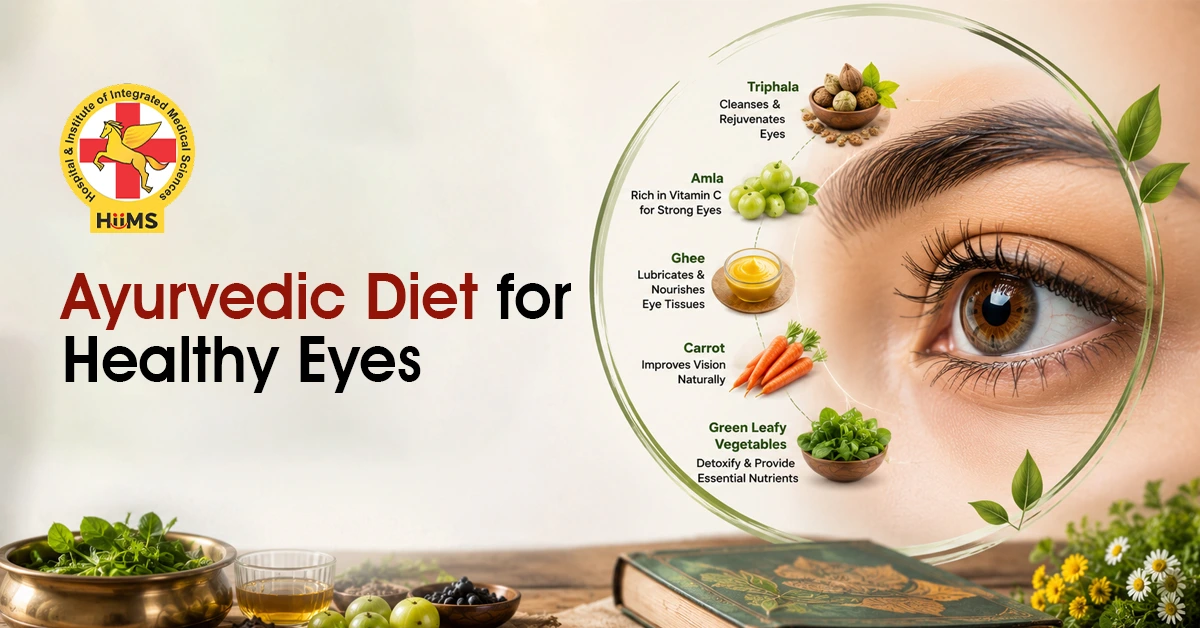
Spinach, bathua, methi, and drumstick leaves bring several useful nutrients to the plate, including lutein and beta carotene.
Eating them with a regular meal, especially lunch or dinner, can be a simple choice for keeping the diet nourishing.
2. Amla and Other Fresh Fruits
Amla provides vitamin C, while fruits such as guava, papaya, oranges and sweet lime add useful vitamins to the diet.
Choose fresh seasonal fruits regularly instead of relying on packaged fruit juices.
3. Carrots and Orange-Coloured Vegetables
Carrots, pumpkin and sweet potato are good sources of beta carotene, which the body changes into vitamin A.
Having these vegetables in regular meals can be a simple way to add eye-friendly nutrients to the diet.
4. Nuts and Seeds
Almonds and pumpkin seeds contain vitamin E, magnesium, and healthy fats, which are useful nutrients for the body. A few can be added to breakfast or eaten between meals if they suit your digestion.
5. Plant-Based Sources of Healthy Fats
Both flaxseeds and chia seeds contain plant-based omega-3 fatty acids. They are easy to include in food and can be mixed with porridge, salads or regular homemade meals.
When taken regularly and in moderation, they can add some useful nutrients to the daily food routine.
Ayurvedic Eye Care: Simple Dietary Habits to Follow
An Ayurvedic diet for healthy eyes is not about eating one special food every day. It is about building a steady food routine. Fresh meals, seasonal produce, and sensible portions are easier to follow.
Keep these simple points in mind,
- Prefer fresh, home-prepared meals
- Include green vegetables and seasonal fruits regularly
- Add a small amount of nuts and seeds according to your digestion
- Drink enough water during the day
- Limit very oily, processed and sugary foods
- Eat meals at fairly regular times
Traditional Ayurvedic literature also describes food and ghee-based preparations in eye care, which may form part of a healthy vision diet and care routine when used appropriately. Such preparations should not be tried at home without proper guidance.
Foods to Avoid for Better Eye Health
Eye-friendly eating is not only about adding foods. It also means reducing habits that can disturb overall health. Frequent packaged snacks, sugary drinks, deep-fried foods and processed meals can make a diet less balanced.
Poor food habits may also contribute to the conditions such as diabetes and high blood pressure, which are linked with eye health problems.
Including fresh foods for better vision in daily meals is useful, but variety matters more than any single ingredient.
Simple Habits to Support Healthy Vision
Food is certainly important for the eyes, but it is not the only thing that matters.
- Give your eyes a little rest when you spend long hours on a screen.
- read in proper light, and use sunglasses when you are outside.
- Staying physically active is also good for general health.
- Healthy food, regular activity, and protection from strong sunlight all have a place in maintaining good vision.
If blurred vision continues for some time, or you notice pain, flashes, sudden changes in sight, or loss of vision, do not depend on food alone. Such changes need proper attention from an eye professional.
Conclusion
An Ayurvedic diet for healthy eyes can be kept simple with vegetables, leafy greens, fruits, nuts, seeds, and healthy fats. Amla, carrots, greens, and seasonal fruits fit easily into an Indian food routine. The aim is not to depend on one food but to eat well through meals. Sleep, screen breaks, movement and outdoor eye protection also matter.
Jeena Sikho HiiMS Rohtak supports a balanced approach based on food and daily routine. For guidance, you can choose a VOPD consultation and discuss your diet and eye care routine with an Ayurvedic practitioner.

FAQs
Q1. Which foods are good for healthy eyes?
Green leafy vegetables, amla, carrots, pumpkin, sweet potato, almonds, walnuts, flaxseeds and chia seeds can be included in a balanced diet.
Q2. Is amla good for eye health?
Amla provides vitamin C and can be included as part of a varied and nourishing daily diet.
Q3. What foods should be limited for healthy eyes?
Frequent sugary drinks, packaged snacks, deep-fried foods and highly processed meals are better limited.
Q4. Can Ayurvedic eye care be followed with a healthy diet?
Yes, dietary habits can form one part of Ayurvedic eye care along with suitable daily routines and professional guidance.
Q5. When should I seek professional help for an eye problem?
Persistent blurred vision, eye pain, flashes, sudden changes in sight, or noticeable vision loss should receive proper professional attention