


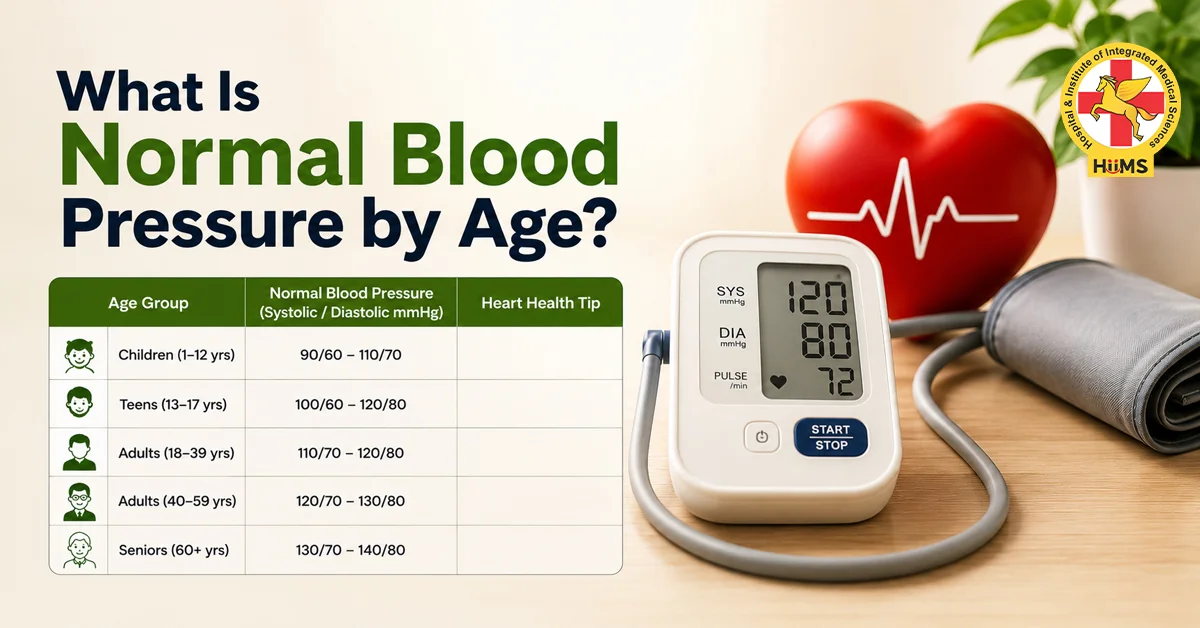
A blood pressure reading is easier to understand when you consider the person’s age, overall health, and other risk factors. While blood pressure patterns can change with age, there is no single normal reading that applies to every adult. What is normal blood pressure by age, exactly, and how much should it realistically shift as you get older?
This blog breaks down the numbers for every age group, what counts as high or low, and a few practical things worth knowing before your next checkup.
What is Normal Blood Pressure, Really?
For most adults, normal blood pressure is generally defined as a systolic reading below 120 mmHg and a diastolic reading below 80 mmHg. The top number is the systolic pressure, which measures the pressure in your arteries when your heart beats. The bottom number is the diastolic pressure, which measures pressure between heartbeats.
It’s worth remembering that blood pressure can vary from person to person and can be influenced by age, genetics, activity level, weight, medications, and overall health.
Normal Blood Pressure by Age: Adult Guidelines
A general normal blood pressure chart for adults looks roughly like this:
- Ages 18-39: around 115/75 mmHg on average
- Ages 40-59: around 120/80 mmHg
- Ages 60 and older: around 125/80 mmHg, with some guidelines allowing up to 130/80 as an acceptable target for seniors
These are averages, not rigid cutoffs, your doctor will look at your specific health picture alongside these numbers rather than judging you against a single fixed target.
Blood Pressure by Age in Children and Teens
Blood pressure by age works differently for kids, since it’s judged against height and sex percentiles rather than one fixed number. Rough averages by age group:
- Ages 1-3: approximately 85-91/37-49 mmHg
- Ages 4-6: approximately 91-96/50-56 mmHg
- Ages 7-10: approximately 96-102/57-61 mmHg
- Adolescents 13 and older: generally below 120/80 mmHg, similar to adult guidelines
Because children’s cardiovascular systems are still developing, doctors typically use dedicated pediatric charts rather than adult standards to judge what’s actually healthy for a specific child.
What is Normal BP by Age for Seniors?
This is a question a lot of families ask once a parent or grandparent starts getting regular checkups. What is normal BP by age once you’re past 60? For older adults, blood pressure goals may depend on overall health, existing medical conditions, medications, and individual cardiovascular risk. A reading should therefore be interpreted in the context of the person’s health rather than age alone.
Arteries can become less flexible with age, which may contribute to higher systolic blood pressure. However, consistently high readings should still be monitored and discussed with a healthcare professional rather than dismissed as a normal part of aging.
Understanding High Blood Pressure: When Do Numbers Become a Concern?
High blood pressure, or hypertension, is generally classified in stages:
- Elevated: 120-129 systolic, under 80 diastolic
- Stage 1: 130-139 systolic, or 80-89 diastolic
- Stage 2: 140 or higher systolic, or 90 or higher diastolic
- Hypertensive crisis: 180 or higher systolic and/or 120 or higher diastolic. If a reading is this high, especially with symptoms such as chest pain, shortness of breath, weakness, or confusion, seek urgent medical care.
High blood pressure often does not cause noticeable symptoms, which is why regular blood pressure checks are important even when you feel well.
What Counts as Low Blood Pressure?
Low blood pressure, or hypotension, generally refers to readings below 90/60 mmHg, though this isn’t automatically a problem unless it comes with symptoms like dizziness, fainting, or fatigue.
Some people may experience symptoms such as dizziness or weakness at readings that are not technically below 90/60 mmHg. What matters is how the reading compares with your usual blood pressure and whether you have symptoms.
Does Blood Pressure Naturally Rise With Age?
To some degree, yeah, it does. Arteries stiffen up a bit as the years go on, lose some of that natural flexibility, and that tends to push systolic numbers upward gradually. That’s part of why the “normal” range for a 60-year-old sits a touch higher than for someone in their twenties. But don’t mistake that for permission to ignore it.
Crossing into stage 1 or stage 2 hypertension territory still needs attention, diet, movement, medical guidance where it’s needed, age isn’t really an excuse to shrug it off.
Why Do Readings Change Throughout the Day?
Blood pressure genuinely follows a daily rhythm. It tends to peak in the morning hours, largely due to cortisol and adrenaline released as your body wakes up, dips through the afternoon, rises slightly in the early evening, and drops to its lowest point during sleep.
This is exactly why doctors often recommend taking readings at consistent times, so you’re comparing like with like rather than getting thrown off by natural daily fluctuation.
How to Measure and Track Blood Pressure Accurately
If you’re monitoring at home, a few things genuinely improve accuracy. Use a validated, properly fitted upper-arm cuff. Sit quietly for five minutes before measuring, and take two readings, one to two minutes apart.
Record the time, date, and position each time, and bring this record to your doctor rather than relying on a single isolated reading to judge your overall pattern.
An Ayurvedic Perspective on Healthy Blood Pressure
From an Ayurvedic perspective, overall wellbeing is often considered in relation to factors such as stress, digestion, daily routine, and circulation. Sarpagandha and Arjuna Certain Ayurvedic herbs, including Sarpagandha and Arjuna, have traditionally been discussed in Ayurveda in relation to cardiovascular wellbeing. However, herbal products should not be started or used to replace prescribed blood pressure treatment without guidance from a qualified healthcare professional.
Conclusion
Understanding what is normal blood pressure by age gives you a genuinely useful reference point, but the real value comes from tracking your own pattern consistently over time, not just chasing a single ideal number.
If you have concerns about your blood pressure or want help understanding your readings, you can consider consulting a qualified healthcare professional. Jeena Sikho HiiMS Patiala also offers VOPD consultations for people looking for guidance on their health concerns and lifestyle.

FAQs
1. Does everyone need to hit exactly 120/80, no matter their age?
Not necessarily. For adults, 120/80 mmHg is a commonly used reference point, but blood pressure should be interpreted using established BP categories and your overall health rather than age alone.
2. Why does BP spike in the morning specifically?
Blood pressure can be higher around the time you wake up because of normal changes in hormones and nervous-system activity. Stress, caffeine, poor sleep, and other factors can also affect morning readings.
3. Is low blood pressure something to actually worry about?
Low blood pressure is not always a concern, especially when you have no symptoms. However, dizziness, fainting, weakness, or unusual fatigue should be discussed with a healthcare professional.
4. Are kids measured against the same BP standards as adults?
No. Children and teenagers are generally assessed using age, sex, and height-based references rather than the same fixed categories used for adults.
5. How often should home BP checks actually happen?
How often you should check your blood pressure depends on your health and whether you are monitoring an existing condition. If your doctor has asked you to monitor it at home, follow their recommended schedule and try to measure it under similar conditions each time.