


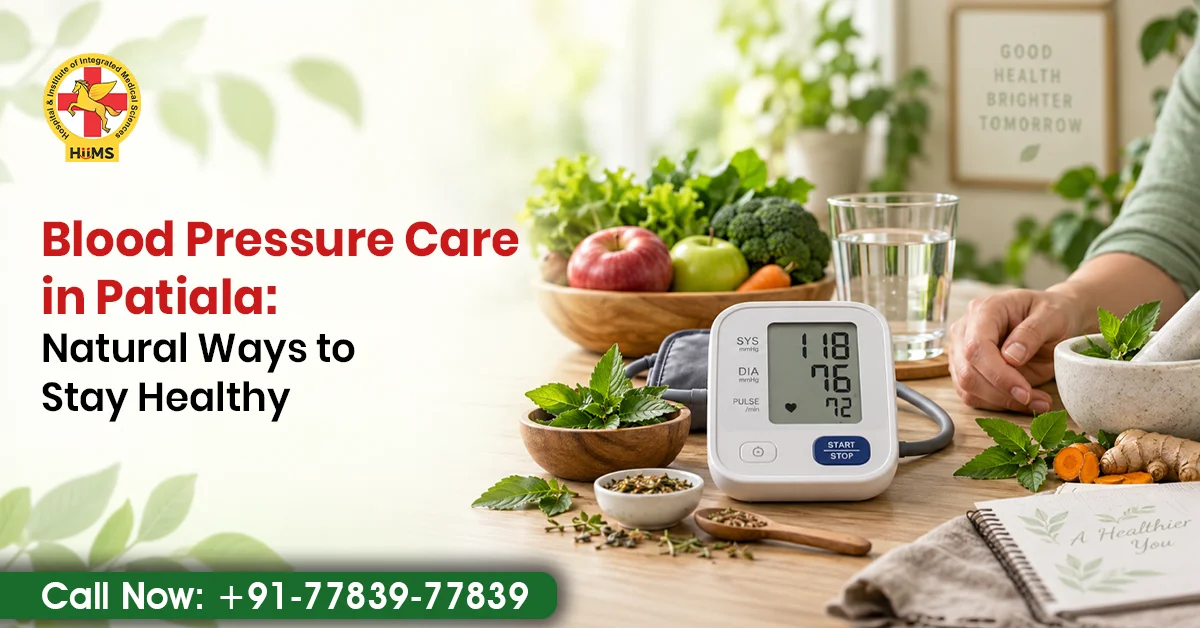
Managing blood pressure is not only about looking at a number on a machine. It is also about paying attention to the habits that affect your health every day. Busy schedules, salty foods, long sitting hours, poor sleep and constant mental pressure can gradually make healthy living difficult. This is where blood pressure care in Patiala can take a broader approach, bringing together regular monitoring, sensible food choices, physical activity and better stress management.
Ayurveda adds another perspective by looking at a person’s diet, routine, digestion and overall balance before suggesting a suitable approach. At Jeena Sikho HiiMS Patiala, this way of care can help people understand their health rather than depend only on temporary changes in readings.
In this blog, you will learn about the common causes and signs of high BP, simple daily habits, Ayurvedic approaches and when professional guidance becomes important.
Understanding the High Blood Pressure Causes Behind the Numbers
A high BP reading can have more than one reason behind it. Some factors are linked to everyday habits, while others may need proper health care evaluation.
Food and Excess Salt
Regularly eating very salty, packaged, fried or highly processed foods can make healthy blood pressure harder to maintain. Eating at irregular times and relying heavily on outside food can also affect the overall quality of your diet.
Stress, Poor Sleep and an Unsettled Routine
Work pressure, family responsibilities and constant mental strain can keep the body in a stressed state. Sleeping late, getting too little rest and following an irregular routine may add to the problem. The National Heart, Lung, and Blood Institute (NHLBI) lists factors such as physical inactivity, unhealthy eating, high stress and poor-quality sleep among factors that can increase the risk of high blood pressure. These are common high blood pressure causes that often get overlooked because they have become part of everyday life.
Lack of Movement and Weight Gain
Sitting for several hours, spending little time outdoors and avoiding regular exercise can gradually affect fitness and body weight. A more active routine, suited to your age and health condition, can make daily BP care easier.
Other Factors That Need Attention
Age, family history, diabetes, kidney conditions and certain medicines can also influence blood pressure. Therefore, understanding the high blood pressure causes is only the beginning. The next step is creating a practical blood pressure management routine that fits your health needs.
Blood Pressure Management Starts With Everyday Habits
Good BP care does not always require dramatic changes. Small habits become useful when you follow them consistently. The American Heart Association’s 2025 guideline also emphasises lifestyle measures such as healthy eating, regular physical activity, weight management and reducing sodium as important parts of blood pressure care.
Make Your Plate Simpler and More Balanced
Choose more fresh vegetables, fruits, whole grains and home-cooked meals, while keeping excess salt, packaged snacks and heavily fried foods to a minimum. An Ayurvedic approach can further personalise food choices according to a person’s body type, digestion and daily routine.
Keep the Body Moving
Walking, gentle yoga, and other suitable forms of exercise can help you stay active without making the routine unnecessarily difficult. The goal is to find an activity you can continue regularly rather than exercising intensely for a few days and then stopping.
Give Stress and Sleep the Attention They Deserve
Pranayama, meditation and quiet periods during the day can help create a calmer routine. Along with these practices, maintaining regular sleeping hours gives the body a better opportunity to rest and recover.
Keep Track of Your BP
Regular monitoring helps you understand how your readings change over time. Keep a record when advised and discuss repeated high readings with a qualified healthcare professional instead of trying to manage them only through home remedies.
Natural Ways to Control Blood Pressure Through Ayurveda
Ayurveda approaches health by considering the person as a whole rather than focusing on one number. For someone exploring natural ways to control blood pressure, this may include suitable food, daily routines, relaxation practices and selected Ayurvedic therapies.
Ayurvedic Diet and Lifestyle Guidance
The focus remains on simple, fresh meals, sensible salt intake, regular mealtimes and a balanced daily routine. Your plan may need to change according to your health condition, digestion, age and other medicines or treatments you are taking.
Yoga, Pranayama and Relaxation
Gentle yoga, Anulom Vilom, meditation and other calming practices can become part of a healthy routine, particularly when stress affects your daily life. These practices should be performed correctly and according to your individual capacity.
Ayurvedic Herbs Under Expert Guidance
Ayurvedic herbs such as Arjuna, Ashwagandha and Brahmi are traditionally used for different health purposes. Their suitability depends on the individual, and they should not be started or combined with BP medicines without professional advice.
Blood Pressure Treatment in Patiala at Jeena Sikho HiiMS
People looking for blood pressure treatment in Patiala may benefit from an approach that considers their complete routine instead of focusing on a single aspect of health. At Jeena Sikho HiiMS Patiala, personalised guidance can bring together Ayurvedic principles, diet planning, lifestyle changes, relaxation practices and appropriate therapies.
Therapies That May Be Included in Personalised Care
Depending on an individual’s condition and assessment, the care plan may include therapies such as hydrotherapy, guided breathing practices and selected Ayurvedic procedures. Panchakarma, for example, is a specialised Ayurvedic therapy and should be considered only when an experienced practitioner finds it appropriate. Regular monitoring remains an important part of responsible BP care.
If you are finding it difficult to manage your BP routine on your own, contacting the experts at Jeena Sikho HiiMS Patiala can help you understand which lifestyle and Ayurvedic approaches may suit your individual needs.

When Should You Consult a Blood Pressure Doctor in Patiala?
Repeatedly high readings deserve attention, even when you feel reasonably well. WHO points out that uncontrolled high blood pressure can increase the risk of conditions affecting the heart, brain and kidneys, which is why persistent high readings should receive appropriate professional attention. A blood pressure doctor in Patiala can assess your readings, health history, medicines and related risk factors before suggesting the next step. If you already take BP medicine, do not stop or change the dose on your own.
Severe chest pain, serious breathing difficulty, sudden weakness, trouble speaking or major changes in vision require prompt medical attention rather than home treatment.
Conclusion
Healthy blood pressure depends on what you do repeatedly, not on one remedy taken occasionally. Better food choices, regular movement, sufficient sleep, stress control and routine BP checks can form a practical foundation for long-term wellness. Ayurveda can complement these habits through personalised diet, lifestyle guidance and selected therapies when recommended by a qualified practitioner.
For people seeking blood pressure care in Patiala, the most sensible approach is one that respects individual health needs while keeping safety and regular monitoring at the centre. Jeena Sikho HiiMS Patiala offers personalised guidance for people who want to understand their condition and make healthier changes. You can also opt for VOPD consultation with expert doctors at Jeena Sikho HiiMS to discuss your health concerns and receive suitable guidance.

FAQs
1. How often should blood pressure be checked?
The frequency depends on your readings and health condition; your healthcare professional can suggest a suitable monitoring schedule.
2. Which foods are better for maintaining healthy blood pressure?
Fresh vegetables, fruits, whole grains and balanced home-cooked meals are generally better choices, while excess salt and processed foods should be limited.
3. Can walking become part of a daily BP routine?
Regular walking can be a useful form of physical activity, provided the pace and duration suit your age, fitness and health condition.
4. Can Ayurvedic herbs be taken along with BP medicines?
Herbs should be discussed with a qualified practitioner first because some may interact with medicines or may not suit particular health conditions.
5. What should I do when my BP reading stays high?
Record the readings and consult a qualified healthcare professional rather than changing medicines or relying only on home remedies.