


Most of us would get a fever checked within a day or two. A change in urine, puffy eyes in the morning, or ankles that look swollen by evening usually waits for weeks, because they do not hurt. This blog is for anyone in Muzaffarpur who has noticed such changes, or who has diabetes or high blood pressure and wants to stay ahead.
We cover the early signs of kidney disease, who is at higher risk, which tests help, and when to see a doctor.
What Do the Kidneys Do, and Why Are the Signs So Quiet?
Your two kidneys filter waste and extra water from the blood, balance salts such as sodium and potassium, help control blood pressure, and support red blood cell production.
They have a lot of spare capacity, so you can lose a good part of their working power before your body gives a clear signal. That is why kidney disease is often found by a routine blood or urine test, and not because of a symptom.
Wondering if a change you have noticed is worth a test? Ask a Jeena Sikho HiiMS Muzaffarpur doctor what to check first.
Early Signs of Kidney Disease You Can Notice at Home
These early signs of kidney disease are easy to put down to heat, work stress, or poor sleep, so it helps to know what to look for:
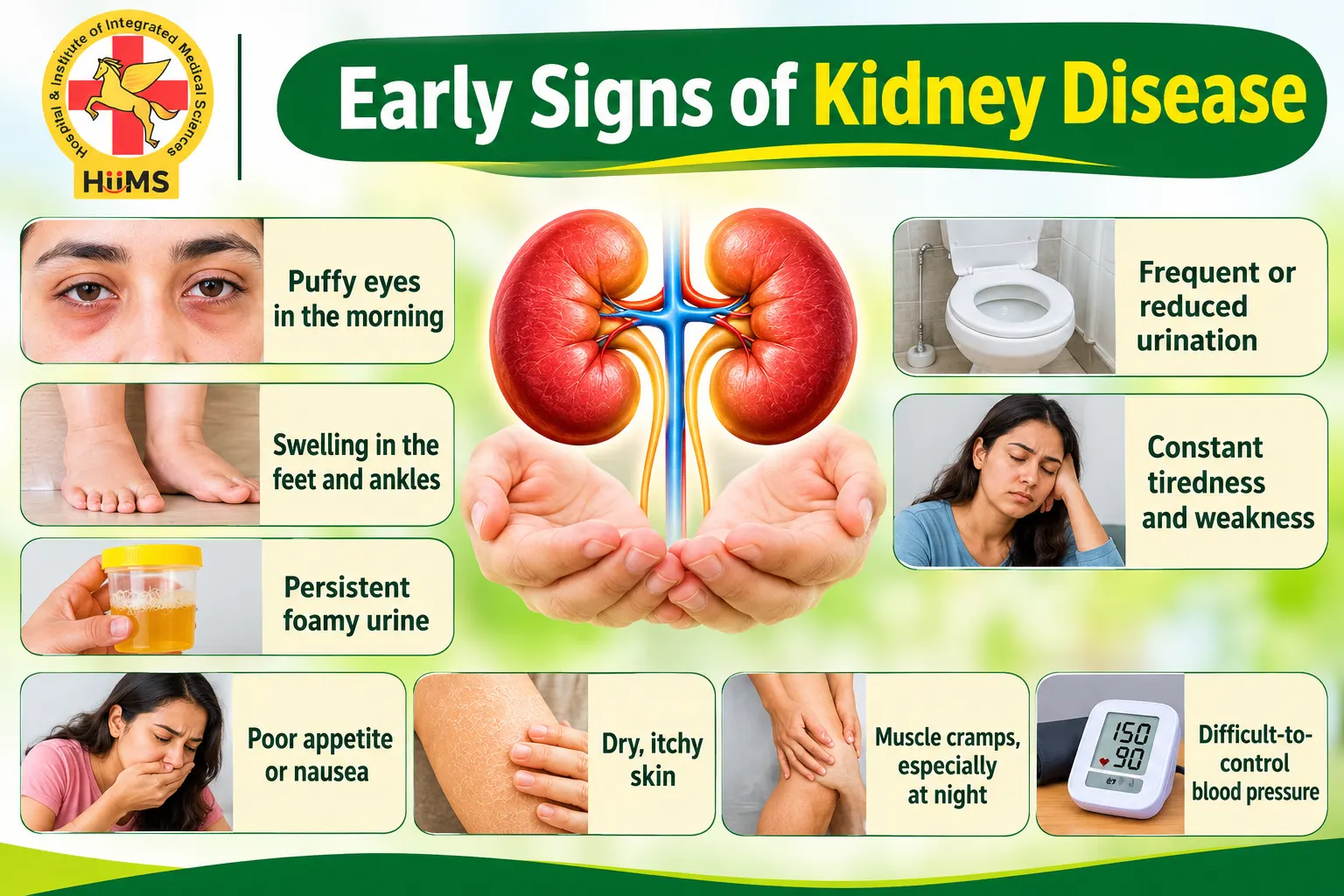
- Puffiness around the eyes in the morning, or swelling in the feet and ankles by evening
- Foamy or bubbly urine that stays foamy
- Passing urine more often at night, or noticeably less than usual
- Tiredness, weakness or trouble concentrating that does not improve with rest
- Poor appetite, nausea, or a metallic taste in the mouth
- Dry, itchy skin without a clear reason
- Muscle cramps, especially at night
- Blood pressure that is getting harder to keep in range
One or two of these on their own rarely mean kidney disease. If two or three keep coming back, or you have diabetes, high blood pressure or a family history, get a simple kidney test done.
Signs of Kidney Problems That Need Prompt Attention
Some signs of kidney problems need a doctor soon, and not after another week of waiting. These are blood in the urine, very little or no urine for a day, severe pain in the back or side with fever, sudden swelling of the face or legs, breathlessness when lying down, vomiting that does not stop, and confusion or unusual sleepiness.
Please go to a hospital quickly if you have any of these. If you already know you have kidney disease, tell your doctor about a sudden change in swelling, urine or weight right away.
Who is More Likely to Develop Kidney Disease?
Diabetes and high blood pressure are the two biggest reasons, since both slowly damage the tiny filters in the kidney. Other risk factors include a family history of kidney disease, age above 60, heart disease, long-term use of painkillers such as diclofenac or ibuprofen, repeated kidney stones or urinary infections, obesity and tobacco, including gutka and bidi.
The numbers are not small. A 2025 report in the New Indian Express on a study in the journal Nephrology, which pooled data from 2011 to 2023, said kidney disease among Indians aged 15 and above rose from 11.2% in 2011-17 to 16.38% in 2018-23, which is close to one in five. The report did not list the study’s sample size or authors, so please see it as a pointer to the trend and not an exact figure. Still, it shows that you are not the only one asking these questions.
Tests That Check Your Kidneys
A kidney check is simple and does not take long, and it can pick up changes before the early signs of kidney disease appear. It usually has these parts: a blood test for creatinine, from which the doctor works out your eGFR (how well the kidneys are filtering), a urine test for albumin or protein, a blood pressure and sugar check, and sometimes an ultrasound of the kidneys.
A normal reading on one test does not always rule out early damage, which is why the urine test matters. If you have diabetes or high blood pressure, get these done at least once a year, and keep each report in one file so that your doctor can see the trend.
When to See a Kidney Doctor in Muzaffarpur
A good first step is your regular physician, who can order the tests and read the results. Ask to see a kidney doctor in Muzaffarpur (a nephrologist) if your eGFR is falling, protein shows up in your urine, you have swelling or blood in the urine, or your blood pressure and sugar are hard to control.
Do not wait for symptoms to become severe. Early advice leaves more room to protect the filtering you still have.
How to Choose a Kidney Specialist in Muzaffarpur
Whether you pick a kidney doctor in Muzaffarpur or travel for a second opinion, a few questions make the visit more useful:
- What is my eGFR and stage, and what does it mean for me in simple words?
- Which tests do I need next, and how often?
- Which of my current medicines or supplements should I check or stop?
- What should my diet look like, based on my own reports?
- What signs mean I should come back sooner?
A kidney specialist in Muzaffarpur who explains your results clearly and writes down a follow-up plan is worth looking for, since the study above shows how much understanding your reports can matter.
Everyday Habits That Help Look After Your Kidneys
These habits matter even before any early signs of kidney disease show up.
- Drink water throughout the day, more in Bihar’s hot summer months, unless your doctor has set a fluid limit
- Keep salt low, since extra salt raises blood pressure, and go easy on pickles, papad and packed snacks
- Do not buy painkillers over the counter for regular use
- Check your blood pressure and sugar, and walk for about 30 minutes most days
- Avoid tobacco in all forms
- Please also show any herbal powder or kadha to your doctor, even if a neighbour or relative recommends it, since some can strain the kidneys or raise potassium
Ayurvedic and Diet Support Alongside Your Doctor’s Plan
At Jeena Sikho HiiMS Muzaffarpur, we offer Ayurvedic and diet support for people with kidney concerns, along with their nephrologist’s plan and not in place of it. Our team works under Acharya Manish Ji’s guidance and goes through your creatinine, eGFR, urine reports, and medicines first.
Our kidney routine, called GRAD, includes hot water immersion, a head-down tilt position, and the diet. The diet is a two-plate pH-balanced pattern: Plate 1 is raw food, like seasonal fruit or a fresh salad, and Plate 2 is a cooked, millet-based meal with dal and vegetables, with dinner before sunset. We may also suggest Panchakarma therapies, a Kidney Care Kadha, Corn Silk Kadha, white pumpkin juice, or herbs such as Punarnava, Gokshura, and Guduchi.
Want diet and routine advice matched to your kidney reports? Share them with a HiiMS Muzaffarpur doctor before you start any kadha or herb.
Conclusion
Kidney disease is much easier to manage when it is found early, and a blood and urine test is all it takes. Keep an eye out for the early signs of kidney disease, get checked if you have diabetes or high blood pressure, and see a kidney specialist in Muzaffarpur when your reports need it.
If you want diet and Ayurvedic support alongside your medical plan, our team at Jeena Sikho HiiMS Muzaffarpur will go through your reports with you. Please keep taking your prescribed medicines unless your doctor advises otherwise.
Prefer to start from home? Book a VOPD with Jeena Sikho HiiMS Muzaffarpur and review your kidney reports with a doctor on video call.

FAQs
Q1. Can my kidneys be damaged even if my creatinine is normal?
Yes. Creatinine often rises late. A urine albumin test can show early damage, so ask for both.
Q2. Is foamy urine always a sign of kidney disease?
No. It can also come from a full bladder or dehydration. If it stays foamy for days, get a urine test.
Q3. Does kidney disease cause pain?
Usually not in the early stage. Kidney stones and infections cause pain, but many kidney problems are painless.
Q4. Are herbal kidney powders safe to take on a neighbour’s advice?
Not without checking. Some products can strain the kidneys or raise potassium. Show them to your doctor first.
Q5. How often should I test if kidney disease runs in my family?
Many doctors suggest a yearly check of blood pressure, creatinine and urine protein. Your doctor may advise more often.
Leave a comment