

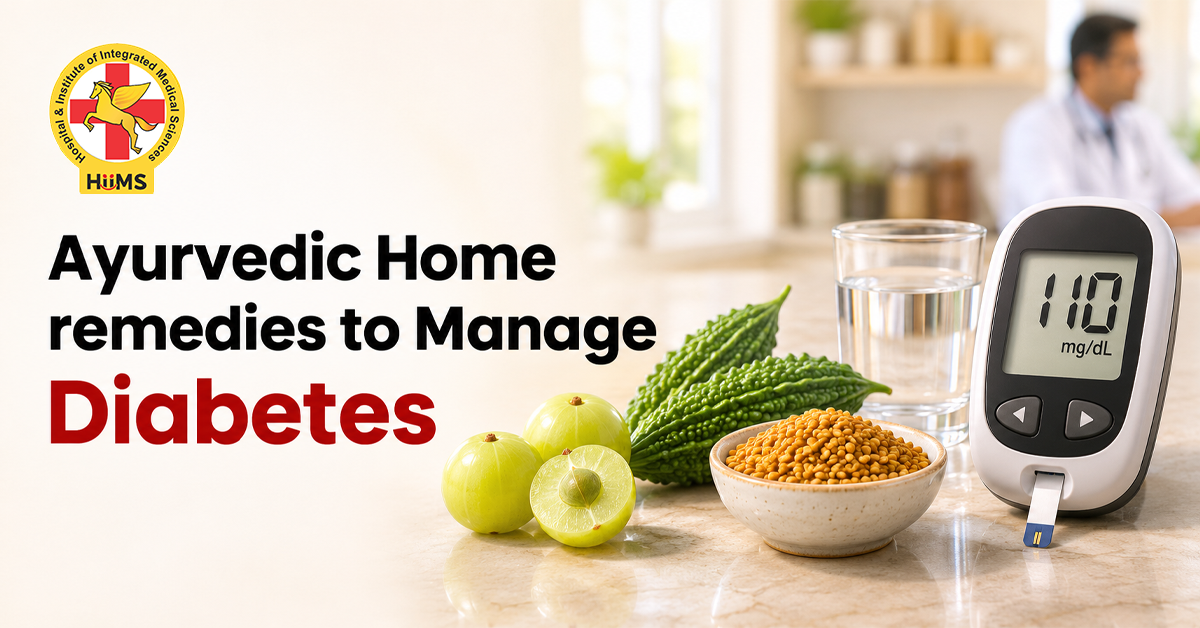

Diabetes is a long-term condition, and its care is a daily task. Thus, many people look for gentle, natural support alongside their regular plan. So Ayurveda offers simple remedies, foods, and routines for diabetes management. This blog explains them in simple words, so they are easy to follow at home.
A national ICMR study estimates that about 101 million Indians have diabetes, and another 136 million have prediabetes. Therefore, early and steady habits matter more than ever. This guide covers the Ayurvedic view, home remedies, foods, and daily habits.
Diabetes in Ayurveda: Understanding Madhumeha
Ayurveda calls diabetes Madhumeha. It belongs to a group of urinary disorders called Prameha. Also, Ayurveda links Madhumeha mainly with disturbed Kapha and Vata. They also describe two forms. Sahaja is inborn, while Apathyanimittaja comes from lifestyle.
Besides, a review in an Ayurvedic journal lists the main causes. These are lack of exercise, poor food habits, and too much heavy, oily food. Day sleep and worry are also named. As a result, digestion weakens, and fat tissue, or Meda, increases. In simple terms, Kapha builds up when life is heavy and slow. Meanwhile, weak digestion leaves waste in the body.
Together, these changes make it harder for the body to use food well. So diabetes management in Ayurveda starts with habits, not only with sugar numbers. Thus, the first step is to remove the causes. Then comes support for digestion.
Understand your blood sugar the Ayurvedic way with our experts.
Ayurvedic Home Remedies for Diabetes
Ayurvedic remedies for diabetes use common kitchen items. Some also have clinical research behind them. Here are six simple options. Begin with one or two, and use fresh ingredients where possible. However, remedies fit best within a wider routine of food and daily habits.
Fenugreek (Methi)
Fenugreek has the strongest research. In fact, a 2023 meta-analysis of randomised trials suggests it helps control glucose and lipids in type 2 diabetes. An Indian double-blind study also tested fenugreek seeds. Fenugreek is rich in fibre, which slows food digestion. So for home use, soak one teaspoon of seeds overnight. Then drink the water and chew the seeds in the morning.
Bitter Gourd (Karela)
Karela is a common bitter vegetable in Indian homes. Ayurveda has long used it to support healthy blood sugar. Its bitter taste is also part of its value, since bitter foods are said to balance Kapha. So you can cook it as a vegetable or drink a small glass of fresh juice in the morning.
Amla
Amla is rich in vitamin C and is a classic Ayurvedic fruit. It has long been used to support digestion and energy. It is also a main fruit in Triphala. For example, eat one fresh amla, or take a spoonful of its juice with water.
Jamun Seeds
Jamun fruit and seeds have long been used for sugar balance in Indian homes. Many people take half a teaspoon of dried seed powder with water. In season, the fruit also adds fibre and fresh flavour.
Cinnamon (Dalchini)
Cinnamon adds warmth and flavour without sugar. It is used to support digestion and energy. Thus, a small pinch in tea or food is enough. It also works well in oats or millet porridge.
Turmeric (Haldi)
Turmeric is a daily spice in Indian kitchens. It is traditionally valued for its anti-inflammatory and antioxidant qualities. Also, add a pinch to daily cooking, or mix it in warm water. It gives food a mild, warm taste as well.
Get a personalised Ayurvedic routine from our experts. Book a consultation now.
Foods to Help Manage Blood Sugar
Food shapes blood sugar every day. Ayurveda favours light, fresh, warm meals that digest easily. Many of these foods are already in Indian kitchens. So the foods to help manage blood sugar are simple and local.
Foods to Include
- Millets such as ragi, jowar, and bajra release energy slowly.
- Leafy greens, bitter gourd, and bottle gourd add fibre with few calories.
- Moong, chana, nuts, and seeds give protein and keep hunger low.
- Buttermilk with a pinch of roasted cumin is also a light drink at lunch.
- Fresh fruits such as guava and apple fit well in small portions.
- For example, a plate of moong dal, millet roti, and a green vegetable makes a balanced meal.
Foods to Limit
Sugar, sweets, and sweet drinks raise blood sugar quickly. Maida, bakery items, and polished white rice act the same way. Fried and packaged foods also add extra fat. Therefore, it helps to keep these to a minimum. When a sweet craving strikes, opt for fresh fruit or a handful of nuts instead.
Meal Timing
Regular meal times keep digestion steady. Also, a fresh salad before lunch and dinner slows the pace of eating. An early, light dinner helps as well. Eating slowly and stopping before you feel full also helps. For example, finish dinner two to three hours before sleep.
Ayurvedic Tips for Blood Sugar Control: Daily Habits
Daily habits matter as much as food. So these Ayurvedic tips for blood sugar control are simple and easy to follow. Besides, you can add them one at a time.
Dinacharya: The Ayurvedic Daily Routine
Dinacharya is the consistent daily routine that Ayurveda recommends. It starts with waking early and drinking warm water. Then come light exercise before breakfast and the main meal at midday. Finally, dinner is early and light. Daytime sleep is avoided, and bedtime is early. Ayurveda holds that this rhythm keeps digestion and Kapha steady.
Walk and Move After Meals
A short walk after meals helps digestion. For instance, even 100 steps after dinner is a good start. Besides, regular movement lowers Kapha, which rises with a sedentary life. Walking in the morning sun also gives fresh air and a calm start.
Yoga and Pranayama
Yoga keeps the body active and the mind calm. Surya Namaskar, Mandukasana, and Ardha Matsyendrasana are common choices. Then add Anulom Vilom and Bhramari for five minutes each. Practise slowly, in the morning if possible.
Sleep and Stress Care
Poor sleep and constant stress disturb digestion. Ayurveda names worry as a cause of Madhumeha. So set a fixed bedtime, and keep screens away at night. A few minutes of meditation also helps. Besides, a light, early dinner supports better sleep.
Beyond Home Remedies: How Ayurveda Supports Diabetes Management
Home remedies help in daily life. However, Ayurveda sees diabetes as a long-term imbalance of Kapha and Vata, with weak digestion. So its support goes beyond one remedy. It then builds a plan around the person, combining diet, herbs, cleansing therapies, and mind and body care.
Thus, these steps support steady care over time. Jeena Sikho HiiMS puts this approach into practice.
Diabetes Management at Jeena Sikho HiiMS
Jeena Sikho HiiMS is an integrated hospital that follows Acharya Manish Ji’s root-cause approach. First, each person gets an individual assessment. Then the plan draws on the therapies below.
Neem Karela Therapy
In this foot therapy, a paste of fresh neem leaves and karela is placed in a tray. The feet are gently churned in it for about 20–25 minutes. HiiMS describes it as supporting metabolic balance and gentle detox.
Panchakarma
Panchakarma is Ayurveda’s deep-cleansing system. Therapies such as Vamana, Virechana, Basti, Nasya, and Raktamokshana are chosen as per each person’s health status.
pH-Balanced Diet
This is a personalised diet consisting of fresh fruits, vegetables, and light meals. It supports digestion and steady energy.
Herbal Support
Herbs such as Gudmar, Vijaysar, and Jamun are chosen under expert supervision. They support healthy blood sugar and overall well-being.
Mind & Body Healing
Yoga, breathing exercises, and meditation are part of the plan. They support calm and healthy sleep.
All of this is supportive care alongside the patient’s prescribed plan. Each plan is personal.
Conclusion
Diabetes is a long-term condition, so small, steady habits matter more than quick fixes. In turn, Ayurveda adds a root-cause view, which looks at digestion and the doshas behind it. Thus, diabetes management is best considered a steady, personal plan with some remedies, diet and lifestyle changes.
Get guidance from Ayurvedic doctors, right from your home. Book a VOPD (video consultation) with Jeena Sikho HiiMS today.

FAQs
1. What is Madhumeha in Ayurveda?
Madhumeha is the Ayurvedic term for diabetes. It belongs to a group of urinary disorders called Prameha. Ayurveda links it mainly with disturbed Kapha and Vata.
2. Which Ayurvedic home remedies are used for diabetes support?
Common options include fenugreek, bitter gourd, amla, jamun seeds, cinnamon, and turmeric. You can begin with one or two, and they fit best within a wider routine of food and habits.
3. Which foods help manage blood sugar in Ayurveda?
Ayurveda favours light, fresh and warm meals. These include millets, leafy greens, moong, chana, nuts and seeds. Sugar, sweets, maida and fried foods are best kept to a minimum.
4. Which daily habits support blood sugar control?
Regular meal times, an early and light dinner, a short walk after meals, yoga, and restorative sleep all help. Ayurveda calls this steady rhythm Dinacharya.
5. Can Ayurvedic remedies replace diabetes medicines?
No. Ayurveda offers supportive care alongside the patient’s prescribed plan. Therefore, please do not change or stop any medicine without your doctor’s advice.
Leave a comment