


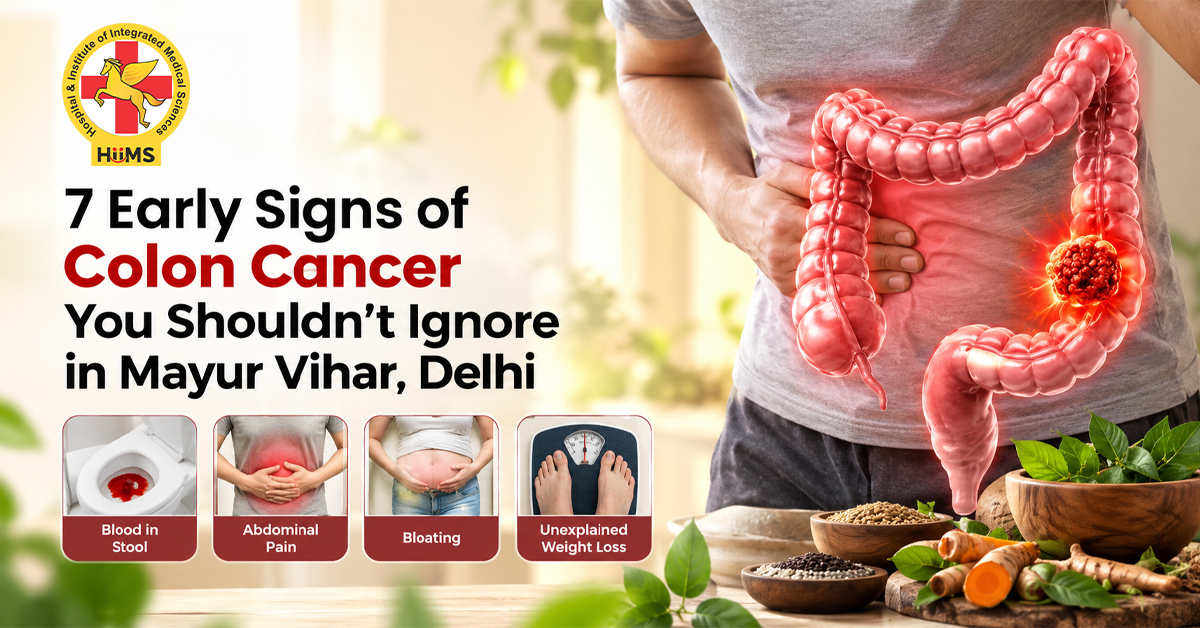
Colon cancer can develop quietly, and some people may not notice a clear problem in the beginning. Bowel changes, blood in the stool, persistent tiredness, or unexplained weight loss may not always seem serious when life in Delhi is already busy and demanding. Many people connect these changes with food, stress, constipation, or piles and wait for them to settle. This is why knowing the early signs of colon cancer matters.
These symptoms can also occur with common digestive conditions, so one symptom does not automatically mean cancer. However, a change that keeps returning should not be ignored. Research from New Delhi has reported bowel habit changes, bleeding and abdominal symptoms among colorectal cancer patients. Another study also examined younger colorectal cancer patients using data from a Delhi cancer registry. Read on to learn the seven signs, how colon cancer develops, and how you can care for your gut every day.
Understanding the Warning Signs of Colon Cancer
Colon cancer does not always begin with strong pain. Some people first notice a change in their bowel pattern. Others feel tired, feel discomfort in the belly, or lose weight without trying.
Look at the whole pattern, not one symptom alone. The early signs of colon cancer differ from person to person, and one symptom does not prove cancer.
Noticing a lasting change in your digestion? Talk to an Ayurvedic doctor and understand your health concerns better.

7 Early Signs of Colon Cancer You Should Not Ignore
The American Cancer Society lists several common warning signs. Most of them have simple causes, but repeated ones need attention.
- A lasting change in bowel habits: Constipation or loose stools that last for weeks without a clear reason should be examined.
- Blood in the stool: The blood may look bright red, or the stool may turn very dark. Many people blame piles, but other bowel problems also cause bleeding.
- Weight loss without a reason: Your weight drops even though your food and daily routine stay the same.
- Belly discomfort that keeps returning: Cramps, bloating, gas, or pressure that return again and again need attention.
- Tiredness and weakness: Small, hidden bleeding in the bowel can lower your blood count over time. This leaves you tired, weak and low on energy through the day.
- A feeling that the bowel has not emptied: You still feel the urge after you leave the toilet.
- A lasting change in the stool itself: Your stool looks different from usual, and the change lasts for weeks. A single odd motion is not a worry, but a repeated change is worth a check.
One sign alone does not mean cancer, but a sign that stays for weeks deserves a proper check.
How Colon Cancer Develops
Scientists explain how colon cancer develops in slow steps. It often starts with small growths called polyps on the inner wall of the colon. Most polyps stay harmless, but a few can change over many years.
The National Cancer Institute lists age, family history, smoking, alcohol, extra body weight, low physical activity, and a diet low in fibre as common risk factors. One risk factor does not mean you will get cancer. It only tells you where to take extra care.
Did You Know? Colon Cancer Facts Worldwide
The World Health Organization reports that colorectal cancer ranks third among cancers worldwide. In 2022, it caused about 1.9 million new cases and about 900,000 deaths. Studies from Delhi have also examined bowel changes, bleeding and belly symptoms in colorectal cancer patients.
Paying attention to your body early gives you more time to act.
How Is Colon Cancer Diagnosed?
Many people feel afraid when they ask, ‘How is colon cancer diagnosed?‘
The first step is simple. A doctor listens to your story.
The doctor asks about your bowel habits, any bleeding, your weight, your family history, and your past health problems. If your symptoms continue, the doctor may suggest further checks to find the exact cause.
Symptoms alone cannot confirm cancer. A proper check helps you learn whether the cause is serious or simple.
Why People Delay Care for Bowel Changes
Doctors often notice that people delay discussing changes in their bowel habits, sometimes for several weeks. They think gas, acidity, or constipation is too common to matter. Many try home remedies first and visit a doctor much later.
Doctors also notice a pattern in daily life. Late dinners, irregular meals, too little water, poor sleep, and long hours of sitting show up again and again. When people take the early symptoms of colon cancer lightly, small problems keep growing quietly.
Simple Habits for a Healthy Gut
Your daily routine shapes your digestion. These small habits keep your gut healthy.
- Eat vegetables, fruits, pulses, and whole grains.
- Drink enough water.
- Walk or stay active every day.
- Eat meals at fixed times.
- Keep processed food to a minimum.
- Maintain a healthy weight.
- Go to the toilet when the urge comes.
Small habits, followed every day, do more for your gut than any short-term fix.
Conclusion
The early signs of colon cancer are sometimes similar to ordinary bowel problems, so a single symptom should not be taken as a sign of cancer. Still, repeated bleeding, lasting bowel changes, unexplained weight loss, abdominal discomfort, or unusual weakness deserve attention.
For people in Mayur Vihar, timely evaluation and healthy daily habits can help you understand the digestive health better. Jeena Sikho HiiMS follows an individual Ayurvedic approach to health and wellness. For the guidance, you can consider a Free consultation to discuss your concerns and understand the next suitable step.

FAQs
1.What are the early warning signs of colon cancer?
A lasting bowel change, blood in the stool, weight loss, belly discomfort, and tiredness are the common signs.
2.Does blood in the stool always mean colon cancer?
No, piles and other bowel problems also cause bleeding, but repeated bleeding needs a check.
3.Can constipation be an early sign of colon cancer?
It can be, especially when it lasts for weeks without a clear reason.
4.When should I see a doctor for bowel changes?
See a doctor when a change lasts for weeks or keeps coming back.
5.What does ‘thin’ or ‘changed stool’ mean?
A lasting change in stool shape, size, or colour is worth discussing with a doctor.