

Why does migraine pain keep returning even after medicines, rest, and lifestyle changes? That question frustrates a lot of people dealing with regular migraine attacks. Sometimes the pain starts with eye heaviness. Sometimes sensitivity to sound or nausea appears first. Slowly, the entire day feels disturbed. This is one reason why natural approaches like Panchakarma for migraine are becoming popular among people looking for deeper healing instead of short term comfort.
At Jeena Sikho HiiMS, we believe in Ayurveda for the whole body, not just for symptoms. In general, migraines are associated with stress, improper digestion, accumulation of toxins, emotional strain, lack of sleep and imbalance in the neurological system in Ayurveda. This is why Panchakarma for migraine works by naturally detoxifying the body and helping the mind and body calm down from within.
How Panchakarma for Migraine Works
Ayurveda considers migraine more than just head pain. It is linked with an imbalance inside the body. Sometimes stress triggers it. Sometimes poor digestion, irregular sleep, screen exposure, or emotional exhaustion make it worse.
The idea behind Panchakarma for migraine is simple. Clean the body properly, improve energy flow, calm the mind, and help the nervous system relax naturally.
At Jeena Sikho HiiMS, Panchakarma therapies are selected based on a person’s condition, headache frequency, sleep quality, digestion, and overall health. Honestly, many people don’t realise how much lifestyle affects migraine until symptoms become frequent.
Understanding Migraine Symptoms and Triggers
Not every migraine feels the same. Some people experience throbbing pain on one side of the head. Others feel nausea, eye strain, dizziness, or sensitivity to light. Common migraine symptoms include:
- Head throbbing or pressure
- Vomiting or nausea
- Sensitivity to sound and light
- Eye heaviness
- Fatigue and irritation
- Difficulty concentrating
These migraine headache symptoms often become stronger because of stress, poor eating habits, lack of sleep, hormonal imbalance, or too much screen time.
At Jeena Sikho HiiMS, we explain migraine in a very practical way. When the body remains internally overloaded, and the nervous system remains continuously stressed, headaches become more frequent. That’s why Panchakarma for migraine focuses on both physical cleansing and mental relaxation together.
Therapies Used in Panchkarma for Migraine
Nasya Therapy
Nasya is one of the most important Ayurvedic therapies for migraine support. Herbal oils are gently administered through the nose to help clear toxins and calm the head region. Ayurveda considers the nose the gateway to the brain and nervous system. Many people feel mental lightness and reduced heaviness after this therapy.
Shirodhara Therapy
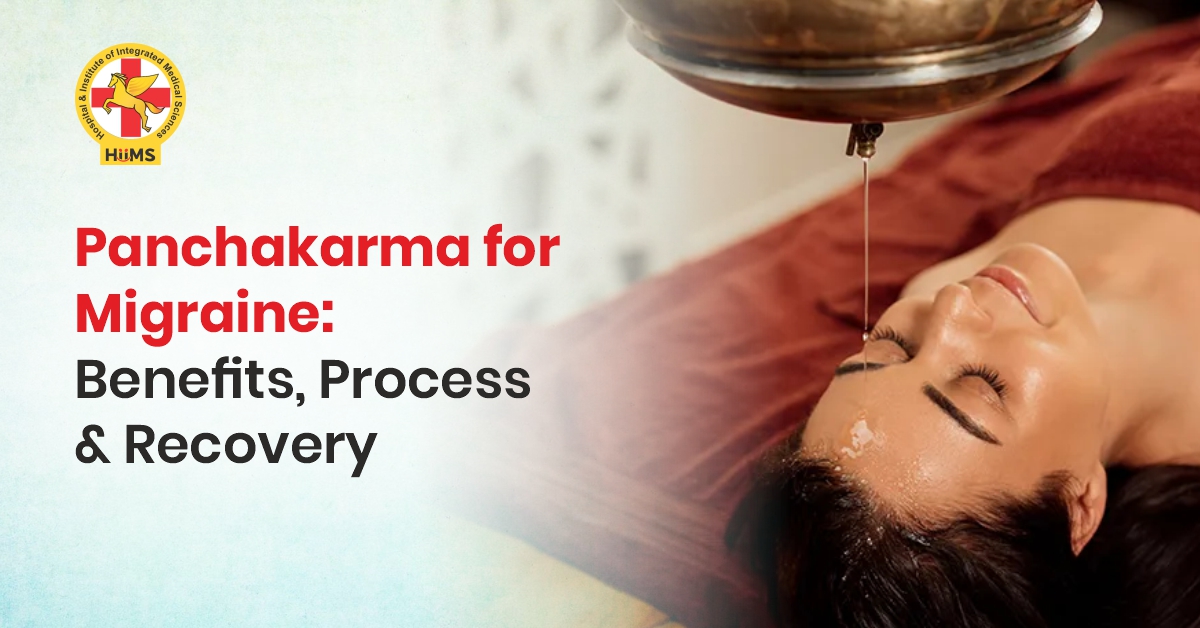
Shirodhara is deeply relaxing. Warm, medicated oil is continuously applied to the forehead for a specific duration. This therapy helps calm stress, emotional fatigue, disturbed sleep, and headaches. People struggling with stress-related migraines often find this therapy very soothing.
Shiro Pichu Therapy
In this therapy, medicated oil is placed on the crown area using a cotton pad. It feeds the nerve system and helps relieve mental fatigue. This therapy is effective for migraines, sleeplessness, stress and emotional imbalance.
Abhyanga and Swedana
Abhyanga uses warm herbal oils to relax the body and improve circulation. Swedana uses herbal steam to help release toxins and reduce stiffness. Together, these therapies support natural relaxation and detoxification of the body.
Benefits of Panchakarma for Migraine
Most people look for something that can stop migraine pain instantly. But migraines that keep returning usually need more than temporary relief. Long-term wellness often requires improving the body internally as well. That’s where Ayurveda feels different. Some benefits people often notice after proper Panchakarma for migraine include:
- Better sleep quality
- Reduced stress levels
- Mental calmness
- Improved digestion
- Less heaviness in the head
- Better energy and focus
Ayurveda holds that when digestion, lifestyle, and the nervous system improve together, migraine frequency may naturally reduce over time. At Jeena Sikho HiiMS, we also encourage yoga, meditation, and grounding practices because stress plays a huge role in migraine discomfort.
Recovery After Panchakarma
One thing people often ask is whether recovery takes time after Panchkarma therapies. Honestly, the body usually needs rest after detox therapies. Recovery is not about lying in bed for weeks. It’s more about allowing the body to settle properly. At Jeena Sikho HiiMS, post-therapy care may include:
- Light and simple meals
- Proper hydration
- Good sleep routine
- Reduced screen exposure
- Meditation and breathing exercises
Recovery feels smoother when people follow these habits seriously.
Can Lifestyle and Food Affect Migraines?
Yes. Most individuals do not know how important food and habits are. Irregular meals, processed foods, dehydration, poor sleep, and stress may make migraine headache treatment more difficult. Ayurveda is very much related to digestion and headaches.
Along with therapies, Jeena Sikho HiiMS promotes natural dietary habits, alkaline hydration, meditation and emotional wellness. Other common home remedies for migraines include staying well-hydrated, sleeping in a dark area, limiting screen time and breathing exercises. These things may appear simple but they really help in many circumstances.
Should You Depend Only on Migraine Medicine?
Temporary relief matters when pain feels unbearable. Merely relying on migraine medication without changing your lifestyle and internal balance may not always be effective in front of the main problem. Therefore many people have now shifted to Ayurveda and natural migraine therapy for their long-term health rather than just symptom control.
A good migraine doctor should understand stress, digestion, lifestyle, and emotional health together because migraine triggers are rarely just physical.
Conclusion
Frequent migraines can slowly affect daily life, sleep, mood, work performance, and emotional well-being. That’s one reason why natural approaches like Panchakarma for migraine are becoming more popular among people looking for long-term wellness support. Ayurveda believes the healing process becomes smoother when the body feels cleansed internally, and the nervous system becomes more balanced.
At Jeena Sikho HiiMS, we use therapies like Nasya, Shirodhara, Shiro Pichu, Abhyanga, and other Ayurvedic wellness practices to support natural migraine recovery. If you still feel confused about which approach may suit your condition better, you can also connect with the experienced doctors at Jeena Sikho HiiMS through a VOPD consultation to understand which kind of Ayurvedic care may actually help your health naturally.

FAQs
1. What is Panchakarma for migraine?
It is an Ayurvedic detox and healing approach that helps cleanse the body and naturally calm the nervous system.
2. What are common migraine symptoms?
Typical migraine symptoms are headache, nausea, light sensitivity, disorientation, eye strain and tiredness.
3. Can Panchkarma help in long-term migraine care?
Break the cycle of migraine attacks by following the flux of the breath and conquer your mental and emotional turmoil aided by the inner workings of your mind.
4. Are there simple home remedies for migraines?
Light exercises during the day, eating a balanced diet, being physically active, and taking up a leisure outdoor activity such as walking or hiking are all ways to keep stress under control.
5. Which therapy at Jeena Sikho HiiMS supports migraine relief?
Nasya, Shirodhara, Shiro Pichu, Abhyanga, and Swedana belong to the class of Ayurvedic therapies which are most widely used for the purpose of migraine relief.