

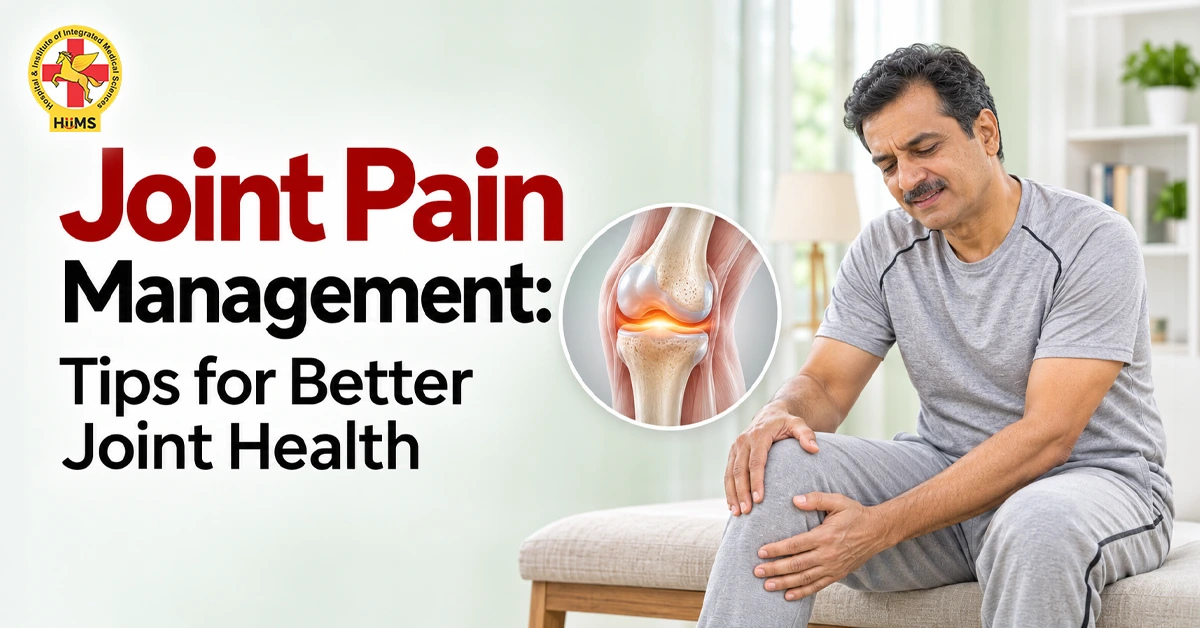

Joint pain affects daily movement for millions of people. Simple tasks such as climbing stairs, sitting on the floor or walking to the market can slowly become difficult. Because of this, many people start looking for ways to move more comfortably.
A meta-analysis of 14 Indian studies, covering 5,029 elderly people, found that 47% had knee osteoarthritis. This blog covers the causes, daily tips, exercises and care options for joint pain management. As a result, you can plan care that fits your routine.
What Is Joint Pain and Why Does It Happen?
A joint is the point where two bones meet. Cartilage and a thin layer of joint fluid cushion this point so the bones glide smoothly. Muscles and ligaments around the joint also hold it in place. When the cartilage wears down, or the lining becomes inflamed, movement turns stiff and painful.
Joint pain management starts with this understanding, because healthy joints and mobility depend on both cushioning and strong supporting muscles. The next section looks at what puts joints under stress. Recurring stiffness or joint pain? Book your appointment today and consult our experts for personalised guidance and care.
Common Causes of Joint Pain
Joints face pressure from many sides. These are the most common causes —
- Ageing: Cartilage thins slowly over the years, so joints feel stiffer.
- Extra body weight: More weight adds load on the knees and hips.
- Injury and overuse: An old injury or repeated strain can leave a joint weak.
- Low activity: Weak muscles give less support to the joints.
- Poor posture: Uneven posture places extra load on the spine and knees.
- Inflammatory conditions: Some types of arthritis cause swelling and need a doctor’s evaluation.
Many people also notice more stiffness in the cold months, when they move less and stay indoors. Most of these causes link to daily habits so small changes can help.
Joint Pain Management Tips for Daily Life
These joint care tips are simple ways to manage joint pain at home. Used together, they work as practical joint pain relief tips and tips for better joint health.
Stay Active with Gentle Movement
Regular movement keeps the joints lubricated. Short walks spread throughout the day work better than one long session. In addition, avoid staying in one position for hours. If you work at a desk, stand up and stretch every 30 to 45 minutes.
Keep a Healthy Body Weight
Extra weight adds load on the knees and hips. Even a small weight loss can reduce this pressure. Balanced meals and daily movement support this goal. As a result, the joints work with less strain during everyday tasks.
Eat Joint-Friendly Foods
Fresh vegetables, fruits, whole grains, nuts and pulses make a good base. Turmeric and ginger are commonly used in Indian kitchens. Fried and processed foods are better kept low. Eating at regular times also keeps digestion steady which Ayurveda treats as part of joint care.
Use Warm and Cold Applications
Warmth relaxes stiff joints, especially in the morning. A cold pack for 10 to 15 minutes can ease swelling after activity. Always wrap the pack in a cloth to protect the skin.
Fix Posture and Daily Movements
Sit with your back supported, and lift objects with your legs instead of your back. If your knees hurt, avoid sitting cross-legged for long periods. A firm chair at the right height also reduces the strain on the knees and hips.
Sleep Well and Manage Stress
Poor sleep and stress can make pain feel stronger. A fixed sleep time and a few minutes of slow breathing each day help the body relax. In addition, the body repairs itself during sleep so rest is part of joint care.
Wear Proper Footwear
Cushioned, well-fitting shoes reduce the impact on the knees and hips. Rest after heavy tasks, so the joints get time to recover. For example, take a short break during long walks, gardening, or housework.
Movement is the most important of these habits.
Exercises for Joint Health
Regular exercise strengthens the muscles around the joints. Start slowly, and stop if you feel sharp pain.
Low-Impact Cardio
Walking, cycling, and swimming move the joints without heavy impact. Ten to twenty minutes a day is a good start. You can increase the time slowly as the joints feel stronger.
Strengthening Exercises
Strong thigh and hip muscles take load off the knees. Simple exercises such as leg raises and wall sits build this strength. Do them slowly, and rest between each set.
Stretching and Yoga
Gentle stretches and yoga poses improve joint flexibility and mobility. For example, ankle circles, hip stretches and shoulder rolls ease morning stiffness. A few minutes each morning is enough to begin with. Looking for a movement plan that suits your joints? Talk to our team.
When to See a Doctor for Joint Pain
Mild stiffness often improves with better habits. However, see a doctor if you notice swelling or redness, fever with joint pain, pain at night, a locked joint or trouble bearing weight. A proper evaluation finds the cause, so you can choose the right care.
Conventional Options for Joint Pain
Conventional care depends on the cause. It includes physiotherapy, pain relievers, injections, and, in advanced cases, joint replacement. These options help many people regain movement.
However, long-term pain relievers can cause stomach or kidney side effects and recovery from surgery takes time. In addition, these options mainly address the pain, but they do not always change the daily habits that contribute to it. As a result, many people also look at other ways to care for their joints.
Natural Ways to Support Joint Health: The Ayurvedic View
In Ayurveda, joints are called Sandhi, and degenerative joint pain is known as Sandhigata Vata. Ayurveda links it to increased Vata, weak digestion (Agni), and poor nourishment of Asthi dhatu, or bone tissue. Therefore, Ayurveda looks at diet, routine and therapies together as natural joint health support.
A 2025 randomised trial of 120 knee osteoarthritis patients compared Trayodasanga Guggulu with Sahacaradi Taila massage against naproxen over 63 days. Both groups showed a significant reduction in WOMAC scores and the authors reported comparable effects.
Joint Pain Management in Jammu: The Jeena Sikho HiiMS Approach
Joint pain often involves movement, digestion and routine together, so an integrated approach helps. Jeena Sikho HiiMS Jammu is an integrated hospital that combines Ayurveda, Naturopathy, Homeopathy, Unani, and modern science. For joint pain care in Jammu, it looks at each person’s joints, digestion, and daily routine as one plan. The approach includes the following:
Panchkarma
Panchkarma is a set of cleansing therapies. For joints, therapies such as Basti, Abhyanga (oil massage), and Patra Pottali Swedan (herbal poultice) are traditionally used to ease stiffness.
Natural Therapies
These therapies hold warm, medicated oil over a specific area, so each one targets a different part of the body.
- Janu Basti: Warm oil is held over the knee. It is traditionally used for knee stiffness and pain.
- Kati Basti: The same method is used on the lower back for stiffness in that area.
- Greeva Basti: The same method is used on the neck for neck stiffness.
- Pristha Basti: The same method is used on the upper and middle back for back stiffness.
The doctor chooses the therapy according to the joint and the condition. A plan may include a few sittings over several days, with follow-up visits.
Herbal Support
Traditionally used herbs such as Guggulu, Shallaki, Nirgundi, and Ashwagandha are chosen for joint comfort. The doctor selects them according to your condition and body type.
pH-Balanced Diet
A pH-balanced diet focuses on fresh, light and easily digested food. It also keeps fried and processed items low, so the body stays comfortable. Meals are planned across breakfast, lunch and dinner making the routine easy to follow.
Mind & Body Healing
Stress and poor sleep affect pain so this approach combines yoga, breathing practices, and lifestyle guidance. Together they support a calmer routine and easier movement.
Conclusion
Joint pain is common, and small daily habits make a real difference. Gentle movement, a healthy weight, and balanced meals protect the joints over time. Ayurveda follows the same thought by looking at the whole routine along with the joint.
Talk to the Jeena Sikho HiiMS team about joint pain management from wherever you are, with VOPD (video consultation). Share your concerns with HiiMS Jammu experts and receive a personalised plan for your joint health.

FAQs
1. What are the first signs of joint pain?
Early signs include stiffness after rest, mild pain on movement and feeling of heaviness in the joint. They often improves once you start moving.
2. How can I manage joint pain at home?
Gentle movement, a healthy weight, warm applications and good posture help. Balanced meals and enough sleep also matter.
3. Which exercises are good for joint health?
Walking, cycling, swimming, light strengthening and gentle stretching suit most people. Start slowly and stop if the pain is sharp.
4. Can diet affect joint pain?
Yes. Fresh, light food supports the body while fried and processed items are better kept low.
5. Can I consult Jeena Sikho HiiMS about joint pain online?
Yes, you can consult a Jeena Sikho HiiMS expert online through their VOPD (video consultation) service. It lets you discuss your joint pain with an expert from home.
Leave a comment